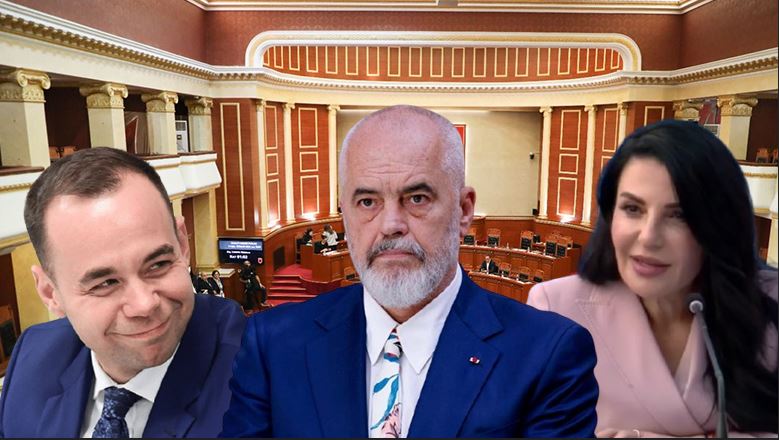
Alqi Bllako and Belinda Balluku were two socialist officials for whom SPAK requested the lifting of immunity, but they did not face the same attitude from their prime minister.
These two cases show the two standards by which Edi Rama interprets and applies the law when it comes to parliamentary immunity.
“Before the law there are no deputies, no ministers, no forces, no privileged, everyone is equal…”, declared Rama in March 2022, when SPAK requested the lifting of Bllako’s immunity for the incinerator affair. The situation was presented then according to the principle that everyone is equal before the law and no one should hide behind immunity. In the same spirit, Rama later declared that for anyone against whom justice raises an accusation, the Socialist Party will not become a political shield. “We will not be anyone’s lawyer,” was his message, adding that any request coming from SPAK would be approved without being put into question.
Today, the approach seems completely different. Rama and his party declare that lifting Balluk’s immunity is not necessary, because the MP “will neither leave nor can she destroy the evidence.”
In this case, immunity is no longer treated as a procedural issue, but as a political shield.
So one standard applies to a deputy far from the center of power and another standard when he has been at its heart.
The way Balluk’s case is being handled raises the suspicion that the standard is not determined by principle, but by fear of the consequences that a deeper investigation could have.
It seems that in our politics, defense is not always done for principles. It is done for damage control. When a member of parliament who until yesterday was an important figure in power defends herself so resolutely, the problem may not only be her political fate, but the fear that she may take others with her, if justice goes to the end.
© BalkansWeb