Updated March 11, 2026 07:44AM
Tired of blowing your budget on energy gels and melting your molars on carb drinks?
Well, fear not. There are plenty of energy-packed alternatives for when the thought of more sports nutrition makes your gullet gag and your wallet wail.
And better still, there’s more to fueling a workout than a bunch of bananas.
We’ve consulted with WorldTour nutritionists to put together a shopping list of some of the best grocery store solutions to your high-carb fueling needs.
From some old favorites to some surprise additions, these alternatives are cheap, easily accessible, and hella lot tastier than some slimy sports goop.
The sports nutrition benchmarks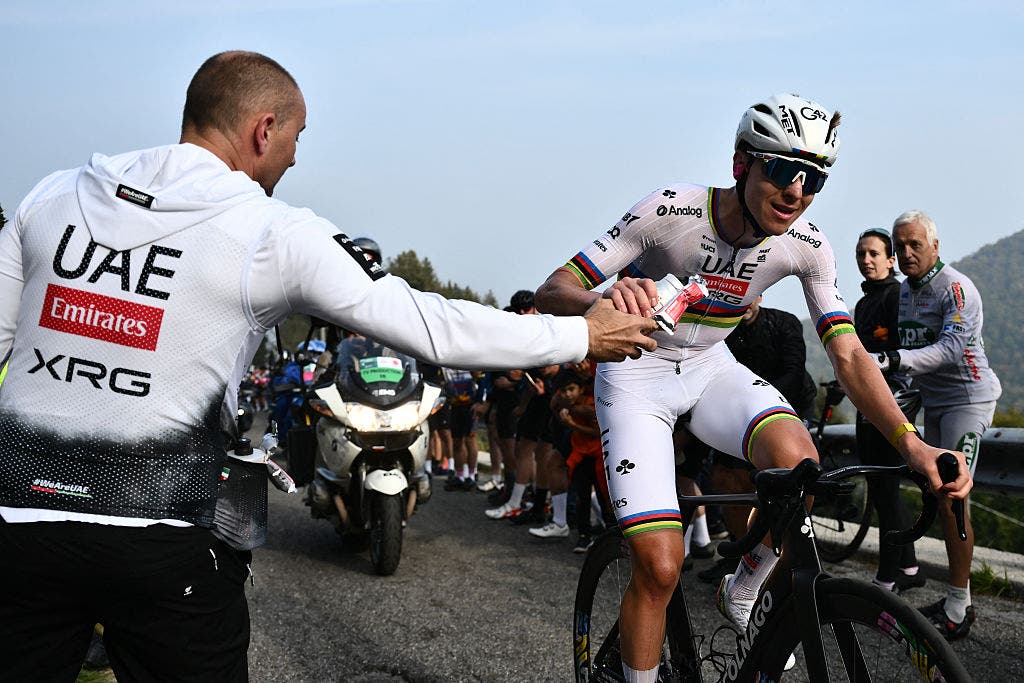 Sports nutrition packs a punch in terms of energy and outlay. (Photo: MARCO BERTORELLO/AFP via Getty Images))
But first, for context – we’re assessing these seven items against our own personal sport nutrition go-tos.
Beta Fuel energy gels by Science in Sport and the Carb and Electrolyte Drink Mix by Precision Fuel & Hydration have long been a staple of our ultrarunning and bike riding adventures.
Their price-point, palatability, and energy profiles put them in the front echelon of the booming sports nutrition market. They’re the gold standards against which we’ll assess our supermarket fueling sweep.
The SIS Beta Fuel energy gel packs 40 grams of carbohydrate into a 160-calorie package. With a 1:08 glucose-fructose ratio, it’s perfectly formulated for anyone who wants to push their fueling potential to the max.
The downside? The price. A single gel retails at $3.50, or around $3.30 when bought in bulk.
The carb and electrolyte mix from Precision Fuel & Hydration provides 30g of carb and 400mg of sodium per 500ml when mixed per the instructions. For a non-salty athlete, it’s perfect.
A 500g bag costs $32.00 and should provide around 15 x 500ml servings. That’s around $2.10 per standard-size bike bottle.
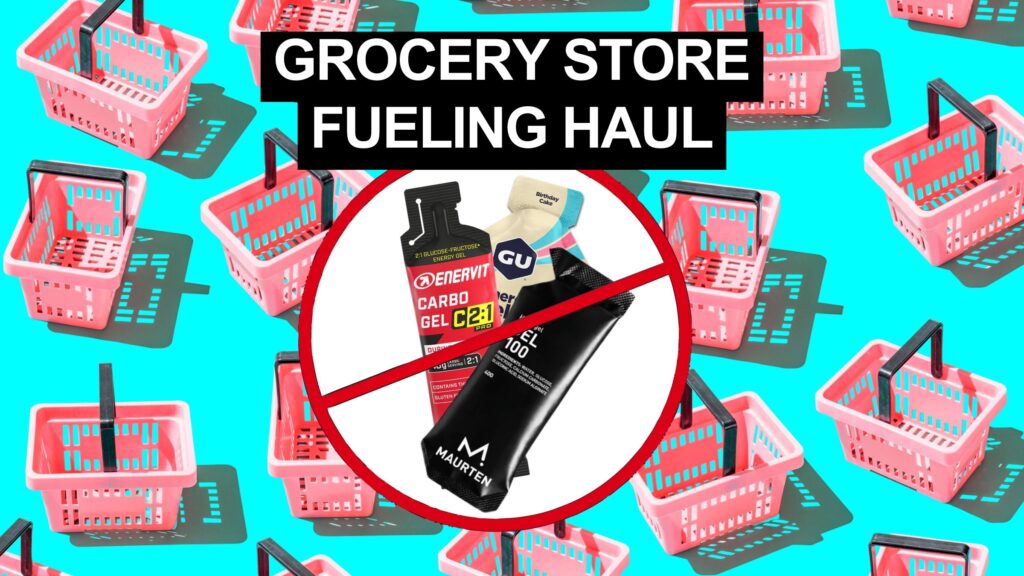
Velo’s grocery store fueling haul:
Here’s our grocery fueling haul.
We’ve even broken down the approximate costs, calories, carbs, and value-for-money of each item to help you get the best workout bang for your buck.
Keep reading for explainers on why each item might, or might not, work for you.
Medjool dates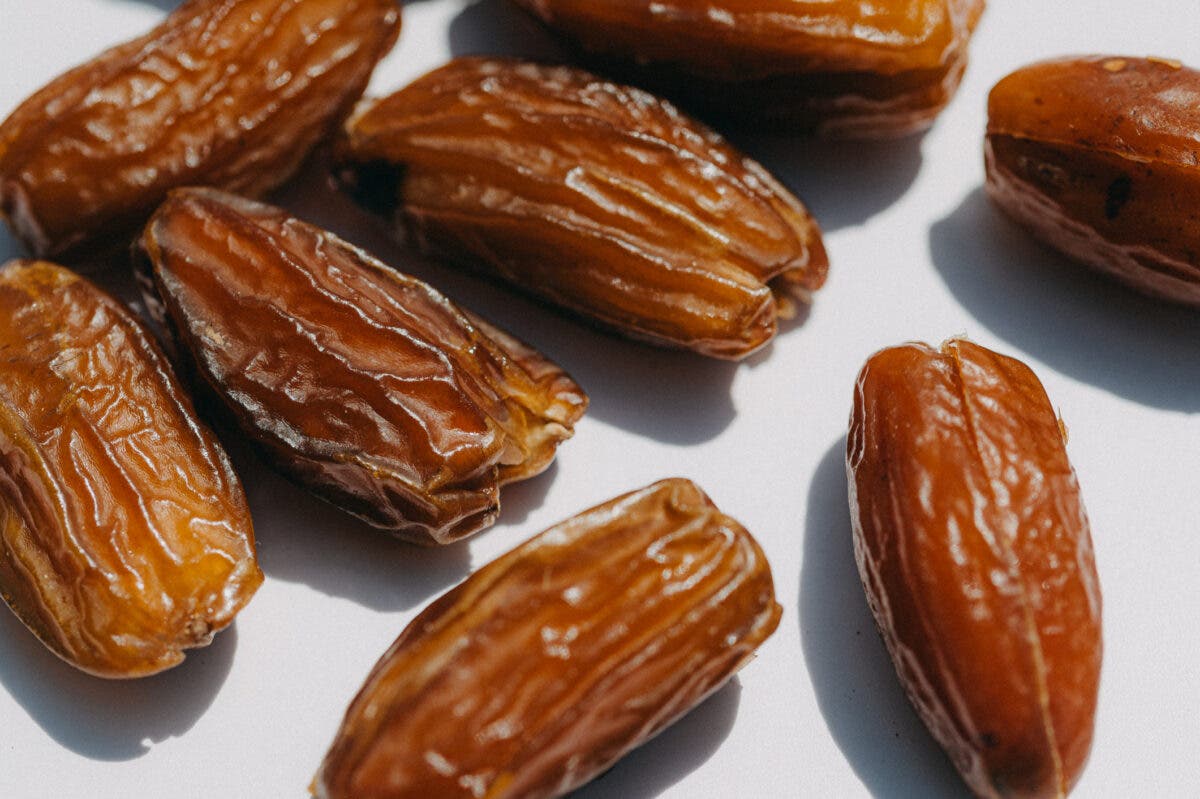 Dates are great, but don’t forget to take out the stones. (Photo: Getty Images)
The stats (2 x Medjool dates): 130 calories, 36g carbs
Pros: Dates are bullets of raw energy.
Just one of these so-called “kings of fruit” contains a whopping 18 grams of carbohydrate from glucose and fructose, making them one of the most space-efficient grocery store options for your jersey pocket. These caramelly sugar bombs are also incredibly satisfying to chew and mess-free.
Unlike energy gels or candy, dates are also loaded with beneficial antioxidants and micronutrients.
Sure, so eating a handful of dates on your ride won’t turn you into some immortal wellness guru. But the extra vitamins and minerals might make you feel a bit better about yourself while you ride your sugar high.
Cons: Dates don’t only contain antioxidants and whatnot. They’re also loaded with fiber – so if you’re prone to cases of “The Dumoulins,” you’d best leave your bag of dates on the kitchen counter.
Also, don’t forget dates have stones!
Bananas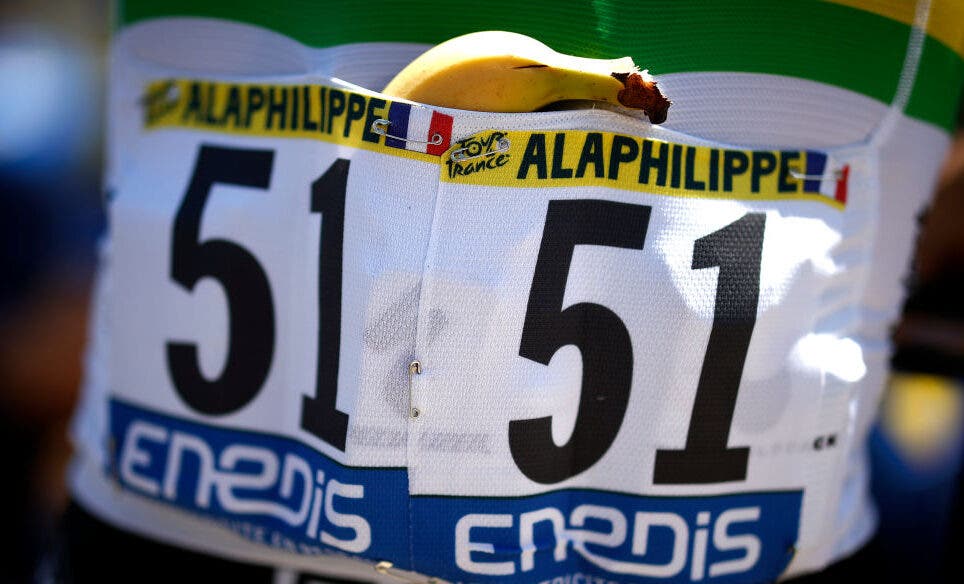 Energy fuel rules the pro peloton, but bananas still occasionally sneak their way into jersey pockets alongside the energy gels. (Photo: Getty Images)
The stats (1 x medium banana): 110 calories, 28g carbs
Pros: Bananas, they’re nature’s own energy bar. They’re pre-wrapped energy sticks that slide easily into a jersey pocket and slip down the gullet nicely, too.
An average-sized ‘nana contains around 28g of carbohydrate, making it comparable to a smaller energy gel or a bottle of drink – only for a fraction of the price.
A banana’s potassium content is a bonus, but don’t count on it as sufficient to replace your sweaty electrolyte losses.
There couldn’t be a better endorsement of endurance’s favorite fruit than the fact that you still occasionally see a banana poking out of a pro racer’s jersey pocket.
Cons: There’s nothing worse than the face-palm moment you discover your $200 jersey is slick with the mush of a long-squished banana. Be careful with those things!
Krispies Treats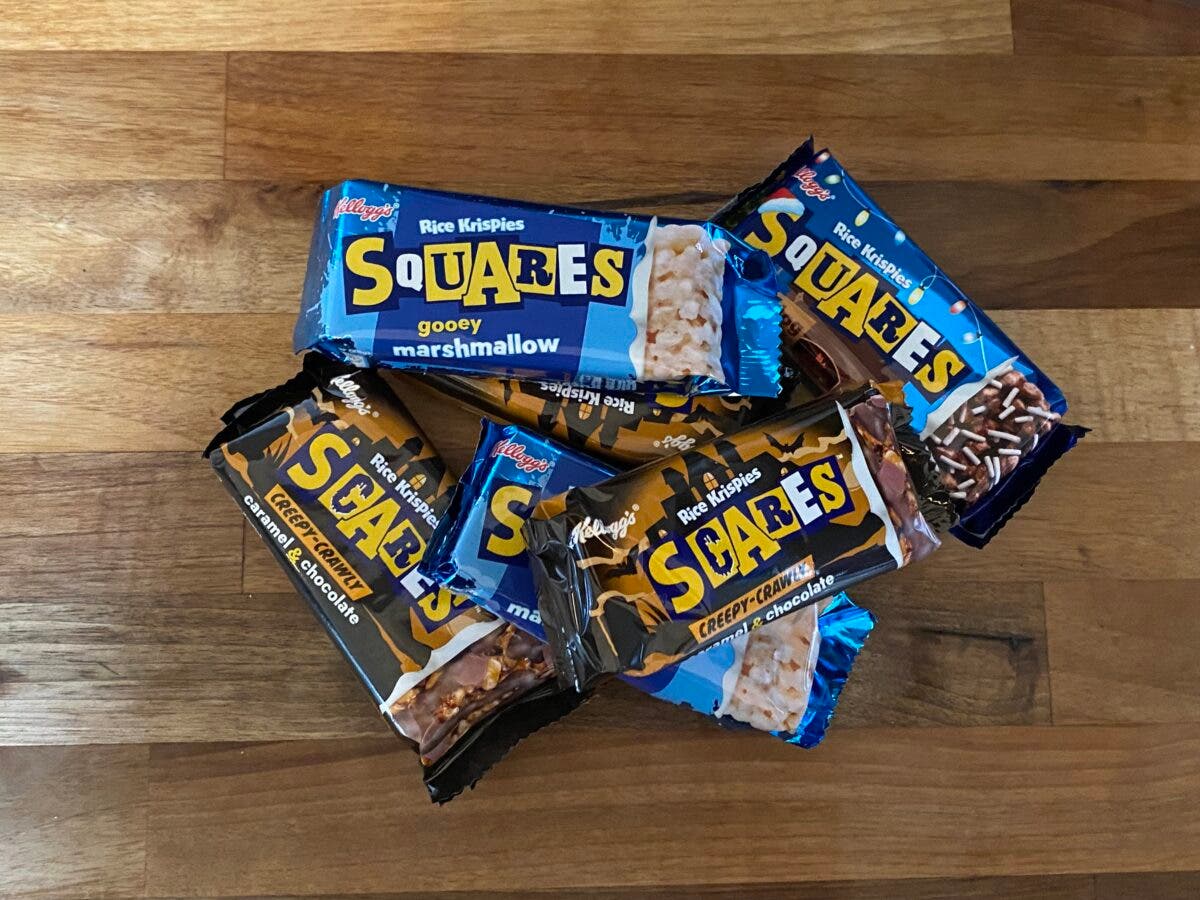 ‘Squares,’ ‘Treats,’ whatever you want to call them, are a cheap, tasty rocket fuel that can work as well as an energy gel. (Photo: Jim Cotton)
The stats (1 x regular original Krispies Treats U.S. version): 150 calories, 29g carbs
Pros: There’s a reason why team chefs churn out their own take on Krispies Treats every race-day morning.
These cereal and mallow cocktails are high-carb, low-fiber, and deliciously sweet, salty, chewy, and crispy all at once.
They’re so nutritionally suited to endurance that they’re the one “real food” that survived the peloton’s shift toward a 100-percent sport-nutrition strategy. The fatty rice cakes of the Team Sky era have been made extinct by their high-G.I. younger siblings.
A standard Krispies Treat contains 29 grams of carbohydrates, making one bar a close replacement for one energy gel.
But before you go throw your cash at Krispies snacks, be warned – they’re so darn tasty you’ll end up eating most of them with your pre-ride coffees.
Cons: Not many.
Shop-bought bars can be tricky to unwrap on the go, so we like to pre-cut them and decant them into a baggie.
Also, watch out for the shrapnel of cereal bits as you chew. They can be a choking hazard.
Gummy sweets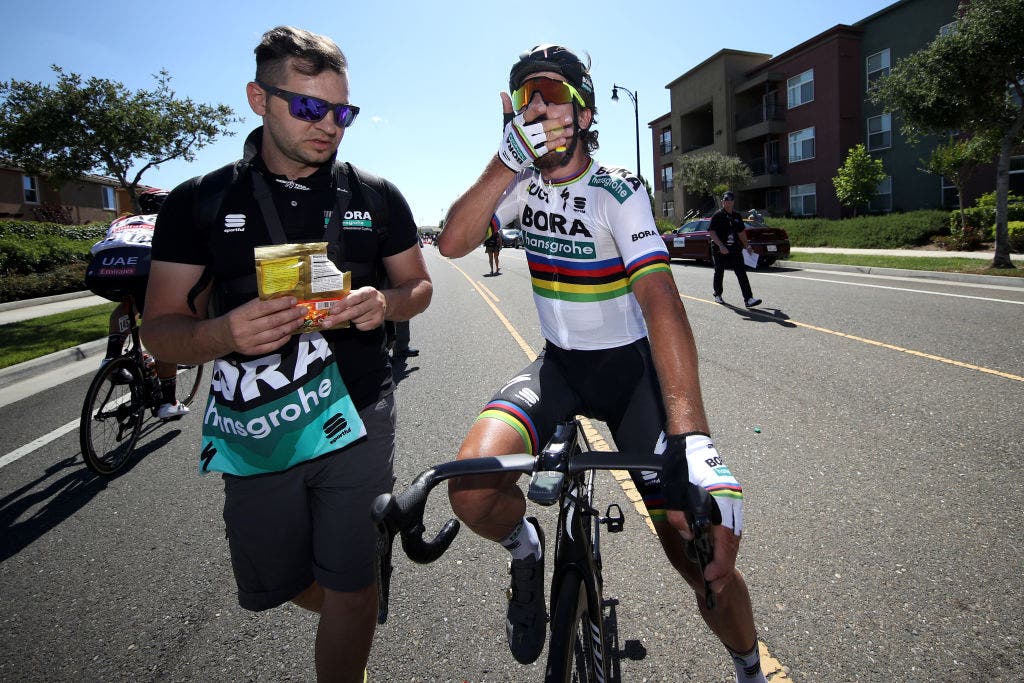 Sagan was on to something when he started scarfing Haribos for a quick sugar boost after a race. (Photo: Chris Graythen/Getty Images for AEG)
The stats (13 Goldbears): 100 calories, 23g carbs
Pros: Peter Sagan was on to something when he started stuffing fistfuls of candy down his throat at the biggest finish lines in pro cycling.
Soft sweets like Haribo Goldbears are basically pure carbs, with almost no calorie “wasted” on protein or fat. They’re one of the fastest-acting, most pure sources of energy you’ll find in the grocery store.
Haribo lists a “serving” of Goldbears as 13 pieces, which will provide 23 grams of carb. But let’s face it, who “only” eats 13 Haribos at once?!
Around 18 bears will provide you the same amount of carbs as a regular 30g energy gel, so if you’re riding, you’ve got the excuse of going large on your portion size.
Cons: Haribos can be hard to chew if you’re breathing hard, so they’re best munched at stoplights and selfie-stops.
Also, it’s very easy to over-fuel and get sick when relying on such a high-volume item, so consider portioning out your candies before you saddle up.
Honey sandwich Honey sandwiches aren’t only for kids. (Photo: Getty Images)
The stats (2 x slices white bread, 1 tablespoon honey): 250 calories, 52g carbs
Pros: Sweet sandwiches with questionable white bread aren’t just for kids.
Anybody who’s slammed a honey sando during a ride will attest to the fact that it’s one of the most satiating “real food” fueling options you can get.
Two slices of white bread and one tablespoon of honey packs a whopping 50g of carbs, and unlike candies and whatnot, provide the mental boost of a “meal.”
The secret to fueling with sandwiches?
Go as cheap and dirty as you can get. Skip the seeded sourdough and choose one of the white loaves that are demonized by every wellness influencer and biohacker on the internet. The refined carbs and low fiber of this nutritional “menace to society” are perfect for providing raw, uncomplicated energy.
Don’t like honey? Switch it for jam.
Cons: Even the most sugary white bread is only around 75 percent carbs, with the rest of the calories coming from protein and fat. That means bread-based bike fuel is best saved for lower-intensity, all-day efforts where metabolic demand is lower.
If you’re packing sandwiches, cut them into quarters and individually wrap each square for easier mid-ride munching.
Coca-Cola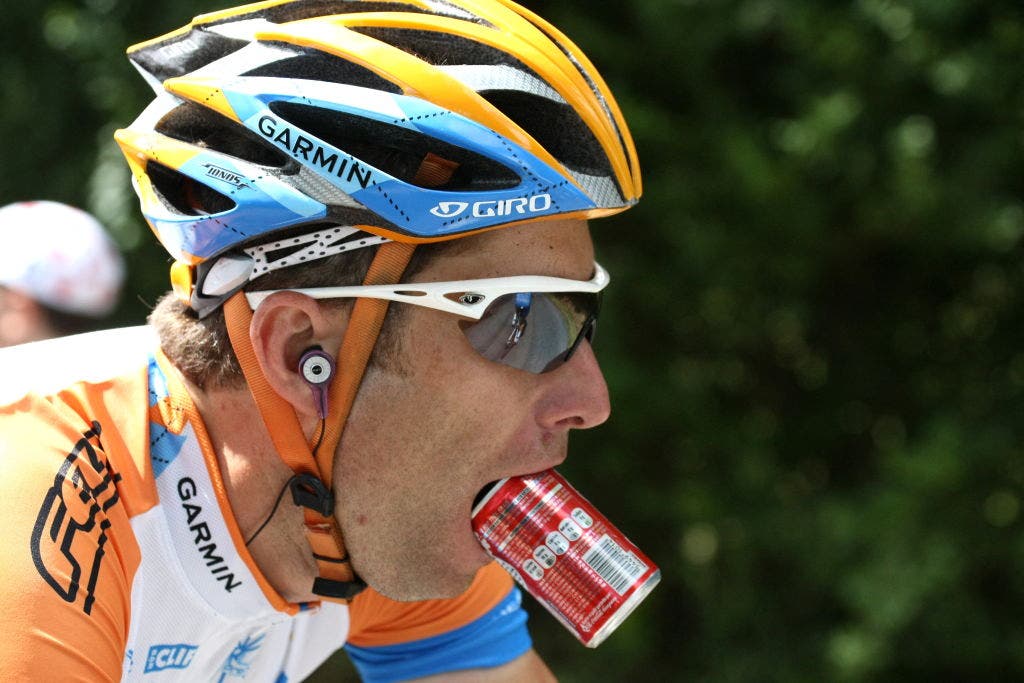 Christian Vandevelde loved a mid-race coke, and who would blame him? (Photo: Getty Images)
The stats (330ml can cola): 139 calories, 35g carbs
Pros: Coca-Cola is the “Red Ambulance” that’s saved every rider or runner at least once. Its sugar and caffeine punch can jump-start even the most beat-down endurance engine.
A regular 330ml can of Cola contains 35 grams of pure sugar, with almost zero protein or fat. That’s more carbohydrate than the majority of energy gels.
The caffeine content of Coca-Cola is relatively low at 33mg per can [most caffeinated gels contain around 100mg], but it’s enough to bring the beneficial buzz of sport’s most popular legal performance enhancer.
Mini colas were once staples of a pro racer’s feed bag, but are becoming relatively rare in a peloton that swigs perfectly formulated sports drinks by the gallon.
If you’re going to stick Cola in your bidon, be sure it’s defizzed. Your nostrils will thank us.
You should also consider your electrolyte needs and supplement if necessary.
Cons: Just go ask your dentist.
Cola kills your teeth just like any high-sugar sports mix, but it does it worse. The fizzy carbonation creates an acidic effect that weakens tooth enamel and can irritate your gums.
Like most fun things, Cola is best dosed in moderation.
Maple syrup and water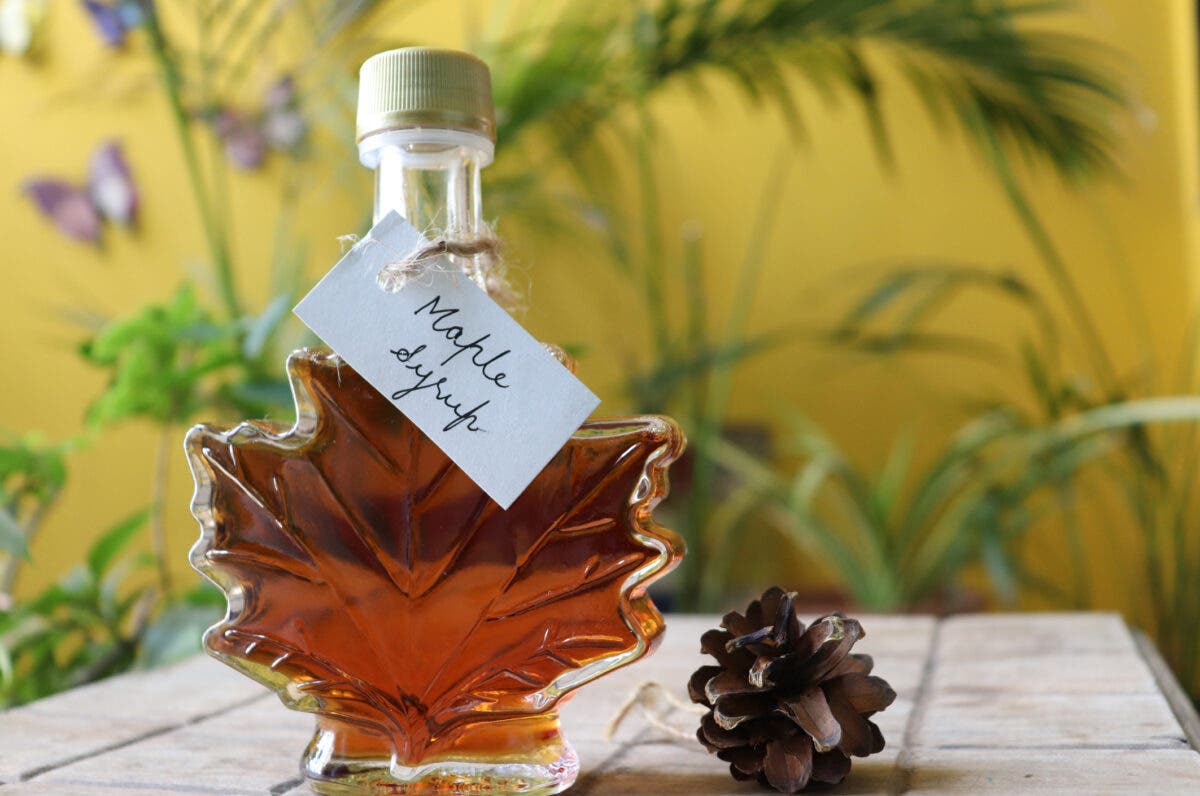 Was this the most cheesy maple syrup image we could find? Pretty much. (Photo: Getty Images)
The stats (2tbsp/ c.35g maple syrup and water): 110 calories, 27g carbs
Pros: If you don’t want to go full-send by making a DIY energy drink with straight sugar and water, be inspired by Ironman legend Lionel Sanders.
The Canadian did his nation proud by resolutely fueling his eight-hour endeavors with maple syrup.
Two tablespoons of “proper” maple syrup contain a solid 27 grams of carbohydrate, which is just about on-par with an energy gel. There’s also the benefit of a bunch of Vitamin B and manganese. And to be clear here, we’re talking OG maple syrup from the sap of a tree, not the artificial high fructose corn syrup alternative.
A word of caution – don’t go slugging straight from one of those boujie maple bottles during your ride. Maple syrup is fuel, not hydration.
The easiest way to fuel with maple syrup is to mix two tablespoons (around 35ml) with water to make a 500ml energy drink. If you’re not supplementing with electrolytes and you’re a heavy sweater, maybe add a dash of salt, too.
Cons: At ~$17 for a large bottle, maple syrup is a costly source of sugar. A bag of maltodextrin won’t taste as good or have any micronutrients, but it will go a lot further per dollar.
Grocery-store snacks or energy gels and drinks: What’s best?
Comparing energy gels and sport drinks to real food is like comparing apples to oranges … but sugarier.
One is fuel that’s perfectly formulated for maximal carbohydrate absorption and ease of use. The other is food.
But assessing one vs. the other is an interesting thought experiment that might help you rethink both your grocery haul and your fueling strategy.
Our take?
If you’re racing or in a key training block, invest in the effectiveness and efficiency of energy gels and drinks. Otherwise, load your jersey with gummy bears and save your cash for a coffee.