If you’ve vowed to start strength training but can’t seem to make a routine stick, you’re not alone. Nathaniel Serrurier, CSCS, a personal trainer and doctoral student at Columbia University’s RunLab, finds that many runners dedicate time to hitting the road but skip the gym altogether.
“Historically, strength training hasn’t been something that’s been very prioritized,” he tells Runner’s World. “There’s not necessarily resistance, but I think that runners are less inclined to dedicate training time and effort to strength training.”
And we get it: Runners want to run. But once you start thinking about strength training as a programming component that optimizes your running rather than an ancillary activity that eats up precious workout time, it can be easier to commit to the practice. And then once you start reaping the benefits of strength training, you’ll wonder why it took you so long to get started.
🏋 Want follow-along workouts? Check out our full video program on strength training:
Watch the Runner’s World Guide to Strength
Advantages You’ll Gain By Starting a Strength Routine
“Strength training is one of the best things that runners can do to not only stay healthy, but also improve performance,” Serrurier says. He explains that running is essentially a form of “controlled falling” that repeatedly places load on the body’s muscles, bones, joints, and connective tissues. “What we want is that stability and that foundation for your muscles to take that load,” he says. Full-body strength training fortifies the body, enabling it to better withstand repeated pounding and avoid injuries.
Strength training also allows you to target weaknesses that may otherwise lead to problematic strength imbalances. For example, a gluteus medius weakness can put extra stress on the knees. Or, if the hamstring muscles can’t adequately handle the force put upon them, the body may recruit the hip flexors to pick up the slack. These compensations can work temporarily, but repeatedly asking a muscle or joint to do a job it’s not designed for typically leads to pain and injury.
From a performance perspective, strength training can make you a more powerful and efficient runner. Strong glute and leg muscles allow you to charge up a hill or crank out a finishing kick. Core strength keeps your posture in check as the mileage racks up, and training the upper body adds oomph to your arm swing.
The right strength program—one that includes movements that are relevant to running—can also help train the brain and nervous system to activate the appropriate muscles.
“Being intentional and having a specific weight-training program can really help you develop that mind-muscle connection and neuromuscular control so that you understand, ‘okay, I’m pushing off, and my hip is going into extension. How do I contract my glute to propel me forward?’” Serrurier says. “There’s a lot to be said about the translation between being able to do these movements in the gym and working on the strength of these muscles, and then being able to feel that same contraction and input when you’re running.”
Related StoryTips for Runners Who Are New to Strength Training
Building a strength base is a lot like building an endurance base: It’s best to start slow, progress gradually, and avoid doing too much too soon.
“I’m a huge fan of doing bodyweight movements to begin with,” Serrurier says. Performing strength exercises without dumbbells or a barbell allows you to practice proper form without added resistance. That way, once you (gradually) add load, you’ll have already established the good habits that allow you to maintain the correct posture and alignment for each lift.
At first, aim to strength train twice per week, but don’t swap your only rest days for lifting. “I’m a huge believer in having complete rest days,” Serrurier says. Instead of sacrificing recovery, he recommends doing strength-training workouts on the same days as shorter runs. As you learn the movement patterns—especially when you’re not training for a race—start with strength workouts first so you’re fresh, he suggests. If you are running fewer days per week, say three, and can still have at least one complete rest day per week, then you can do run and strength workouts on different days.
At first, runners should focus on simple exercises that emphasize basic, functional movement patterns, like squatting, lunging, pushing, pulling, and hinging at the hip. Mastering these movements lays the groundwork for more advanced workouts and heavier loads. “You want to make sure you feel comfortable performing those movements with correct form and control, and then we can start adding weight and making things a little more dynamic,” Serrurier says.
Related Story4-Week Beginner Strength-Training Program for Runners
Using Serrurier’s input, we designed a four-week strength-training program specifically for runners who are new to lifting. There are four full-body workouts in total, and each one includes beginner-friendly exercises that will help you form a strength-training foundation that you can build upon.
Where appropriate, we’ve added movement progressions you can use to increase the level of difficulty. For exercises without specified progressions, stick with the original exercises or make the movement harder by using more resistance or heavier weights.
For the first two weeks, we suggest sticking to the introductory exercises. During weeks three and four, consider incorporating some or all of the movement progressions.
To follow the program, you will need a large resistance band, a small looped resistance band, and a bench, step, or couch to start. To add load, you’ll need at least one set of dumbbells.
Here’s the recommended schedule:
Week 1: Workout A; Workout BWeek 2: Workout C; Workout DWeek 3: Workout A, with movement progressions; Workout B, with movement progressionsWeek 4: Workout C, with movement progressions; Workout D, with movement progressions
Workout A
Do the exercises listed below in order, performing 2-3 sets of each exercise. Complete all sets of one exercise before moving onto the next on the list, resting 30-60 seconds between sets. Rest for 1-2 minutes between exercises.

Banded Good Morning | 20 reps
1. Stand with feet hip-width apart, standing on a long looped resistance band with both feet, other end around the neck.
2. With a flat back and knees slightly bent, hinge at the hips, sending butt straight back and lowering torso until you feel a deep stretch in the hamstrings. Keep back flat, core engaged.
3. Engage glutes and drive feet into the floor to stand back up.
3. Repeat.
Progression: Dumbbell Deadlift (shown) | 12 reps
1. Stand with feet hip-width apart, holding a dumbbell in each hand in front of hips, palms facing thighs.
2. Hinge at the hips, sending butt straight back and bend knees slightly to lower dumbbells along the front of legs, pausing when torso is parallel to the ground. Keep back flat, core engaged and shoulders down and back (avoid rounding spine).
3. Drive through the feet to stand back up, keeping dumbbells close to the body throughout. Fully extend hips and knees, squeezing glutes at the top.
4. Repeat.
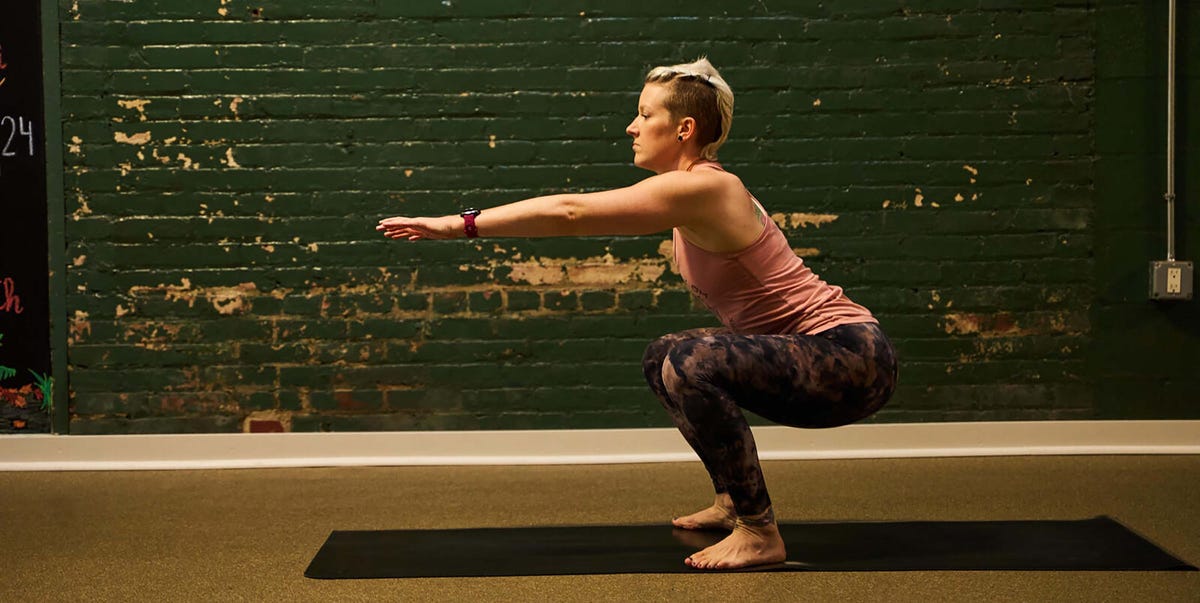
Air Squat (shown) | 15 reps
1. Start standing with feet just wider than hip-width apart, toes pointed slightly out, clasp hands at chest for balance.
2. Send hips back and down, bending knees to lower down as far as possible with chest lifted.
3. Drive through heels to stand back up.
4. Repeat.
Progression: Goblet Squat | 12 reps
Perform the same movement holding a dumbbell vertically at chest, with both hands.
Wall Push-Up (shown) | 10 reps
1. Start in a plank position, with hands against a wall, stepping feet back so you’re on a diagonal, shoulders over wrists, core, glutes, and legs engaged.
2. Bend elbows to lower chest to the wall. Keep core engaged and hips in line with the rest of body.
3. Push back up to plan.
4. Repeat.
Progression: Push-Up | 8 reps
Take your hands to a lower surface, like a couch or chair, or all the way to the floor to perform a full push-up.
Banded Bent-Over Row | 20 reps
1. Stand on a long looped resistance band with both feet hip-width apart.
2. With a flat back and knees slightly bent, hinge at the hips, sending butt straight back, until torso is nearly parallel to the floor. Allow arms to hang straight, palms facing each other.
3. Holding this bent-over position, pull elbows back, hands reaching hips, squeezing shoulders blades together. Pause here.
4. Lower arms.
5. Repeat.
Progression: Dumbbell Bent-Over Row (shown) | 12 reps
Perform the same move, but holding a dumbbell in each hand, palms facing each other. Row the weight to hip, keeping shoulders down and back and elbows close to rib cage.
Split Squat | 12 reps
1. Stand with feet shoulder-width apart.
2. Step forward with right leg and plant front foot on the floor.Keeping hips straight, raise back heel so only the toes of rear foot are on the ground. This is the starting position.
3. Lower knee of back leg toward the floor, keeping front knee and ankle in line. Both knees should bend 90 degrees. Pause.
4. Use both legs to push back to the starting position.
5. Repeat for 12 reps, then switch sides.
Progression: Dumbbell Split Squat (shown) | 10 reps
Perform the same movement holding a dumbbell in each hand, down at sides.
Save WorkoutWorkout B
Do the exercises listed below in order, performing 2-3 sets of each exercise. Complete all sets of one exercise before moving onto the next on the list, resting 30-60 seconds between sets. Rest for 1-2 minutes between exercises.
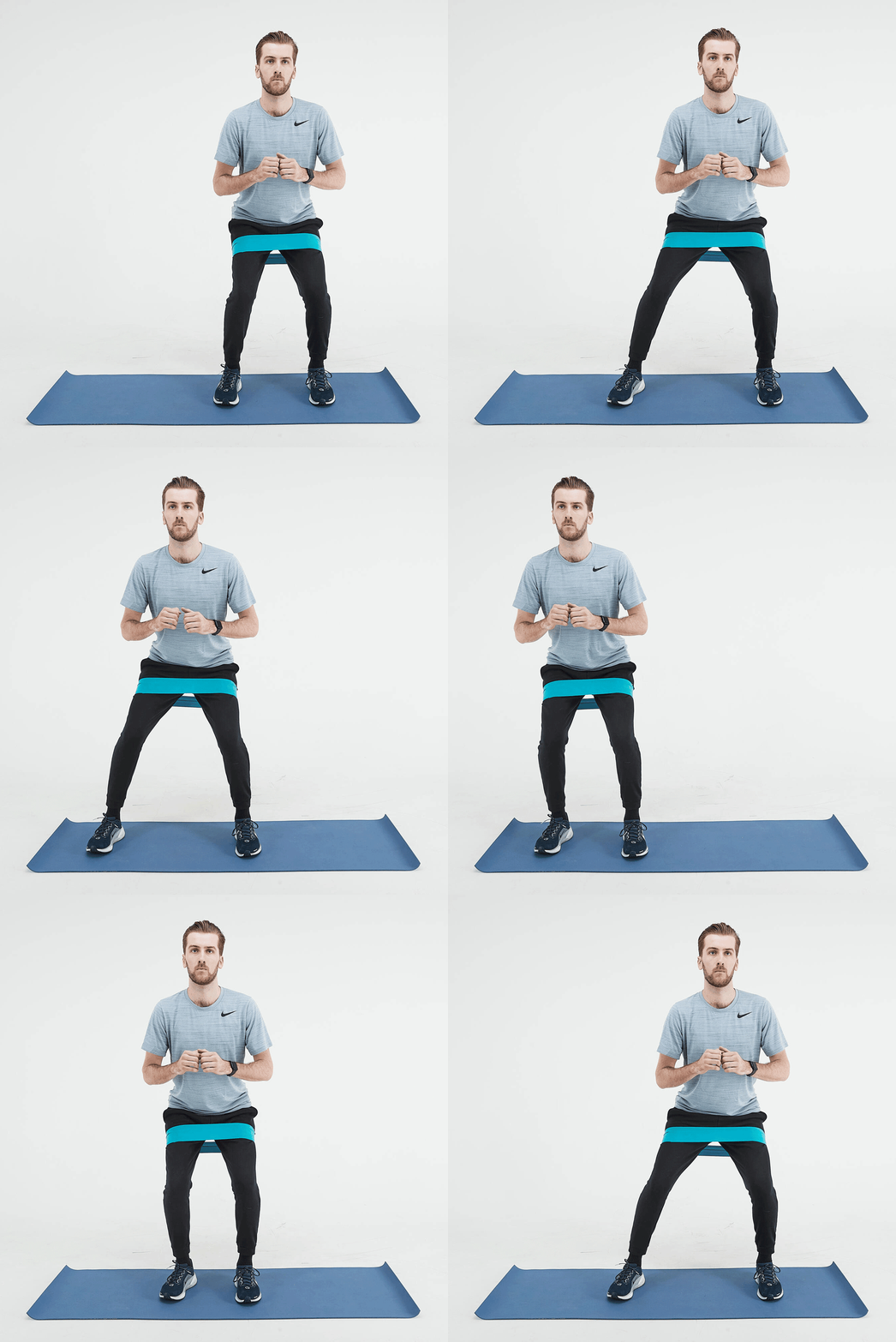
Banded Lateral Walk (shown) | 12 steps each side
1. Loop a small resistance band around both legs just above knees.
2. With feet shoulder-width apart and the knees slightly bent, take 12 steps to the right, then 12 steps to the left.
Progression: Lateral Walk | 10 reps in each direction
Perform the same exercise, but move band around feet.
Trevor Raab
Sumo Air Squat (shown) | 15 reps
1. Stand with feet wider than shoulder-width apart and toes turned out 45 degrees.
2. With pelvis in a neutral position, send hips back and down, and bend at knees until thighs are parallel with the ground. Keep knees and toes in line and chest lifted as you squat.
3. Press through feet to stand back up.
4. Repeat.
Progression: Goblet Sumo Squat | 10 reps
Perform the same movement holding a single dumbbell vertically at chest height with both hands.
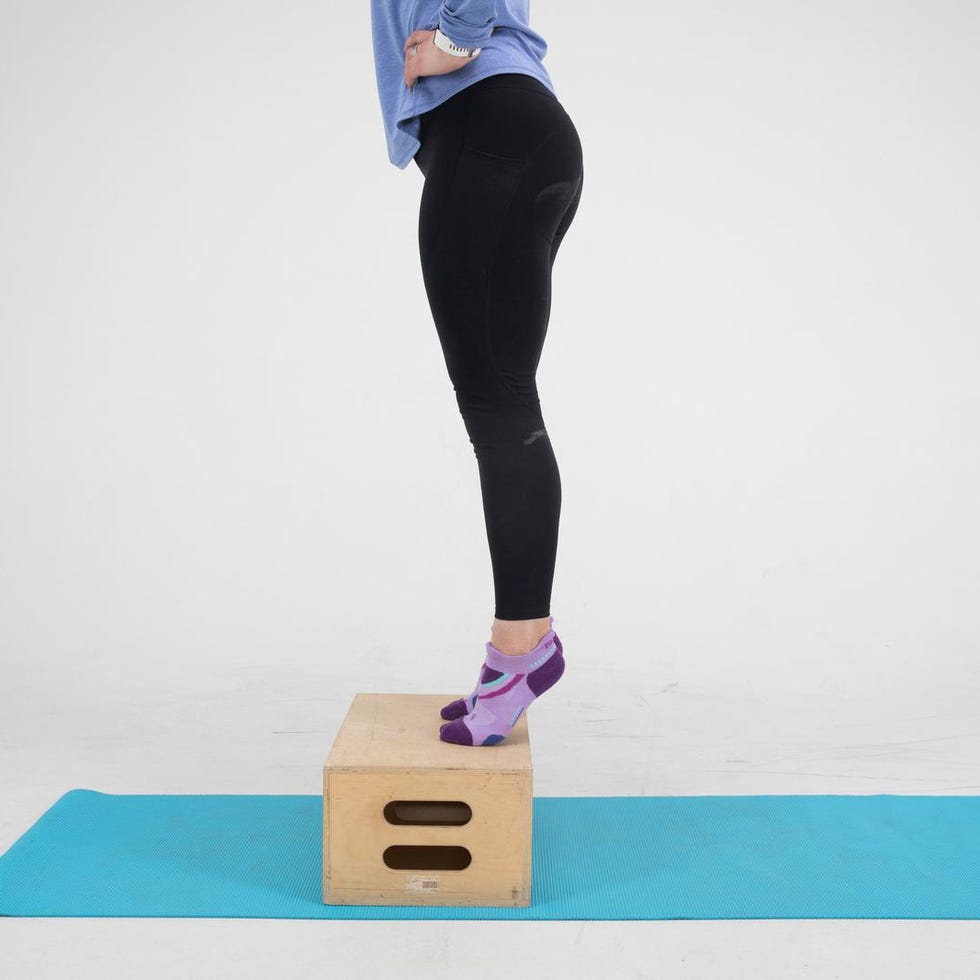
Isometric Calf Raise (shown) | 10 reps
1. Stand with feet hip-width apart and arms at sides.
2. Engage abs for stability and roll up onto the balls of feet, lifting both heels off the floor.
3. Hold for 5 seconds, then lower heels.
4. Repeat.
Progression: Dumbbell Calf Raise | 8 reps
Perform the same exercise holding a dumbbell in each hand, down by sides.
Thomas Hengge
Dumbbell Overhead Press | 12 reps
1. Stand with feet shoulder-width apart and dumbbells racked at shoulders, palms facing each other.
2. Engage core and press the dumbbells overhead until arms are straight. Keep shoulders down and back, and back flat with core engaged. (Don’t shrug shoulders up to ears).
3. Lower weights back to shoulders.
4. Repeat.
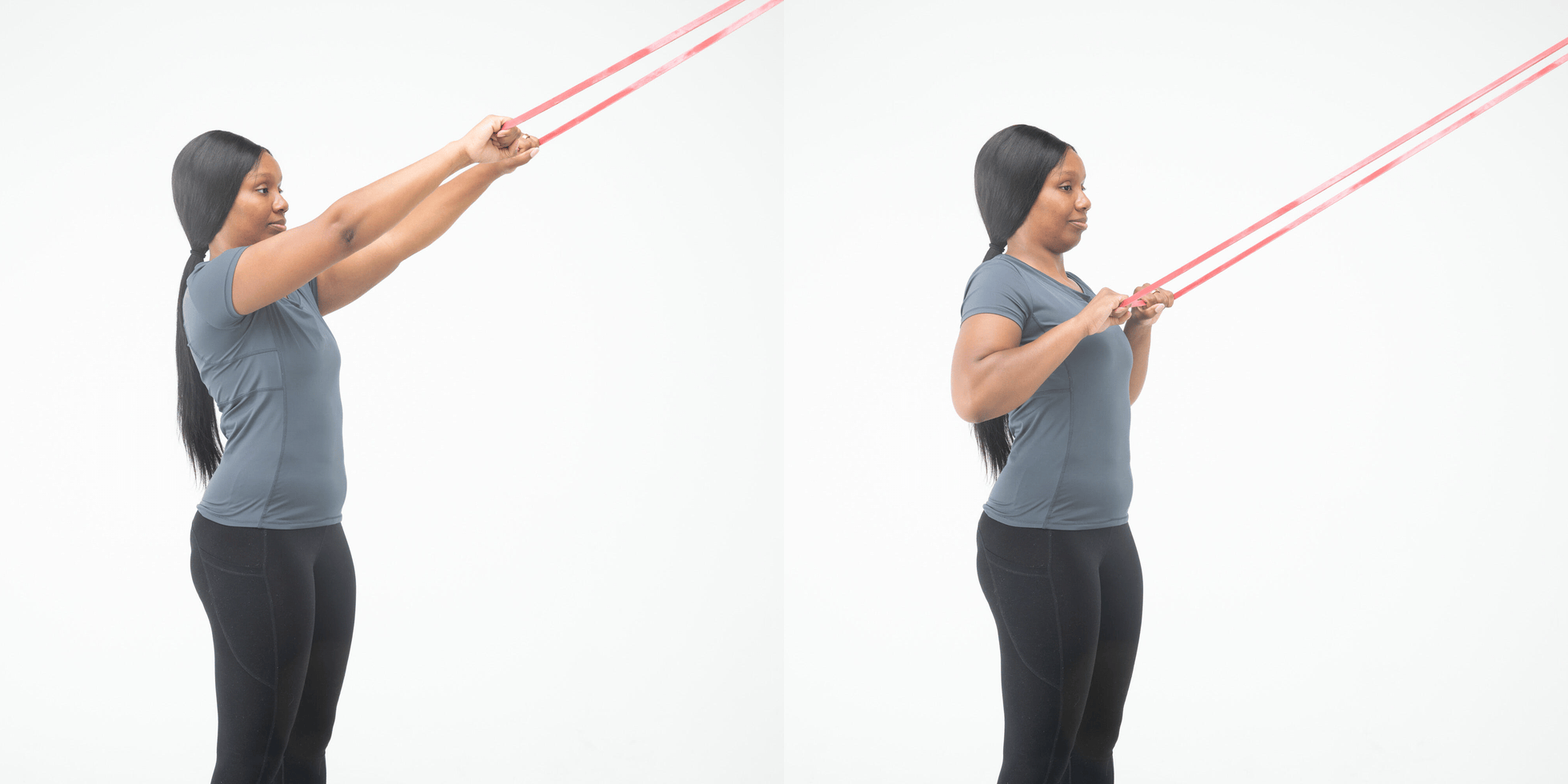
Banded Lat Pull-Down | 12 reps
1. Anchor a long looped resistance band above head and grab the opposite end with both hands, shoulder-width apart, palms facing each other.
2. Step back so that your arms are extended in front of you and there’s tension on the band. This is the starting position.
3. Keeping arms straight and torso upright, pull elbows down and back back to sides.
4. Pause, then extend arms.
5. Repeat.
thomas hengge
Save WorkoutWorkout C
Do the exercises listed below in order, performing 2-3 sets of each exercise. Complete all sets of one exercise before moving onto the next on the list, resting 30-60 seconds between sets. Rest for 1-2 minutes between exercises.
Bear Crawl Hold | 60 sec
1. Start on hands and knees, wrists under shoulders and knees under hips.
2. Keeping back flat, use core to lift knees a few inches off the ground.
3. Hold for 60 seconds total. Break time up into shorter increments, if necessary (for example, 2 sets of 30 seconds, or 3 sets of 20 seconds).
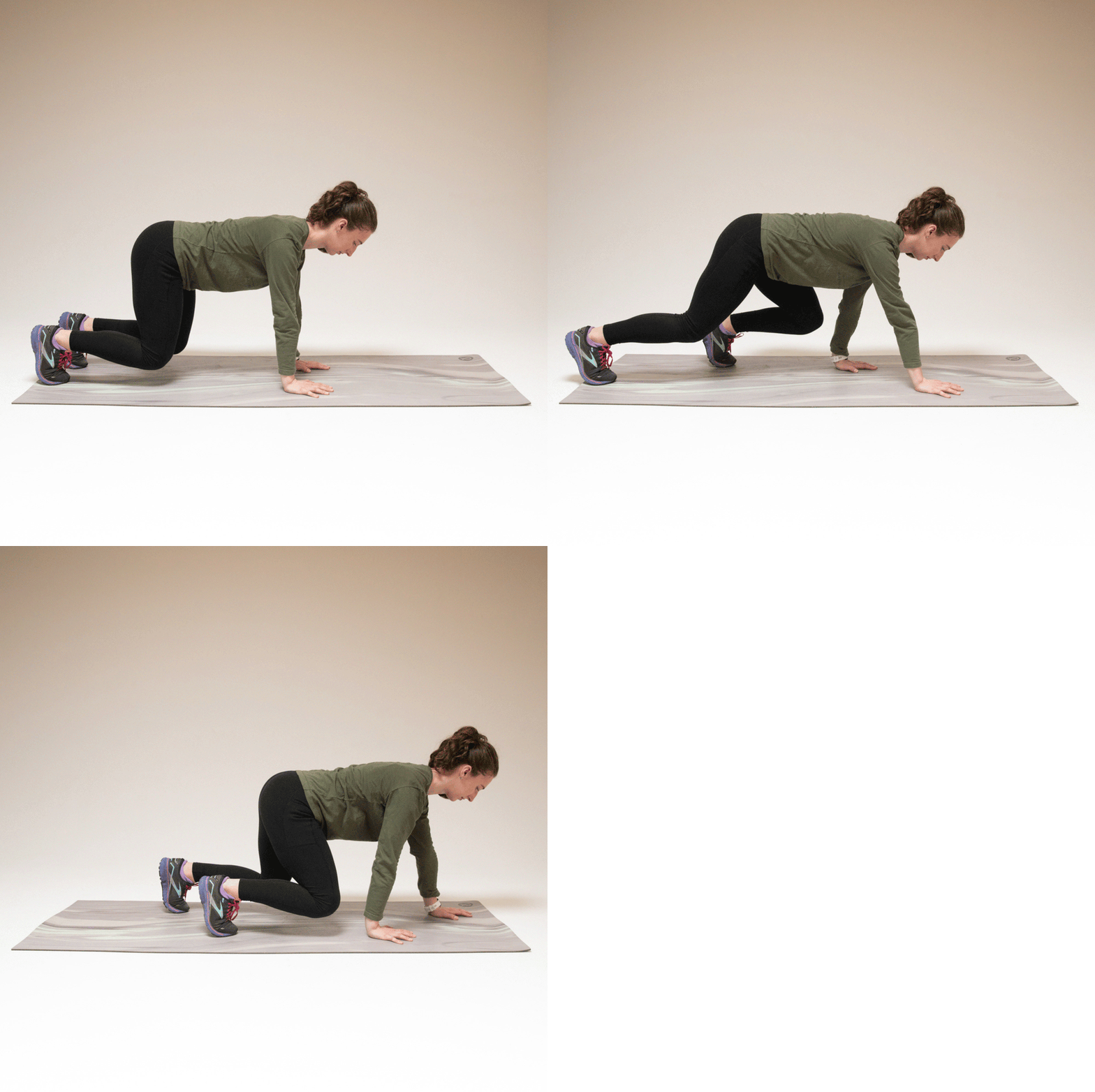
Progression: Bear Crawl (shown) | 5 reps
1. Start on hands and knees, wrists under shoulders and knees under hips.
2. Keeping back flat, use core to lift knees a few inches off the ground.
3. Step right hand and left foot forward. Then step left hand and right foot forward. Look down and out, keeping neck neutral.
4. Reverse the movement to crawl backward two steps.
5. Continue alternating, crawling forward and backward.
6. Do 5 reps.
Thomas Hengge
Lateral Squat (shown) | 12 reps on each side
1. Stand with feet wide, arms at sides or hands clasped in front of chest.
2. Bend right knee as you sink weight into right hip and push butt back. Keep left leg straight and chest up.
3. Push through right foot to return to straighten leg.
4. Repeat on the left side.
5. Continue alternating.
Progression: Dumbbell Lateral Squat | 8 reps on each side
Perform the same movement holding a dumbbell in each hand, weight at shoulders, elbows bent (racked position).
Reverse Lunge | 12 reps on each side
1. Stand with feet hip-width apart, arms at sides or hand on hips.
2. Take a big step backward with right foot and bend both knees about 90 degrees. Keep left knee in line with second toe and stacked above left ankle, right knee hovering off the floor. Maintain a neutral spine and lifted chest.
3. Push through the feet to stand back up, right foot stepping forward.
4. Repeat for 12 reps total, then switch sides.
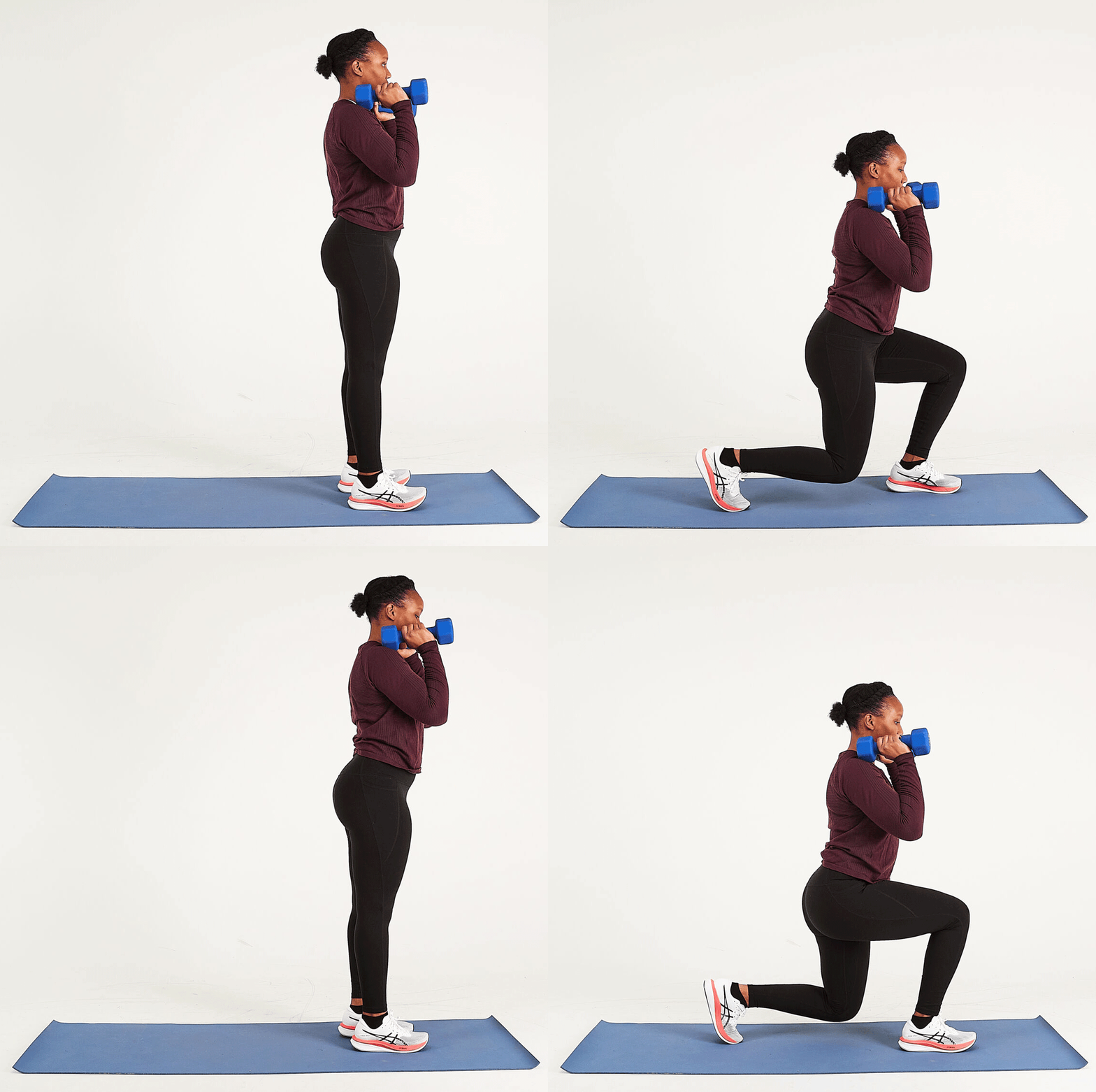
Progression: Dumbbell Reverse Lunge (shown) | 10 reps on each side
Perform the same exercise holding a dumbbell in each hand, elbows bent with weight at shoulders (racked position).
Trevor Raab
Renegade Row | 12 reps per side
1. Start on all fours, wrists under shoulders and knees under hips, with hands on dumbbells
2. Maintaining a flat back and hips and shoulders square to floor, pull one dumbbell up toward hip. Keep elbow close to torso.
3. Lower dumbbell to floor and repeat on the other side.
4. Continue alternating.
Progression: Renegade Row in Plank (shown) | 8 reps per side
Perform the same exercise from a plank position with the knees off the floor. Continue alternating rows, keeping hips as steady as possible. Step feet wider for more support.
Hip Thrust | 12 reps
1. Sit on the floor with knees bent and feet planted hip-width apart. Rest shoulders and upper back on a stability ball, couch, or other elevated surface.
2. Looking down toward belly button, drive feet into floor, engage glutes, and lift hips off the ground, forming a straight line from shoulders to knees.
3. Slowly lower hips back toward the floor.
4. Repeat.
Progression: Weighted Hip Thrust (shown) | 10 reps
Perform the same exercise, holding a dumbbell across hips.
Save WorkoutWorkout D
Do the exercises listed below in order, performing 2-3 sets of each exercise. Complete all sets of one exercise before moving onto the next on the list, resting 30-60 seconds between sets. Rest for 1-2 minutes between exercises.
Plank Hold | 60 sec
1. Get into a high plank position with wrists under shoulders, pelvis tucked slightly forward, and core engaged. Pull belly button up to spine. Body should form a straight line from head to heels.
2. Place feet about hip-distance apart or wider for more stability.
3. Hold for 60 seconds total. Break time up into shorter increments, if necessary (for example, 2 sets of 30 seconds, or 3 sets of 20 seconds).
Progression: Plank Shoulder Tap (shown) | 60 sec
1. While holding the plank position, tap right hand to left shoulder.
2. Place in plank.
3. Then tap left hand to right shoulder.
4. Place in place.
5. Continue alternating for 60 seconds. Break time up into shorter increments, if necessary (for example, 2 sets of 30 seconds, or 3 sets of 20 seconds).
Alternating Step-Up (shown) | 12 reps per leg
1. Place left foot on a bench or box and push up through foot to extend hips and lift yourself up, bringing right foot up, driving knee toward chest at the top.
2. With control, step back down with right foot, then left.
3. Repeat, starting with right foot.
4. Continue alternating.
Progression: Dumbbell Step-Up | 8 reps per leg
Perform the same exercise holding a dumbbell in each hand, arms down at sides.
Side-Lying Leg Raise | 12 reps per side
1. Lie on left side with legs extended out straight. Prop yourself up on left forearm and rest right hand on floor in front of you for balance.
2. Keeping feet parallel and hips stacked, raise right leg only as high as you can without rotating forward or backward.
3. Lower with control.
4. Do 12 reps then switch sides.
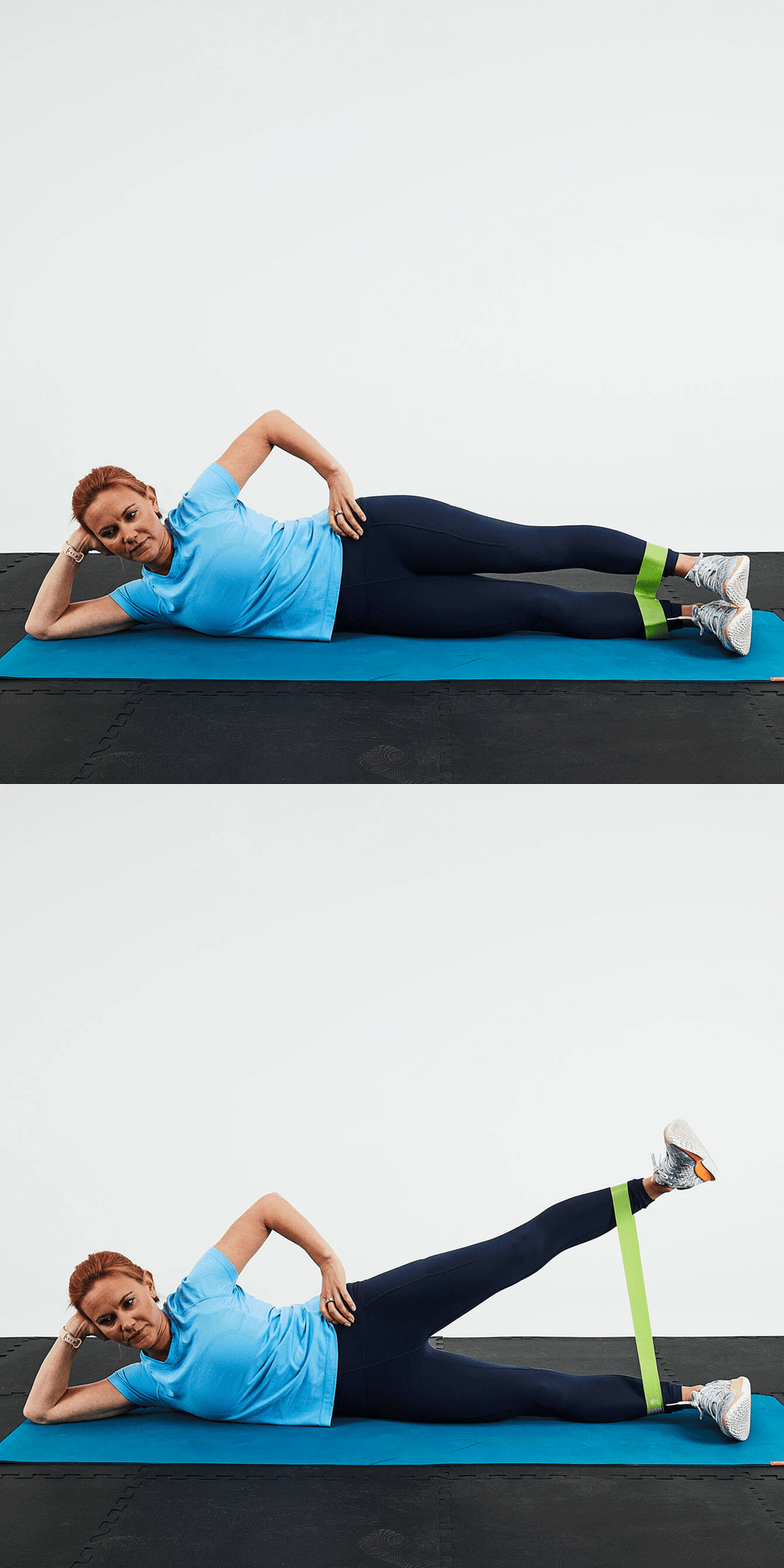
Progression: Banded Side-Lying Leg Raise (shown) | 10 reps per side
Perform the same exercise wearing a small looped resistance band looped around ankles. Do 10 reps on each side.
Trevor Raab
Banded Pull-Apart | 15 reps
1. Stand with feet shoulder-width apart, arms extended straight in front of body and raised to shoulder height in front of you. Hold the ends of a large resistance band with both hands, palms facing floor.
2. Engage core and pack shoulders down and back. Pull fists away from each other, forming a T with arms.
3. Slowly bring hands back together.
4. Repeat for 15 reps total.
Progression: Reverse Fly (shown) | 12 reps
1. Stand with feet shoulder-width apart and dumbbells in hand. Hinge at hips by sending glutes straight back, so that torso is nearly parallel to floor, knees softly bent.
2. Let the dumbbells hang straight down, palms facing each other. This is the starting position.
3. Keeping back flat and core engaged, lift arms up and out to sides until they’re in line with shoulders. Upper body will form a “T,” with a slight bend in elbows.
4. Lower weights back down with control.
5. Repeat.
Tempo Squat | 15 reps
1. Start standing with feet just wider than hip-width apart, toes pointed slightly out, clasp hands at chest for balance.
2. Send hips back and down, counting to 3 as you slowly bend knees and lower into a squat.
3. At the bottom of the squat, pause for 2 seconds, then drive through heels to quickly return to standing.
4. Repeat using 3/2/1/ tempo.
Progression: Dumbbell Tempo Squat (shown) | 12 reps
Perform the same exercise holding a dumbbell in each hand, either racked at shoulder height or down at sides.
Save WorkoutDownload PDF
Related Story