Botanical ingredients are evolving beyond their roots in traditional remedies to standardized, science-supported solutions that meet the natural wellness demand for targeted health benefits in women’s, metabolic, mental, and gut health.
Nutrition Insight meets with leading suppliers Akay Bioactives, Greenvit, Ingredients by Nature, Phynova, Layn Natural Ingredients, and MartinBauer Nutraceuticals to discuss trending health areas and ingredients, research advances, and challenges in the growing botanical wellness space.
“There is a lot of energy in the market right now, and you can feel it,” says Trisha Sugarek MacDonald, Ph.D., market development manager at Akay Bioactives.
“This momentum is driven by two major forces: we live in a fast-paced, technology-driven environment where people feel constant pressure to keep up, and for the first time in recorded history, the global population is older overall.”

She also observes a shift in the market toward botanicals that do more than provide traditional wellness support. “Our partners want more because consumers are increasingly savvy and expect products that work and align with their values. They want measurable, fast-acting, bioavailable results backed by science, along with sustainability and clean label sourcing.”
Rafał Pietruszyński, CEO of Greenvit, adds: “One of the most exciting developments in the botanical sector is the increasing use of whole-matrix extracts that interact with complex biological systems, such as cellular metabolism and the gut microbiota.”
He notes that this marks a shift toward a more holistic, systems-based approach to botanical science, leveraging the full potential of compounds naturally present in plants.
“From Greenvit’s perspective, the most exciting ‘new’ botanical ingredients are not necessarily newly discovered plants, but next-generation, standardized berry extracts that deliver measurable bioactive potency and reproducible performance — particularly polyphenol- and anthocyanin-rich aronia and anthocyanin-standardized elderberry.”
Moving to clinical human trials
While many botanicals relied on traditional use narratives and third-party science a decade ago, Sugarek MacDonald says that the market now expects credibility and transparency. She underscores that randomized, double-blind, placebo-controlled human trials, biomarker analyses, and pharmacokinetic data are becoming the norm rather than the exception.
 Sugarek MacDonald says that understanding an ingredient’s absorption and measurable outcomes strengthens the credibility of solutions.Noting that “science matters as much as sourcing,” Akay Bioactives has been developing delivery technologies and botanical ingredients for nearly two decades.
“Understanding how an ingredient behaves in the body, from absorption pathways to measurable outcomes, strengthens the credibility of our plant-based solutions and elevates them beyond conventional materials,” details Sugarek MacDonald.
She highlights several examples of this substantiation in Akay Bioactives’ portfolio. CardaMind, a standardized black cardamom fruit extract, demonstrated measurable cognitive energy within one hour and sustained effects up to five hours without a crash.
Trials on the fenugreek composition FenuSmart evaluated the same endpoints across pre-, peri-, and post-menopausal women, showing life-stage hormonal support. Moreover, Sugarek MacDonald says the company’s latest clinical study on Tenzara, a curcumin-boswellia complex, shows meaningful improvements in comfort and mobility after two weeks.
Doug Lynch, commercial lead at Ingredients by Nature, adds that researchers are increasingly exploring how botanicals interact with physiological pathways related to metabolism, inflammation, and the gut microbiome.
“This approach allows for more responsible interpretation of results and helps bridge the gap between traditional botanical use and modern nutritional science. In some cases, published studies have also explored how specific flavonoids may be associated with supporting our body’s own metabolic hormones, such as GLP-1, offering insights into potential mechanisms without overstating outcomes.”
Although Ingredients by Nature secured three patents for its Eriomin citrus extract covering specific compositions, mechanisms of action, efficacy, and natural support for blood glucose and GLP-1, he cautions that companies in general may face challenges securing intellectual property for natural products.
Health benefits
Greenvit’s Pietruszyński highlights the categories of metabolic and gut health as experiencing the strongest demand growth for botanical ingredients.
“Metabolic wellness is increasingly tied to inflammation, endothelial function, and oxidative stress — areas where polyphenol-rich berry extracts are widely explored. For Greenvit, Aronvit is especially relevant here, supported by reported clinical findings showing improvements in markers such as total and LDL cholesterol, as well as a positive influence on GLP-1 levels through inhibition of the DPP IV enzyme.”
 Pietruszyński says metabolic and gut health are experiencing the strongest growth in demand for botanical ingredients.This enzyme, found on the surfaces of many cell types, plays a critical role in degrading hormones such as GLP-1, which regulate blood sugar. Pietruszyński says that Aronvit’s mechanism, combined with other beneficial metabolic effects, suggests the potential use of aronia as a natural support in the management of type 2 diabetes and other metabolic disorders.
“A major nutraceutical trend is the move from ‘gut comfort’ to microbiome-informed health, including links to mood, cognition, and metabolic regulation,” he adds.
According to Pietruszyński, polyphenol-rich berries are increasingly positioned as part of microbiome-forward strategies, as scientific literature increasingly supports the idea that dietary polyphenols interact with the gut microbiota, producing metabolites that may contribute to systemic effects.
“In practical terms, this supports the growing interest in polyphenol-driven microbiome modulation as a companion approach to biotics, especially in formulations targeting stress resilience and metabolic balance.”
Emerging botanicals
Although the experts note that many innovations in the botanical market stem from next-generation solutions based on traditionally used ingredients, Lisa Offringa, Ph.D., scientific affairs manager at Phynova, highlights lesser-known species emerging in the market.
“One of my favorites is Asparagus racemosus or Shatavari,” she details. “With the growing interest in women’s health and plant medicine, Shatavari has a strong combination of these focus areas, and it has multiple clinical trials backing up its action for women’s health.”
“When women were previously turning to more common phytoestrogens like soy, red clover, and hops, Shatavari provides a multifaceted mechanism to support women in addition to estrogen receptor modulation.”
Another plant Offringa points to is Ocimum tenuiflorum, or holy basil. “Companies are researching it more deeply and standardizing it so consumers have more confidence in what is in their supplement stack.”
While this traditional Ayurvedic plant has been on the market for a while, she observes a resurgence in research and positioning to support occasional stress by modulating multiple pathways, including the hypothalamic-pituitary-adrenal axis. This is the body’s primary stress response system.
She also highlights a movement toward upcycling botanical waste across the sector; for example, citrus and grape peels are repurposed after their primary use in juice or wine is exhausted.
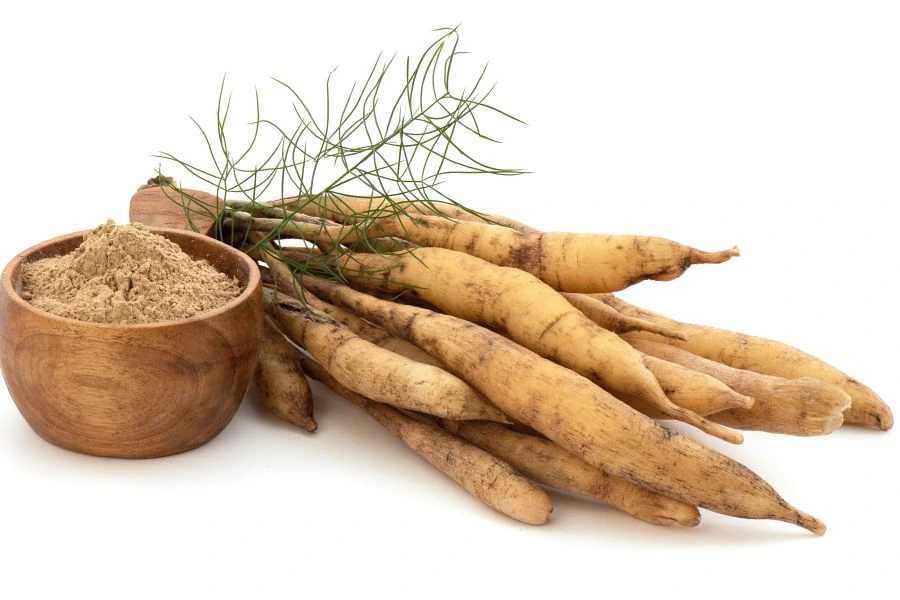 Offringa says Shatavari offers benefits in women’s health, backed by multiple clinical trials on estrogen receptor modulation.“This is a defining time to recognize that waste from one industry can be useful to another. The polyphenols found in these two upcycled fruits can support vascular and metabolic wellness.”
Polyphenols on the horizon
Jim Roza, chief scientific officer at Layn Natural Ingredients, weighs in on other botanical ingredients on the horizon. “Herbs that support GLP-1 receptor agonists and help mitigate the manifestations of these drugs are gaining recognition for the roles they play in weight management.”
For example, he says there is evidence that quercetin — a flavonoid found in apples, berries, and red wine — improves the effects of the GLP-1 medication liraglutide. Along with the polyphenol resveratrol from grape skin and berries, it can attenuate muscle wasting.
“For beauty-from-within, herbs such as ferulic acid from rice bran and phloretin from apples reduce pigmentation and brighten skin. Proanthocyanidins from grape seed and naringin from pomelo can help strengthen and improve the stability of collagen.”
Roza notes that American ginseng is emerging in the US market for its stress and immune-related conditions, which had not been widely recognized in the country. “Prized in Asia for its immuno-stimulating properties, it is now beginning to warrant the attention that was once generally reserved for Korean Panax ginseng.”
Overcoming supply challenges
While there is growing market demand and consumer interest in botanicals, companies face sourcing and supply challenges. To address this, botanical supplier MartinBauer recently joined its business with its subsidiaries Finzelberg and MB Med into a single unit, MartinBauer Nutraceuticals, to consolidate production, supply, and logistics across major regions to improve capability and speed to market.
Commenting on supply constraints, Dr. Cynthia Suarez-Rizzo at MartinBauer Nutraceuticals tells us that botanicals’ biological, agricultural, and commercial complexity poses several challenges in sourcing ingredients, consistency, product development, and scaling products internationally.
“From a sourcing perspective, climate volatility, biodiversity loss, and geopolitical factors require careful management as many high-value botanicals thrive only in specific ecosystems. Safeguarding both supply and biodiversity demands long-term grower partnerships, cultivation programs, and, in some cases, active conservation initiatives.”
For example, she points to Rhodiola’s listing in CITES (the Convention on the International Trade in Endangered Species of Wild Fauna and Flora), which signals that its continued availability depends on responsible management and traceable cultivation.
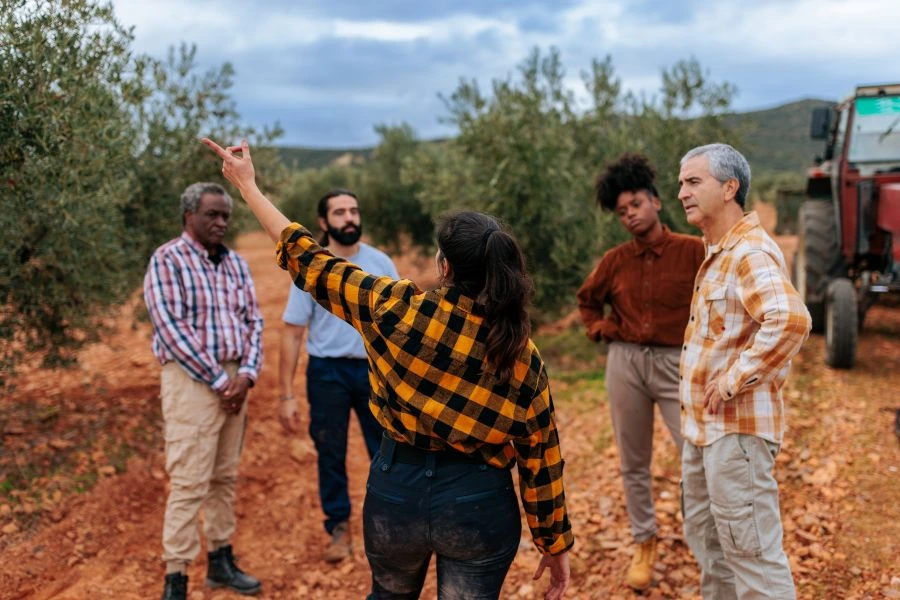 Safeguarding supply and biodiversity demands long-term grower partnerships, cultivation programs, and active conservation initiatives, says Suarez-Rizzo.“Consistency presents another challenge,” says Suarez-Rizzo. “Soil composition, altitude, harvest timing, and processing conditions all influence phytochemical profiles. Therefore, delivering standardized extracts with reproducible active levels requires rigorous agronomic oversight, advanced analytics, and disciplined supply chain control.”
Formulation and product development also present chalenges as botanical extracts may carry distinctive sensory characteristics or stability considerations and may interact with other actives.
“Achieving clinically relevant dosages in consumer-friendly applications, ranging in formats from capsules to functional beverages, calls for technical expertise. Growing clean label expectations also mean that simplicity and transparency must accompany technological performance.”
Regulatory scrutiny
Suarez-Rizzo notes that scaling internationally introduces regulatory and documentation requirements that vary across regions.
“Botanical ingredients must meet diverse safety, quality, and compliance standards while maintaining consistent specifications. This extends far beyond procurement, but demands an integrated approach spanning sustainable agriculture, scientific validation, quality assurance, and regulatory alignment.”
Lynch from Ingredients by Nature observes that regulatory expectations for botanicals are moving toward greater scrutiny and documentation in the EU and the US.
“Responsible companies understand the importance of assuring safety at the highest level, and nearly just as importantly, that these ingredients are effective.”
He explains that ongoing developments in the EU regarding novel foods and the European Food Safety Authority’s evaluations continue to shape how botanical ingredients are assessed and positioned. In the US, attention remains focused on compliance with New Dietary Ingredients, safety substantiation, and claim responsibility.
“As a result, companies will need to invest more heavily in data quality, traceability, and proactive regulatory planning to support long-term market access,” Lynch recommends.