 (Credit: Pexels)
Let’s face it – we’ve all been there, with the motivation and determination to start a new routine on a Monday morning, packing our gym bag and planning a brand-new exercise plan. However, for many of us, it seems like our motivation and determination wear off before the end of the month. It’s a problem many of us are familiar with, and it’s one of frustration – but is it really our fault?
Is it really a lack of willpower? Studies in human behaviour have shown that it’s far more complex and linked to our environment and systems of accountability, and it’s time for us to take a look at the physiology of building healthy habits.
Why Healthy Habits Are Difficult to Maintain
If building healthy habits is an uphill battle, then it’s because it is – biologically speaking. Behaviour modification is difficult because it requires our brain to fight against what’s already been wired in favour of what’s unproven and untried. It’s time for us to take a look at how a structured fitness environment can help bridge the gap between building healthy habits and long-term success.
We’re experiencing decision fatigue, which is the psychological state that results from the cumulative effects of making too many decisions, and it’s very easy to talk yourself out of going to the gym when the couch is just too comfortable.
The theory of the habit loop says that our behaviours are initiated by specific environmental cues. Without structure and schedule, our brain doesn’t have the cues it needs to take the first step.
When your goal is vague, such as “I’m going to exercise more,” the decision fatigue that comes with trying to figure out when, how, and where you’re going to do that can cause you to do nothing at all.
Understanding that the environment plays a much larger role in our behaviour than our intentions is the first step towards designing your life to make healthy habits the path of least resistance.
The Science of Habit Formation
How long does it take to form a new habit? The popular myth is that it’s 21 days, but the truth is that it’s actually an average of 66 days to form a new behaviour, according to the European Journal of Social Psychology’s seminal study on the topic. This is the science behind habit formation, and the science is quite clear that the consistency of your training environment is just as important as the specifics of your training.
How Structured Fitness Environments Help with Consistency
A structured environment is like having your own personal choice architect, helping you overcome the mental obstacles that normally stand in your way. Think of it as outsourcing your motivation and your discipline.
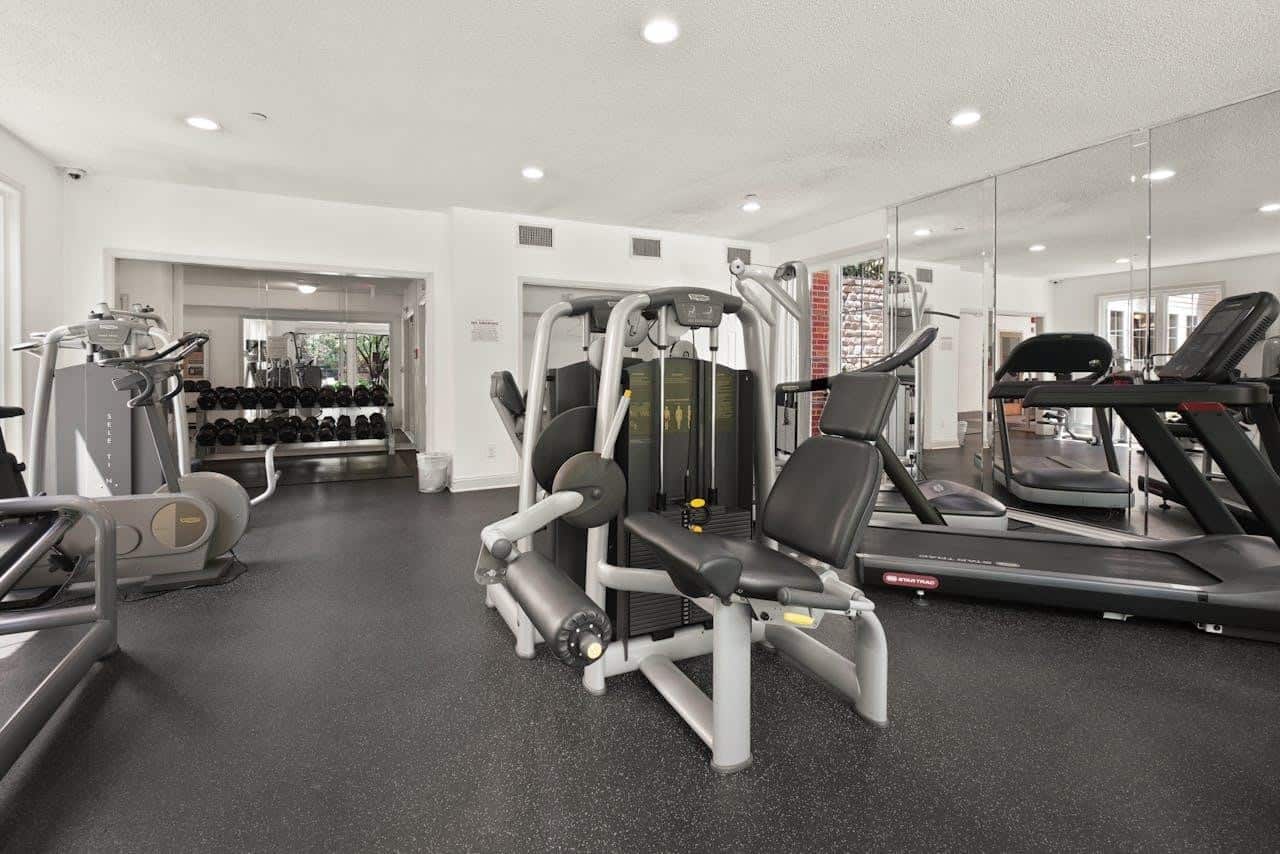
A structured training environment is not just about the equipment; it’s about the environment itself being the cue that says you’re here to train and you’re not going anywhere until you’re done.
Moreover, the World Health Organization tells us that physical activity is non-negotiable for the maintenance of long-term health, but many people are not able to do this in their daily life without some form of plan in place. This is where a well-designed gym can help, so you are getting the physical benefits of strength, flexibility, and cardiovascular exercise necessary, rather than just continuing to do the same old movements that are comfortable for you.
Accountability and Routine
One thing that humans are known for is their need to be around others. Research has also shown that social support is a key contributor to the adherence rate of any given workout routine.
Knowing that someone is expecting you to show up will give you the external accountability that bridges the gap between your desire to work out and your lack of desire to do so on certain days.
 (Credit: Intelligent Living)
Reducing Friction in Behaviour Change
By making sure that your workout environment is always the same, meaning that the location is always the same and the equipment is always similar, you are able to tap into the psychological benefits of the gym. Eventually, walking in the gym alone is enough to put your brain in “workout mode,” greatly reducing the amount of willpower required to begin a workout routine.
The Psychological Benefits of Consistent Training Environments
The benefits of a well-structured routine are far-reaching beyond the physical level, which is a fundamental aspect of mental health. According to Harvard Health, regular physical training is one of the most effective tools in combating depression and anxiety by controlling stress hormones like cortisol and increasing the release of endorphins.
However, when you show up for yourself in a structured way, you build self-efficacy, which is the belief in your capacity for success. This carries over into all areas of your life as well. It’s not just about lifting weights; it’s about demonstrating to yourself that you are a type of person that can show up and get things done.
Habit Stacking and Lifestyle Integration
If you wish to create a fitness lifestyle and not a fad, then you should consider a concept known as “habit stacking,” which is a technique that involves stacking a habit onto another habit. This is a way to integrate fitness into your life in a holistic fashion.
Practical Strategies for Building Sustainable Fitness Habits
If you are ready to move from trying to doing, consider the following strategies:
Start Manageable: Do not attempt to change your entire lifestyle in a week. Simply focus on showing up.
Prioritise Recovery: According to the Cleveland Clinic, this is where the actual physiological changes take place. Without this, burnout is inevitable.
Track Progress: Keep a journal and track your lifts and your energy levels. This visual representation of your progress is a huge dopamine release for the brain.
Focus on Function: Ensure that your fitness routine includes a variety of strength, mobility, and cardiovascular elements in order to maintain functionality as you age.
The Role of Environment in Long-Term Fitness Success
Ultimately, you are a product of your surroundings. If your surroundings are conducive to fitness, then you will likely be fit. If your surroundings are not, then it is likely that you will be anything but.
Choosing a Fitness Environment That Supports Your Goals
Another part of your fitness plan for your future self is to select your fitness environment. When selecting your fitness environment, do not look at the number of treadmills and exercise bikes in the room.
Is this fitness environment going to give you access to expert advice to ensure that your techniques are safe? Is this fitness environment going to give you access to a community that will welcome you? Is this fitness environment convenient enough so that it will not be used as an excuse for not exercising in the rain?
A well-designed fitness environment will give you all of the organisation that you will need to help keep you focused towards meeting your fitness goals. If you are seeking out a fitness environment that is structured, then joining a gym in Lane Cove is recommended.
 (Credit: Intelligent Living)
Consistency Is the Foundation of Long-Term Health
Real fitness is not found in some “30 day shred” or some type of detox program. Real fitness is found in the quiet, behind-the-scenes actions that we engage in every day of every year.
By utilising the science of habits to create environments that are structured and supportive, we are able to move from the exhaustion of willpower to the ease of routine. Ultimately, your fitness journey is a marathon, not a sprint. So, focus on the system and let your results take care of themselves.