Medically reviewed by Suzanne Fisher, RD
Credit: Design by Health / Getty Images
NAD levels decrease as you age, so supplementation may improve age-related conditions.
Lifestyle and dietary changes can increase your NAD levels naturally.
Taking NAD supplements is likely safe, but it’s best to talk with a doctor before you start them.
Nicotinamide adenine dinucleotide (NAD) supplements may offer benefits for anti-aging, cognitive, and metabolic health. However, the research on its uses is limited.
What Exactly Are NAD Precursors?
Studies suggest that you can raise NAD levels by taking “precursors” or “boosters.” Two forms of vitamin B3, nicotinamide mononucleotide (NMN) and nicotinamide riboside (NR), help achieve this.
1. May Have Anti-Aging Effects
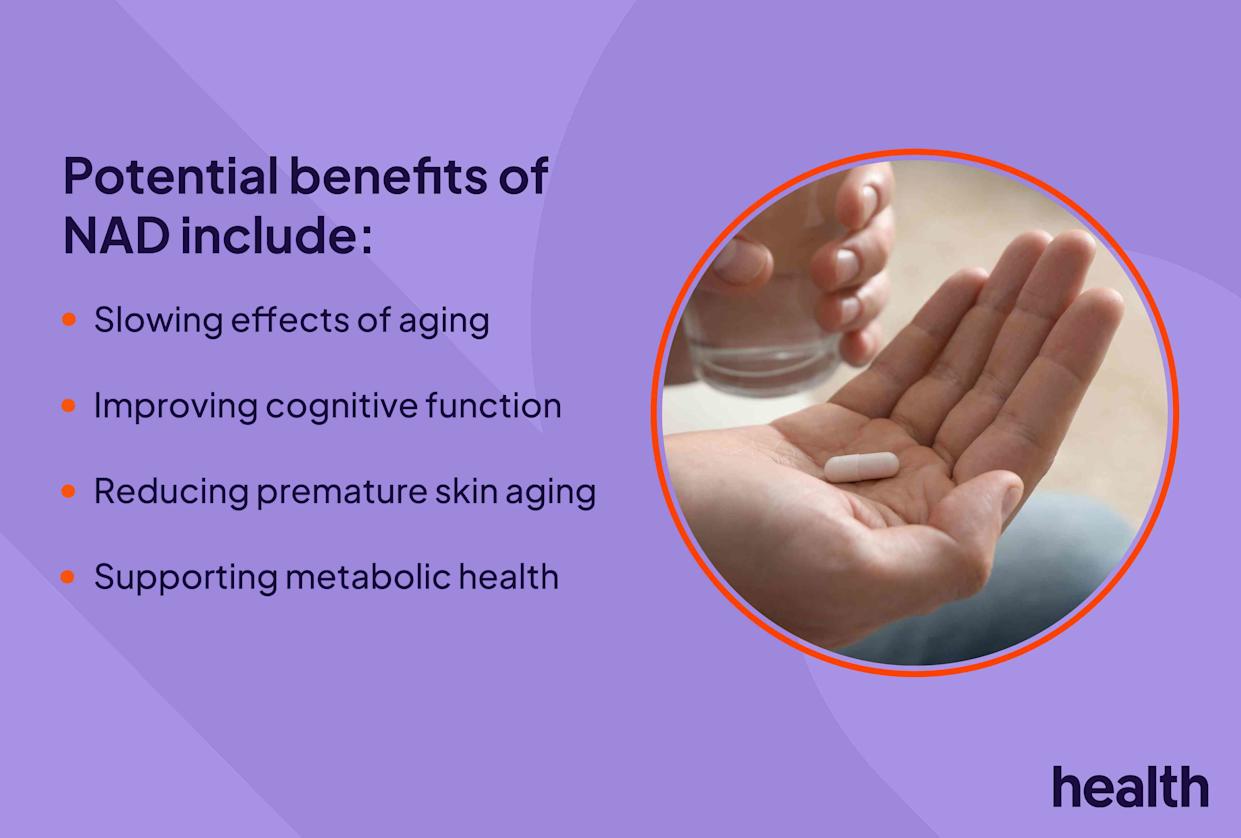
NAD’s anti-aging effects may help your body repair DNA. This could potentially help repair UV-damaged skin and prevent premature skin aging.
Applying NAD topically has been shown to benefit skin conditions like psoriasis by slowing skin cell turnover. Psoriasis causes skin cells to multiply too quickly, which leads to a build-up.
2. May Improve Your Cognitive Function
NAD supplements might decrease nerve inflammation, linked to cognitive disorders like Parkinson’s disease.
What the Science Says: People with Parkinson’s disease may lack NAD. A 2023 study found that high doses of NAD precursors (i.e., 1,500 milligrams of NR twice daily) improved NAD levels and some symptoms.
In a 2020 study, Alzheimer’s-related dementia responded positively to daily NAD supplements.
3. May Support Your Metabolic Health
NAD may improve your metabolic health—your body’s ability to control blood sugar, insulin, cholesterol levels, and more.
Increased NAD levels seem to support conditions like obesity and metabolic syndrome. Both increase your risk of heart disease, stroke, and type 2 diabetes.
What the Science Says: A small 2021 study of postmenopausal people with prediabetes who had excess weight found that 250 milligrams of NAD per day for 10 weeks improved insulin sensitivity.
Other research has found improvements in:
4. May Support Your Muscle Health
As you age, you naturally lose muscle mass and strength—medically known as sarcopenia. Supplementation with a NAD precursor like NR may improve muscle health as you age.
What the Science Says: In a small 2019 study, taking 1 gram of NR daily for 21 days was shown to improve muscle health and lower inflammation in older men.
5. May Protect Your Cardiovascular Health
Initial evidence suggests that NAD precursors like NMN and NR might improve cardiovascular health.
What the Science Says: Research has found that NAD may support cellular energy processes. This effect has been shown to help people with heart failure.
A Note on Limited Evidence
Early research suggests that NAD supplements may offer several benefits. However, more extensive human trials are necessary to draw firm conclusions.
Can You Increase Your NAD Levels Naturally?
NAD occurs naturally in the body. You can naturally increase your NAD levels with regular exercise and adequate sleep.
NAD is also found in certain foods, such as:
How Should You Take NAD?
You can take NAD as a supplement in capsule, powder, liquid, or intravenous (IV) forms.
Taking NAD supplements in split doses may be more beneficial. For example, a 250-milligram dose of NAD may be divided into two doses. A 1,000-milligram dose might be divided into four doses.
Like other forms of vitamin B, NAD appears to be well-tolerated with or without food.
What’s the Recommended Dosage?
Dosages for NAD supplements have not been officially established. Studies have examined taking NAD supplements ranging from 250 to 1,000 milligrams daily.
Most NAD supplements on the market are on the lower end of that range per capsule. However, it’s important to look at the bottle and know how much you are taking.
Dosage recommendations can vary by person. Talk with a doctor to ensure you take the amount that works for you and your health.
Are NAD Supplements Safe for Everyone?
NAD is generally considered safe. When taken in doses of up to 1,000 milligrams, NAD has not been shown to harm human health.
Human research on NAD is ongoing. Experts warn that there’s not enough data to know whether NAD is safe in people who are pregnant or breastfeeding. Always talk with a doctor about any kind of supplementation if you fall under these categories.
Standard Disclaimer
When buying a supplement, make sure the product is independently tested. Unlike medications, supplements are not regulated by the FDA. This means their quality and safety can vary. Independent testing confirms that the supplement contains the ingredients listed on the label and is free from harmful contaminants. Check for seals from reputable organizations such as NSF International, USP (United States Pharmacopeia), or ConsumerLab.
Potential Drug Interactions
Some initial data show that NAD supplements may interact with medications like:
Anti-aging supplements: Certain supplements that affect the aging process, like coenzyme Q10 or quercetin, may increase the effects of NAD supplements.
Antidepressants: Taking antidepressants can interfere with NAD levels in the body, which makes the supplements less effective.
Insulin: Because NAD supplements can interact with insulin sensitivity, people who use insulin may need different amounts of NAD to get the same effect.
If you are taking medications or supplements, talk with a doctor before adding NAD to your routine.
What To Look For
Researchers have noted that oral NAD supplements may contain NAD precursors, like nicotinamide (NAM) or nicotinic acid (NA).
The NAD precursor NMN is not allowed to be marketed in the United States as a supplement. The Food and Drug Administration (FDA) says it does not meet supplement qualifications.
Can You Take Too Much?
It’s unlikely you will take too much NAD if you follow dosage recommendations. However, larger studies with higher dosages for longer periods are needed.
To be safe, always discuss NAD and other supplement dosage questions with a doctor.
Are There Side Effects To Watch Out For?
No severe side effects linked to NAD supplementation have been identified. NAD precursors (like forms of vitamin B3) are generally well-tolerated.
Some milder, short-term side effects—which can happen with high doses of niacin—include:
Read the original article on Health