 What is the Future Growth Outlook of the U.S. Corporate Wellness Market?
The U.S. corporate wellness market is experiencing steady growth as organizations increasingly prioritize employee health, productivity, and overall well-being. Corporate wellness programs are becoming a strategic investment for businesses aiming to reduce healthcare costs, improve employee engagement, and enhance workplace performance.
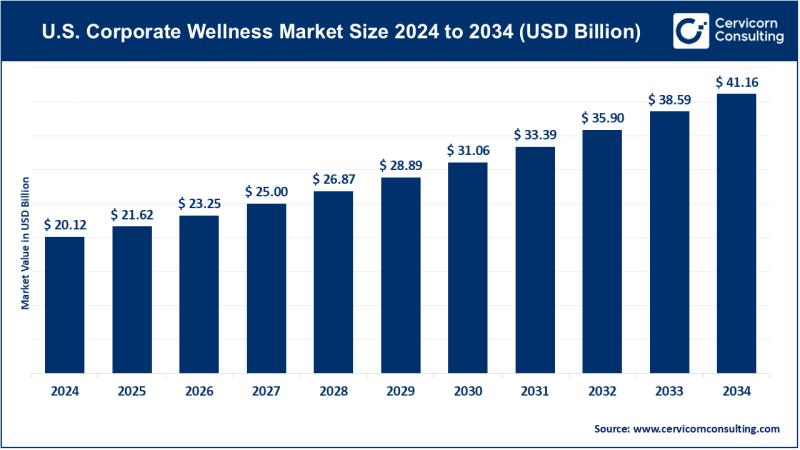
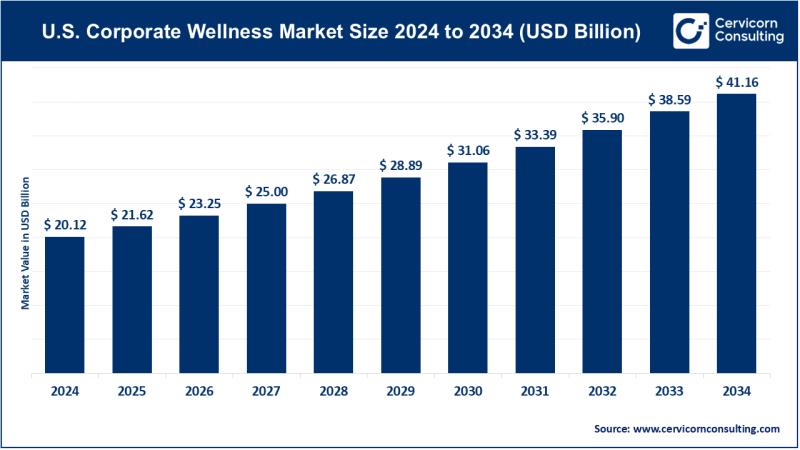
According to industry analysis, the U.S. corporate wellness market was valued at approximately USD 20.12 billion in 2024 and is projected to reach around USD 41.16 billion by 2034, growing at a compound annual growth rate (CAGR) of about 7.41% during the forecast period. The rising prevalence of chronic diseases, growing awareness of mental health, and increasing adoption of digital wellness solutions are key factors driving U.S. corporate wellness market growth.
Below are key insights explaining the U.S. corporate wellness market and its future growth potential.
Download a Free Sample Report: https://www.cervicornconsulting.com/sample/2627
________________________________________
What is Corporate Wellness?
The U.S. corporate wellness market refers to programs and services implemented by organizations to improve the physical, mental, and emotional well-being of employees.
These programs typically include:
– Health risk assessments and screenings
– Fitness and nutrition programs
– Mental health counseling and stress management
– Smoking cessation initiatives
– Wellness coaching and preventive healthcare
By adopting these initiatives, companies aim to create healthier workplaces, reduce absenteeism, and boost employee productivity.
________________________________________
Why is the U.S. Corporate Wellness Market Gaining Importance?
The U.S. corporate wellness market is gaining importance as organizations recognize the direct link between employee well-being and business performance.
Key factors driving the U.S. corporate wellness market include:
– Rising healthcare costs for employers
– Increasing prevalence of lifestyle-related diseases
– Growing awareness of mental health and work-life balance
– Shift toward preventive healthcare strategies
– Increasing focus on employee engagement and retention
Organizations are increasingly integrating wellness programs into their corporate culture to improve workforce satisfaction and long-term productivity.
________________________________________
Where Are Corporate Wellness Programs Used?
The U.S. corporate wellness market serves a wide range of organizational applications.
Large Enterprises
Large organizations dominate the U.S. corporate wellness market due to greater financial resources and infrastructure for implementing comprehensive wellness programs.
Medium-Sized Businesses
Medium-sized companies are rapidly adopting flexible and hybrid wellness models that combine onsite and digital solutions.
Small Businesses
Small organizations are increasingly using cost-effective digital wellness platforms and third-party services to support employee well-being.
These applications demonstrate the expanding adoption of corporate wellness programs across organizations of all sizes.
To explore the complete market analysis, visit: https://www.cervicornconsulting.com/us-corporate-wellness-market
________________________________________
What Are the Major Drivers of the U.S. Corporate Wellness Market?
Several key factors are accelerating U.S. corporate wellness market growth.
Rising Incidence of Chronic Diseases
Health conditions such as obesity, diabetes, and cardiovascular diseases are encouraging employers to invest in preventive wellness programs.
Focus on Mental Health and Stress Management
Organizations are increasingly offering mental health support, counseling services, and stress management programs.
Adoption of Digital Wellness Technologies
Mobile apps, wearable devices, and virtual wellness platforms are enabling personalized and scalable wellness solutions.
Growth of Remote and Hybrid Work Models
Companies are adapting wellness programs to support employees working remotely, increasing the demand for digital wellness services.
Government Support and Workplace Policies
Supportive regulations and workplace health initiatives are promoting the adoption of corporate wellness programs.
________________________________________
What Challenges Does the U.S. Corporate Wellness Market Face?
Despite strong growth potential, the U.S. corporate wellness market faces several challenges.
High Implementation Costs
Developing and maintaining comprehensive wellness programs can be expensive for organizations.
Low Employee Participation Rates
Engaging employees and ensuring consistent participation remains a challenge.
Data Privacy Concerns
Handling sensitive employee health data requires strict compliance with privacy regulations.
Measuring Program Effectiveness
Organizations may struggle to quantify the return on investment (ROI) of wellness initiatives.
Addressing these challenges is essential for maximizing the benefits of corporate wellness programs.
________________________________________
What Emerging Trends Are Shaping the U.S. Corporate Wellness Market?
Several trends are transforming the U.S. corporate wellness market.
Personalized Wellness Programs
Companies are using data analytics and AI to create customized wellness plans tailored to individual employee needs.
Integration of Mental and Physical Health Solutions
Holistic wellness approaches that combine physical fitness and mental health support are gaining popularity.
Digital and Virtual Wellness Platforms
Online fitness programs, telehealth services, and wellness apps are becoming mainstream.
Focus on Diversity and Inclusion
Wellness programs are increasingly designed to address diverse employee needs, including gender-specific and age-related health concerns.
Expansion of Preventive Healthcare Initiatives
Organizations are emphasizing early detection and preventive care to reduce long-term healthcare costs.
________________________________________
Which Segments Are Leading the U.S. Corporate Wellness Market?
By Service
Health risk assessment services hold a significant share, while stress management programs are expected to grow rapidly.
By End-Use
Large-scale organizations dominate the market, accounting for the highest revenue share.
By Delivery Model
Onsite wellness services lead the market, though offsite and digital solutions are gaining traction due to remote work trends.
________________________________________
U.S. Corporate Wellness Market Outlook
The future of the U.S. corporate wellness market looks highly promising as organizations continue to invest in employee well-being and preventive healthcare solutions.
Advancements in digital health technologies, growing awareness of mental health, and increasing adoption of personalized wellness programs are expected to drive sustained market growth. As businesses recognize the long-term benefits of a healthy workforce, the demand for corporate wellness solutions will continue to rise.
Over the next decade, the U.S. corporate wellness market is projected to expand significantly, playing a vital role in improving employee health outcomes, enhancing productivity, and shaping the future of workplace culture.
________________________________________
Interested in purchasing this report? Click here to get instant access: https://www.cervicornconsulting.com/buy-now/2627
Need more specific insights? Let us know your custom requirements here: https://www.cervicornconsulting.com/customization/2627
Cervicorn Consulting
ADDRESS: Office No – 609, 6th Floor, 129/A Dattawadi, Sinhgad Road, Pune – 411030, India
EMAIL: sales@cervicornconsulting.com
CONTACT NO.: +91 74999 31916
Cervicorn Consulting is a global market research and consulting firm that provides syndicated research reports, industry insights, and customized consulting services across multiple sectors. The company focuses on delivering strategic market intelligence to help organizations make informed business decisions and identify emerging growth opportunities.
This release was published on openPR.