Tammy Blakey’s career as an airline captain took her all over the world from Shanghai to the Middle East. Now retired, she may soon be heading to the most exotic location yet: The Supreme Court.
In 1990, Tammy and her husband acquired 165 acres of ranchland in Snohomish County, Washington. Together, they ran their small business, Flying T Ranch. When her husband passed, Tammy’s daughter Alexis stepped in to help and Flying T became a mother-daughter operation.
Tammy fell in love with the idea of working the land when she was a little girl. Farming is in her blood, with her mother coming from a long line of Nebraska farmers. While Tammy’s parents did not continue that tradition, her uncle owned a farm where she would often spend her weekends. “I loved the whole thing,” she says of her time on her uncle’s farm.
Rural life has always called to Tammy. She tried to move away from Washington once, but after a brief time in San Diego, which she says was “all concrete,” she quickly returned to the wide-open spaces she loved so much.
For decades, Tammy would spend six to nine days a month flying passengers around the world. When she wasn’t in the air, she devoted all her time to Flying T Ranch. When she finally retired, she was excited to focus on the ranch and her three grandchildren. But life had other plans, and her potential Supreme Court lawsuit has thrown her a curveball.
Two tiny strips of land
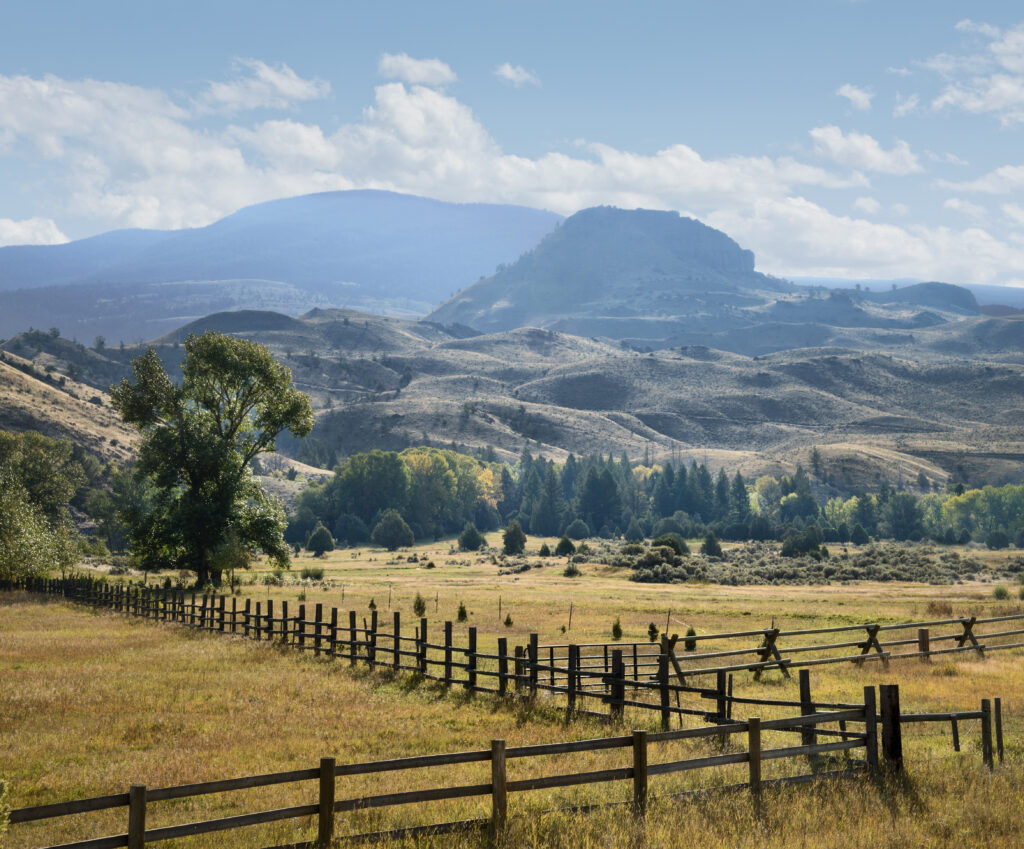
Flying T Ranch sits between a former railroad easement to the north—now a public hiking trail—and the North Fork of the Stillaguamish River to the South. Along the northern edge of the ranch, running parallel to the old railroad easement, sits a barbed-wire fence that has been there since at least 1962.
Within that fenced area are two small strips of land that are now the source of Tammy’s ongoing legal battle.
In 1995, Snohomish County purchased the land adjacent to Flying T from a private owner. The deed included the first small strip of land. In 2021, the Stillaguamish Tribe of Indians purchased land that was adjacent to both Flying T and the County’s property, also from a private owner. Included in that deed is the second strip of land.
While the two strips of land are not officially part of Flying T’s land deed, they have been enclosed within the fenced area for decades and maintained by either the Blakeys or their predecessors, both of whom used the land for grazing without any dispute.
Under Washington law, an individual can make an adverse possession claim and gain official ownership if they can show that they have possessed a parcel of land continuously for a period of at least 10 years.
To prevent any future land dispute, Tammy sought quiet title on the two strips of land within her fence line shortly after 2021.
Tammy met the law’s qualifications, so she assumed that the quiet title claim would be a walk in the park. “I thought this would just be easy-peasy, a slam dunk,” she said.
She couldn’t have been more wrong.
Before she filed any claim with the courts, she wrote a letter to both the County and the Tribe, explaining her intent.
Neither party responded.
“I don’t know why they just didn’t answer my initial letter before I even filed anything. Why not answer that? I mean, it’s just a teeny swath of property,” Tammy says.
She then filed a quiet title action in Washington State Court. Shortly after the suit was filed, the County transferred its portion of the property to the Tribe.
The Tribe soon filed a motion to dismiss, claiming that it had sovereign immunity from quiet title suits. The superior court granted the motion and when Tammy took her case to appeals court, it upheld that decision. The case then went to the Washington Supreme Court, where the motion to dismiss was affirmed once more.
Tammy argued that the immovable property rule limits a tribe’s sovereign immunity in cases where the real property involved is not on tribal land. The justices rejected that argument and held that Washington courts did not have jurisdiction to hear quiet title cases against sovereign tribal governments unless Congress directed them to do so.
After exhausting all options to settle the dispute in the lower courts, Tammy teamed up with Pacific Legal Foundation and has asked the United States Supreme Court to hear her case and answer a question that went unanswered in an earlier 2018 case: Does the immovable property rule limit tribal sovereign immunity?
The immovable property rule
For centuries, European common law has accepted and practiced the immovable property principle, which dictates that when a sovereign owns land in another sovereign’s territory, that land is subject to the jurisdiction of the land, and courts, where it rests.
The rule was articulated by the 18th-century Dutch jurist Cornelis van Bynkershoek, who wrote that when a prince buys property in another country, that property shall be treated just like the property of private individuals.
American courts continued this European tradition. In the 1838 Massachusetts case United States v. Wilder, Judge Joseph Story, who later served as a United States Supreme Court justice, explained that sovereignty did not necessarily imply that a sovereign’s property is exempt from jurisdiction of the courts.
In 1924, this principle was more broadly applied in Georgia v. Chattanooga. Georgia had tried to claim sovereign immunity on land it owned in Tennessee. The Supreme Court rejected the claim, holding that Georgia could be sued in Tennessee state courts regarding property that was held within the state.
The Court’s reasoning was clear: When a sovereign acquires property in another jurisdiction, it submits to that jurisdiction’s property laws. Even the Foreign Sovereign Immunities Act (FSIA) says that foreign states are not immune from suits to “obtain possession of or establish a property interest in in immovable property.”
In the 2007 case, Permanent Mission of India to the United Nations v. City of New York, the Supreme Court emphasized that sovereign immunity never extended to disputes over land ownership.
Yet, even with the immovable property rule’s longstanding history, the Supreme Court has never directly applied it to tribes. Although it did get close in the 2018 case, Upper Skagit Indian Tribe v. Lundgren.
Upper Skagit Indian Tribe was a land dispute case similar to Flying T. The Washington Upper Skagit Indian Tribe purchased land outside of its reservation and then told neighboring property owners that their fence was encroaching on tribal land. The neighbors then filed a quiet title action on adverse possession claims.
The Washington Supreme Court had allowed the claim to proceed, holding that because the lawsuit was about property itself, and not personal liability, sovereign immunity was not applicable. The Supreme Court disagreed, saying the lower court had relied on an incorrect precedent. The case was then vacated and remanded back to Washington Supreme Court.
While the Court acknowledged that the immovable property rule might have relevance in the case, the justices’ hands were tied because the issue had not been briefed and had not first been addressed in the lower court. Even so, four justices mentioned the rule specifically.
In their dissent, Justices Clarence Thomas and Samuel Alito expressed their belief that the immovable property rule should apply to tribal sovereigns. Chief Justice John Roberts and Justice Anthony Kennedy, who voted with the majority, also recognized the issue’s importance, saying they would take up the immovable property question if Upper Skagit Indian Tribe returned to the Supreme Court and would likely find themselves in agreement with Justices Thomas and Alito.
The rule would have likely come up when the case went back to the Washington Supreme Court, but both parties settled before that could happen and the immovable property rule never got its moment in the sun.
Nine years later, Flying T presents the perfect opportunity for the Court finally to clarify whether the immovable property rule limits a tribe’s enjoyment of absolute sovereignty over land disputes on property outside of its sovereignty.
Not her first rodeo
While Tammy would have preferred to resolve the dispute without a legal battle, she is calmer than most would be when faced with a potential Supreme Court case. This isn’t her first rodeo.
In 2000, Tammy won a landmark case at the New Jersey Supreme Court.
In 1989, Tammy became the first female captain for Continental Airlines qualified to fly the Airbus A300. It was a tremendous honor, but it came at a cost. Tammy experienced ongoing discrimination that became the basis of a lawsuit that ended in the New Jersey Supreme Court. The case was groundbreaking and still is taught in college courses across the country today.
For all her accomplishments, Tammy is humble. She isn’t motivated by fame or recognition, but she does feel a responsibility to stand up for her rights and the rights of other property owners who may find themselves in a similar situation.
If tribes can buy land anywhere and then declare themselves immune to lawsuits, individuals have no means of asserting their rights, should a property dispute arise. In the next few weeks, the Supreme Court will decide whether it will take Tammy’s case, where they will have the opportunity to further secure property rights for all individuals.