

As a new recruit to Wakatobi’s marketing team, Bailey Anderson realised that in choosing scuba diving over snorkelling, he’d been missing out on some of the best in-water experiences.
By Bailey Anderson
When I joined Wakatobi’s Marketing team, I was thrilled to finally connect my professional life with my lifelong love for the sea.
As an enthusiastic diver – and one who grew up landlocked in the United States – I’d long since written off snorkelling as a forgotten pastime. Like many seasoned divers, I always believed the greatest marine life experiences and sights were discovered well beyond the first atmosphere, far from the shallows.
For me, the fundamentals of a mask, snorkel, and fins had given way to the complexities of cutting-edge gear and camera rigs designed to push human limits. Snorkelling felt unremarkable. Why linger in the shallows when the deep blue is calling?
And honestly, who can blame us for writing off snorkelling? Most shallow reef systems around the world are vulnerable, often succumbing to temperature stress, pollution, and overfishing.
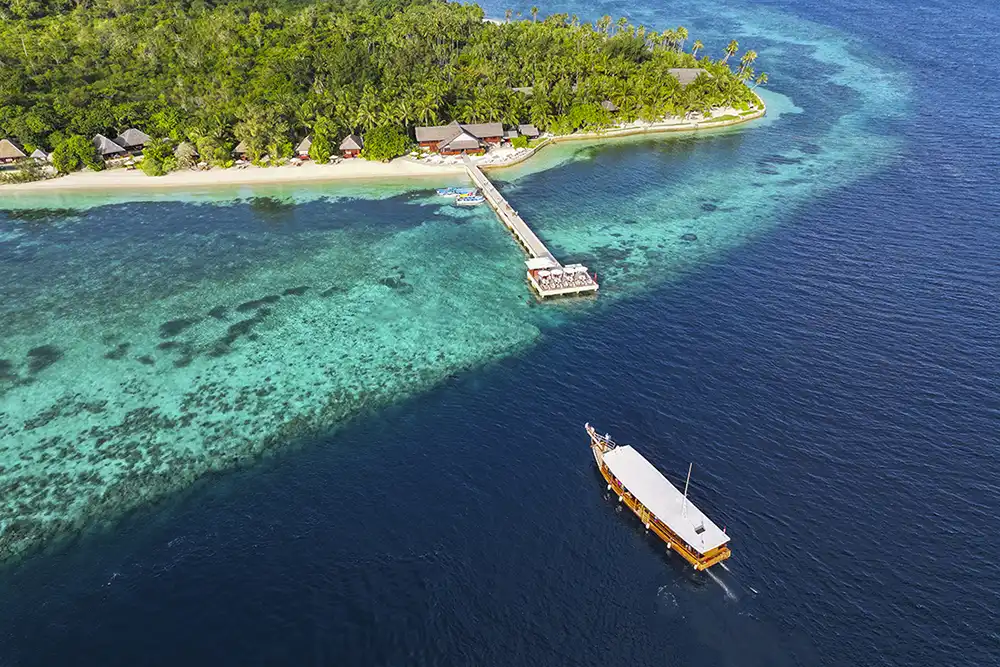
That’s why I was so shocked by my first snorkel at Wakatobi. Just off the jetty, before the house reef plummets hundreds of feet below, the sights blew me away.
I come bearing good news for every diver who thinks the shallows are lifeless: if diving is the only thing on your Wakatobi bucket list, you’ll be missing out on an unparalleled snorkel experience.
Don’t just take my word for it, see what the House Reef magic looks like firsthand in this one-minute clip
The vision that built the reef
My awe isn’t just luck. It’s the direct result of Wakatobi’s vision. Since the resort’s conception in 1996, its founder, Lorenz Mäder, has had one defining goal: protecting the reef system so that guests can experience the natural environment as it once was.
Over the past 30 years, he has worked hand-in-hand with local leaders, establishing reef lease agreements that provide sustainable income for communities while strictly protecting the ecosystem.
His diligent work has brought to fruition a flourishing and expanding private marine protected area (MPA), meaning the underwater world at Wakatobi remains pristine, its health verified by science and its vitality visible to anyone who ventures beneath the surface.
My first time back in the shallows
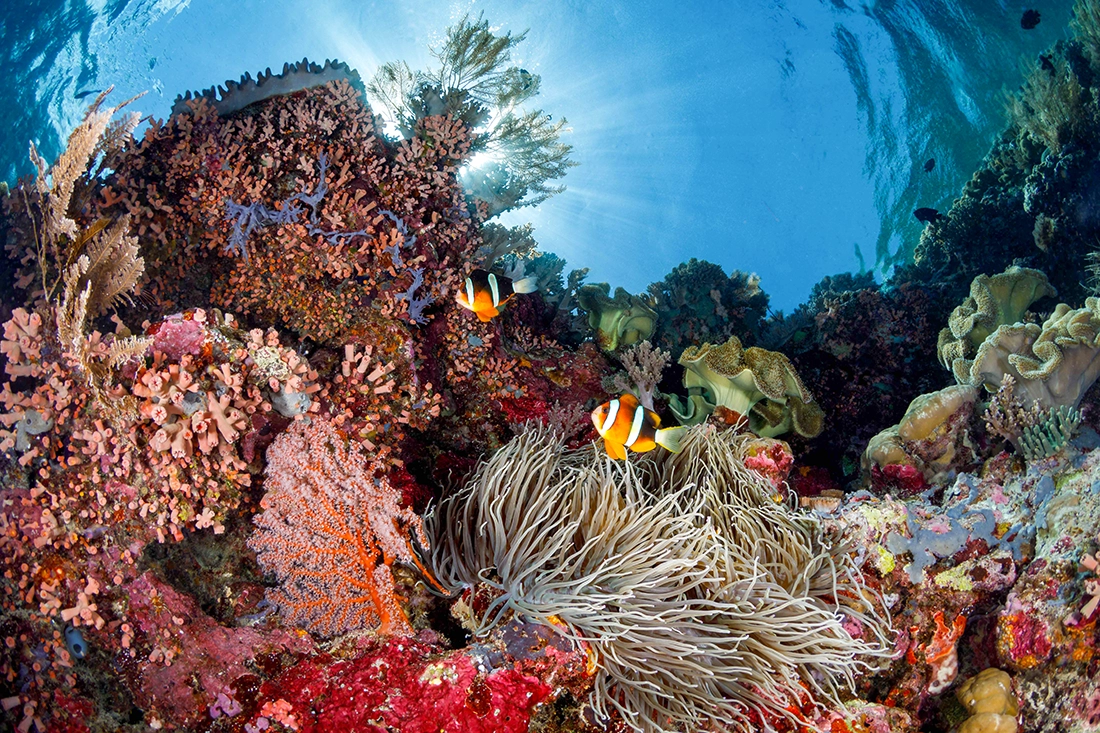 A family of Clark’s clownfish playing hide-and-seek among their magnificent host anemone, all illuminated by a dazzling sunburst (Photo: Jamie Ann Robinson)
Before hitting the water for my first-ever house reef snorkel, I had the pleasure of accompanying Wakatobi’s resident marine biologist, Julia Mellers.
As a diver, I’ll admit I was sceptical that the experience could compare to the excellent dives I’d already enjoyed at depth, but I decided to spend my surface interval back in the water, as many divers understandably would.
As soon as we reached the water, we slipped on our gear and swam towards the wall. The world back on land simmered away as we lost track of time in the crystal-clear waters. We soon changed course, swimming parallel to shore with the deep drop-off on one side and the dense, shallow garden on the other.
The density of corals in the shallows was immediately apparent. Everywhere I looked was a mosaic of movement and colour: vivid table corals, large plate corals, and staghorns galore. The low depth created a prismatic effect, painting dancing rainbows across the tops of the corals with refracted sunlight.
Flickers of movement gave me the chills: false clownfish darting among anemones, blue-spotted rays gliding along, and banded sea kraits slithering between corals. Anthias swirled, and hundreds of tiny silversides clustered together, only breaking apart in lava lamp-like groups when predators neared.
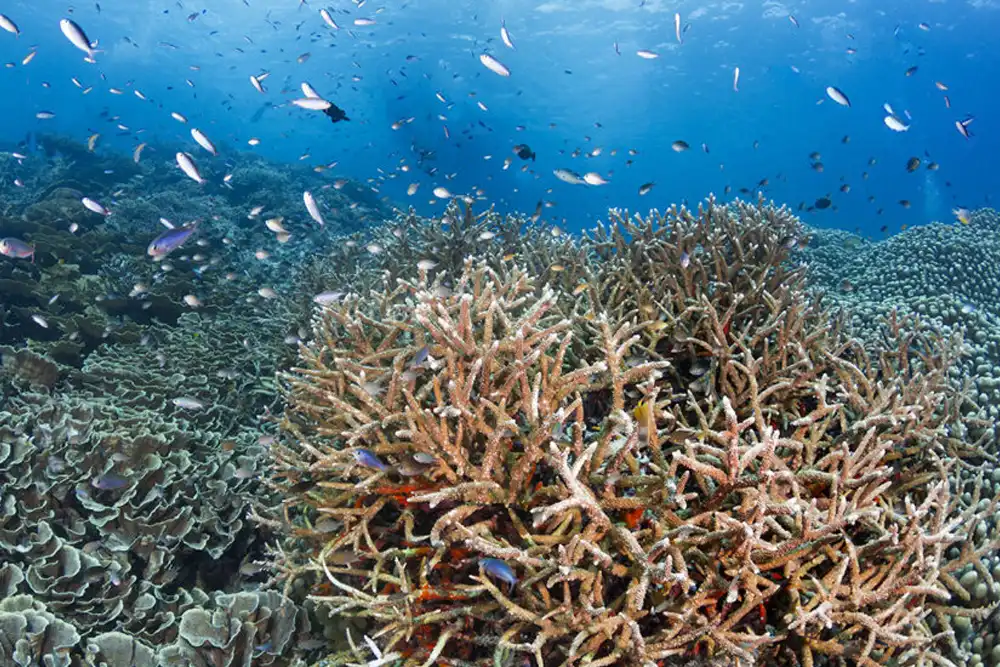 This is what reef health looks like. Dense, branching staghorn coral formations create a safe and vibrant metropolis for endless schools of electric blue chromis and curious damselfish (Photo: Walt Stearns)
Drifting along the reef’s edge, I noticed bubbles rising from divers hanging off the wall about 50 feet below. Julia and I would wave, then free-dive off the wall to frolic in their diamond-like bubbles, marvelling at the rich environment we were in.
I’d never seen anything quite like it. The icing on top was realising this was accessible to all guests, even those without specialised certifications, a sight that could easily inspire ocean advocacy and environmental stewardship.’
Nearly two hours had passed before we swam back to shore, and I still couldn’t believe the beauty I had just seen. For the first time in a long time, I felt fully present with the sea, enjoying the wonders that only nature could provide.
It was a beautiful reminder to appreciate the simplicity of being submerged without my specialist gear, without a large camera rig shackled to me.
As we walked along the jetty, other guests stopped to ask how it had been. My answer was simple: ‘That was just stunning, truly… in the best possible way. I’ve been missing out!’
Bailey can be reached at bailey@wakatobi.com, and you can download a .pdf copy of Pam Osborn’s book Wakatobi’s House Reef here.
For more information or to learn more about Wakatobi diving and snorkelling experiences, contact the team at office@wakatobi.com, or complete a quick trip inquiry at wakatobi.com. Follow along on Facebook and Instagram or watch more videos on Wakatobi’s YouTube Channel