From March 18th to June 21st, 2026, American photographer Nan Goldin takes over the Grand Palais and the Chapelle Saint-Louis de la Salpêtrière. A perfect opportunity to (re)watch the striking documentary All the Beauty and the Bloodshed directed by Laura Poitras. The film looks back at the artist’s troubled life and her fight against the Sacklers, a wealthy family producing opioids. Awarded the Golden Lion at the Venice Film Festival, it is one of the most powerful films ever made about a photographer.
By Violaine Schütz.
The trailer of the documentary All the Beauty and the Bloodshed (2023).
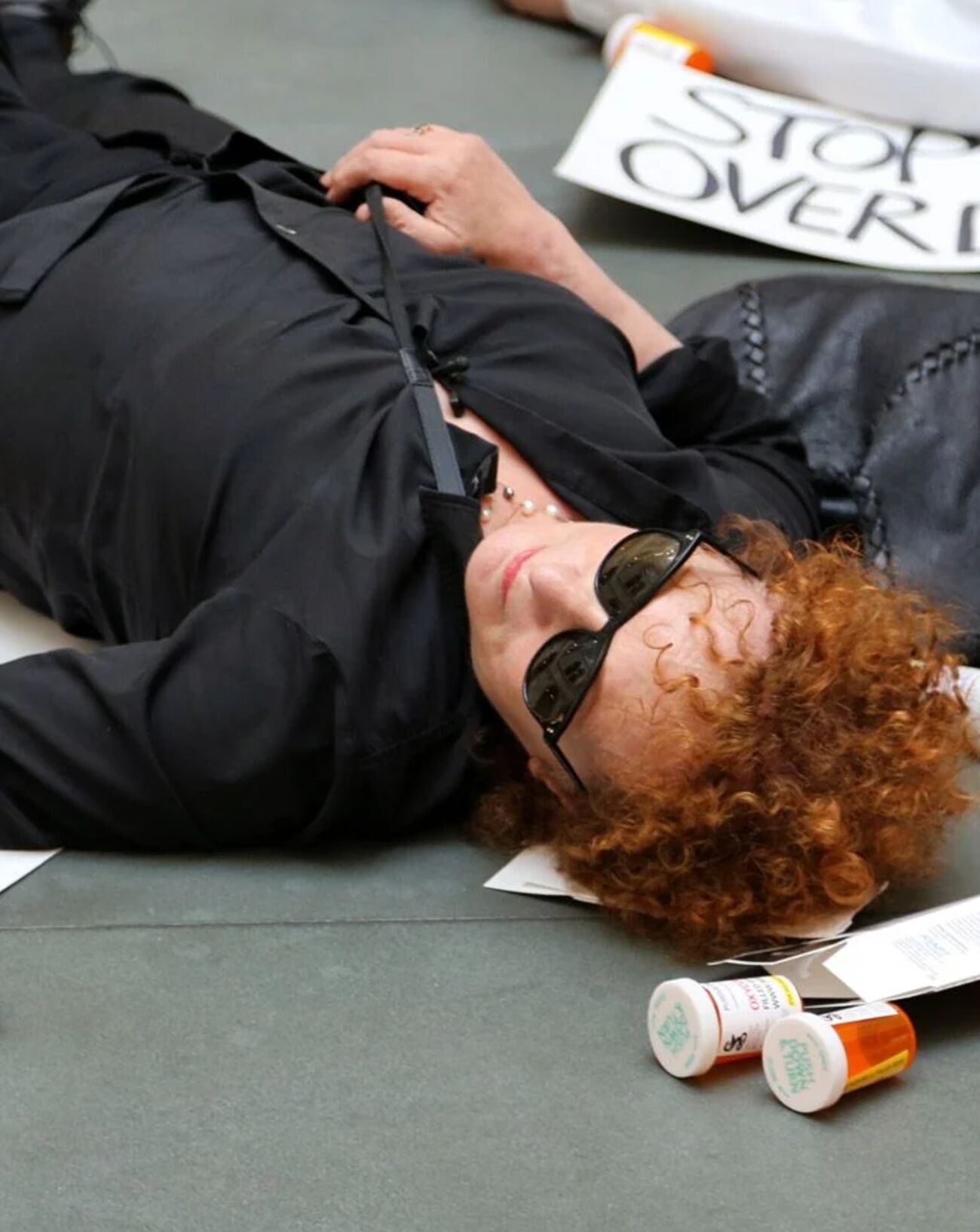
From the very first scene, the audience know they are dealing with a hard-hitting film. Shot at the MET in New York, it shows American photographer Nan Goldin, recipient of the Kering Women In Motion award at the Rencontres d’Arles in July 2025, surrounded by a group of activists throwing vials of opioids into a museum pool.
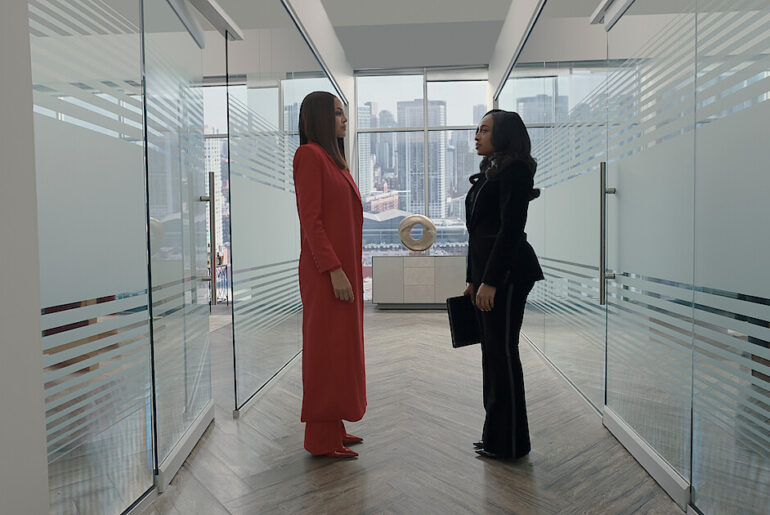
As its epic title suggests, the documentary All the Beauty and the Bloodshed, released in cinemas this week, is both magnificent and deeply moving. American director and journalist Laura Poitras, who has previously made films about Edward Snowden and Julian Assange, tells the intense and violent story of one of the greatest American photographers, while also chronicling her fight against opioids.
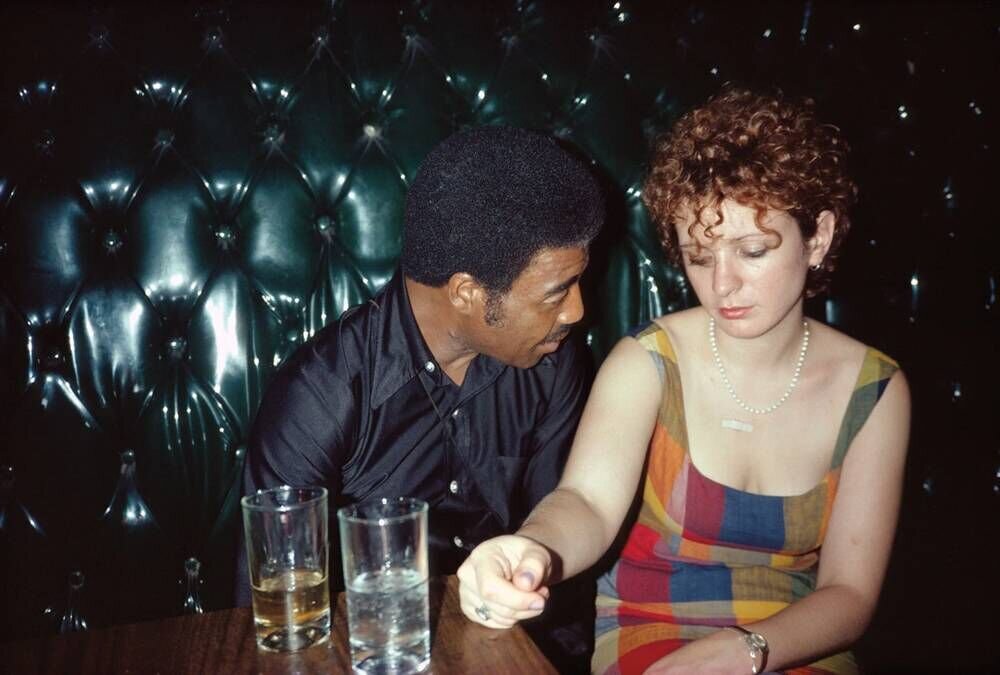 Nan Goldin in All the Beauty and the Bloodshed (2023). © Nan Goldin
All the Beauty and the Bloodshed sheds light on Nan Goldin’s hardships behind her raw photographs
In All the Beauty and the Bloodshed, the viewer (re)discovers Nan Goldin’s difficult life that was already hinted at in her unflinching self-portraits and pictures of her marginalized friends. The photographer left home at a young age. She was deeply marked by the suicide of her older sister, who suffered from depression. After her sister’s death, she couldn’t speak for six months. It was photography that ultimately saved her. Capturing intimate moments in the lives of those she loved, such as her drag queen roommates, helped her emerge from her aphasia.
While her photographs, including some previously unseen, unfold on screen, Nan Goldin recounts, through voice-over, her lesbian love affairs, the physical violence of a partner, the time she spent in a brothel, and her experiences as a go-go dancer and bar waitress.
Without any taboo or filter, much like her direct, frontal images, the artist also remembers sweet moments, such as her friendship with actress, writer and art critic Cookie Mueller. Nan Goldin’s precise and invaluable testimony vividly transports us back to the underground New York of the 1980s, with its decadent parties at the Bowery or the Mudd Club, its wild encounters, and its DIY spirit.
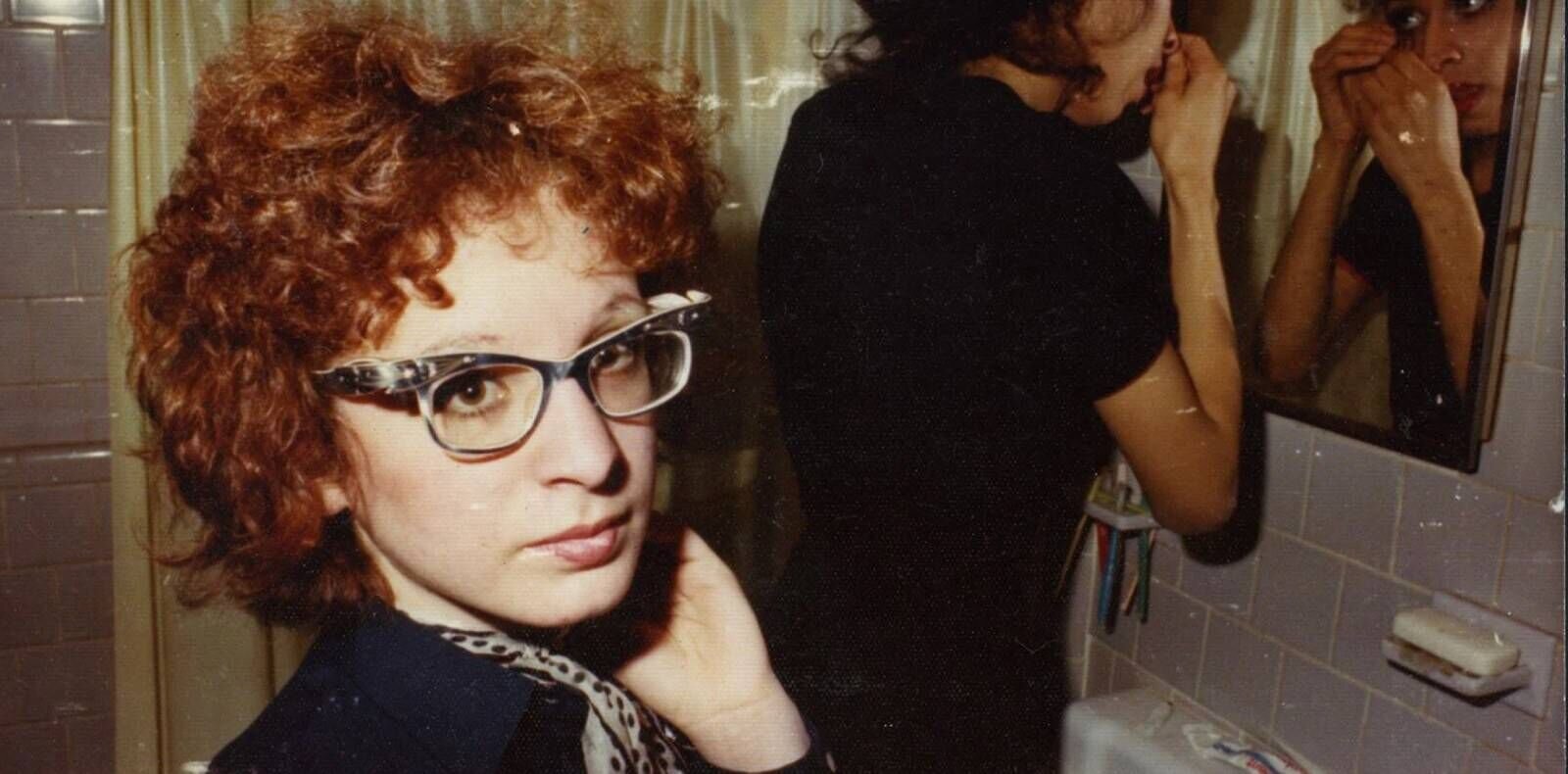 Nan Goldin in All the Beauty and the Bloodshed (2023). © Nan Goldin.
Nan Goldin’s fight against the Sackler family and opioid production
Along with sequences recounting Nan Goldin’s life at the time of her photo series The Ballad of Sexual Dependency (1979-1986), other sequences trace back the photographer’s latest fight against the wealthy Sackler dynasty. The family founded a pharmaceutical empire that produces oxycodone, a substance at the heart of the opioid crisis in the United States. They are also known as major patrons of prestigious cultural institutions.
In order to raise awareness of the dangerous nature of these painkillers, responsible for the deaths of thousands of Americans over the past two decades, Nan Goldin staged powerful protests in museums with activists from her organization PAIN (Prescription Addiction Intervention Now).
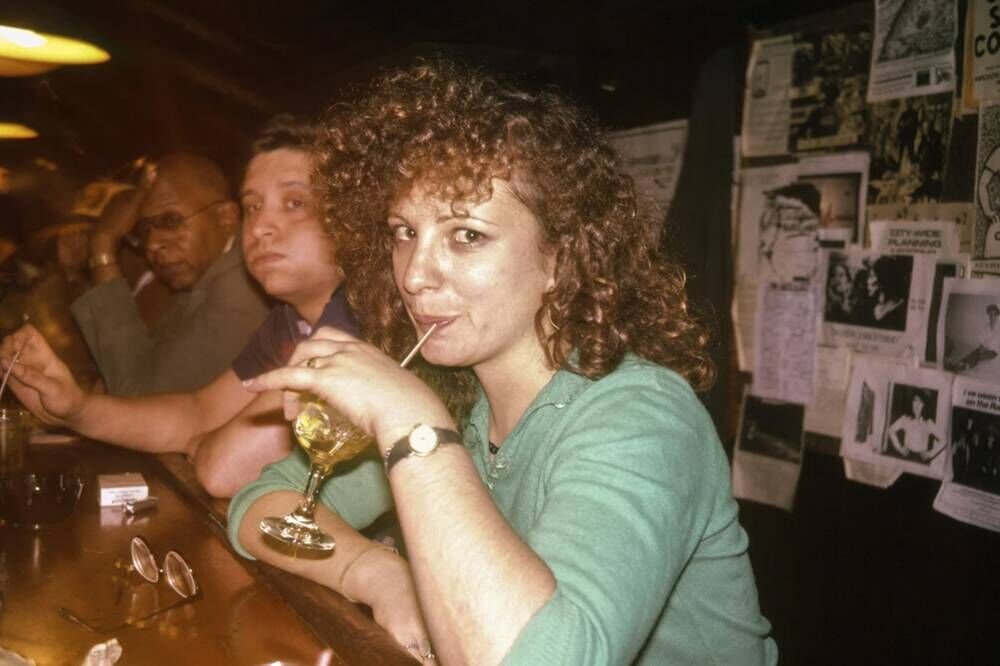 Nan Goldin in All the Beauty and the Bloodshed (2023). © Nan Goldin.
Activism, prostitution… Nan Goldin opens up like never before in this powerful documentary
That crusade feels deeply personal for the photographer. In 2014, she was prescribed OxyContin, a powerful painkiller, in Berlin to ease the pain of a tendinitis in her left wrist, before going to surgery. Nan Golding became addicted to it. Years later, in 2017, after a near-fatal overdose and a stay in rehab, she started speaking out against the Sacklers. The strength of the documentary, which won the Golden Lion at the Venice Film Festival, lies in its constant intertwining of the personal and the political, much like Nan Goldin’s own work.
Now 69, the photographer has brought beauty to those left behind by WASP America, elevating her friends from queer communities of the 1970s and 1980s, many of whom were living with AIDS or struggling with drug addiction. Through her singular lens, those on the margins were granted visibility and recognition. By giving Nan Goldin a voice, Laura Poitras shows that art can truly change the world, and even save lives. Indeed, the photographer has succeeded in severely tarnishing the image of the billionaire Sackler clan and weakening their hold over the art world (among others), proving that David can sometimes defeat Goliath.
All the Beauty and the Bloodshed (2023) by Laura Poitras, available on Arte.
“Nan Goldin. This Will Not End Well”, exhibition from March 18th to June 21st, 2026 at the Grand Palais, Paris, 8th arrondissement, and at the Chapelle Saint-Louis de la Salpêtrière, Paris, 13th arrondissement.