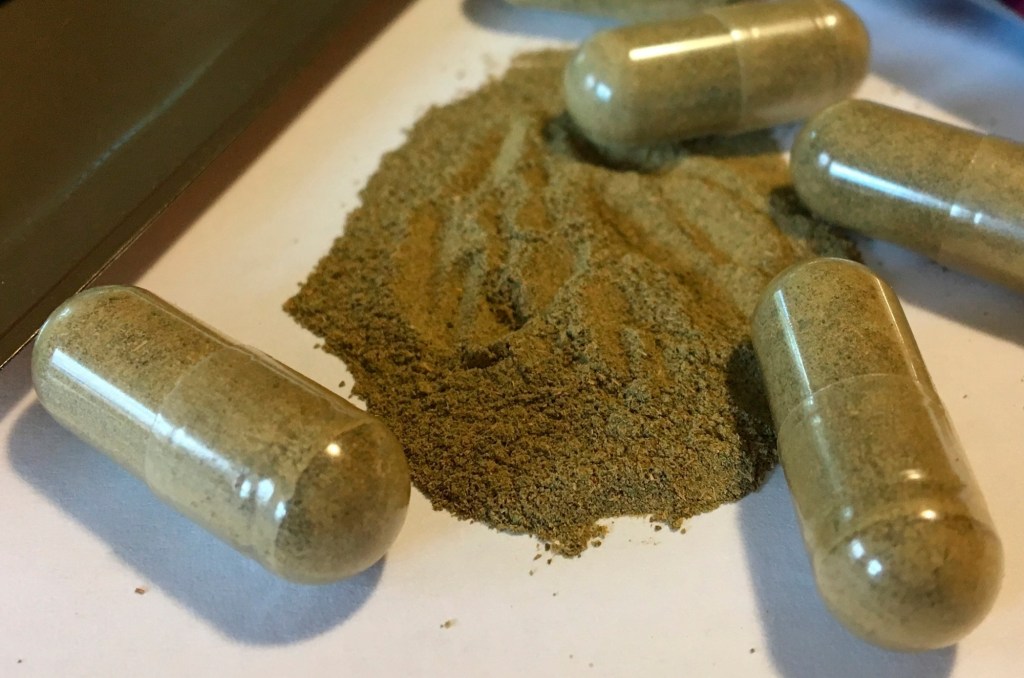
Murrieta is cracking down further on Kratom products after sending out a letter in January to smoke shops across the city reminding them that the sale, distribution and purchase of the drug is prohibited according to the California Department of Public Health.
The Murrieta City Council has now unanimously voted to ban the sale of Kratom products to anyone under 21.
While the state is currently seizing Kratom products from retailers, the council believes it is “important to take a broader approach” and make it a crime to distribute Kratom in all forms to anyone under 21, city spokesperson Hildur Sam said via email on March 11.
The council made its initial decision at its meeting on March 3, and approved it officially on Tuesday, March 17.
Kratom, a plant native to southeast Asia, includes a chemical known as 7-hydroxymitragynine that creates the same opioid receptors in the brain as morphine and heroin. High doses can cause sedation, dependence and opioid-like withdrawal symptoms.
Murrieta’s ordinance also bans the sale of synthetic or enhanced Kratom products.
Kratom products have gained popularity in the U.S. as an unapproved treatment for pain, anxiety and drug dependence. But in recent months, dietary supplement companies that sell Kratom have been urging the Food and Drug Administration to get rid of products with 7-OH, calling it a dangerously concentrated, synthetic form of the original ingredient. It can be found in drinks, gummies, powder and pills.
With the state’s crackdown efforts in effect, Gov. Gavin Newsom announced on March 3 a 95% compliance rate from California businesses with the removal of Kratom products, according to a state news release.
Following a statewide education campaign through the California Department of Alcoholic Beverage Control (ABC) and the California Department of Public Health, in three weeks, agents removed more than 3,300 Kratom and 7-OH products from shelves at licensed businesses, according to the release.
Businesses that continue to sell Kratom products may face suspension or revocation of their licenses.
Riverside County passed an ordinance in October to ban the sale of Kratom derivatives like 7-OH products to anyone under age 21.
In Riverside County, violations for selling to anyone under 21, selling synthetic products and products with over 2% 7-OH concentration, could lead to misdemeanor prosecution.
Penalties could also include up to $1,000 in fines and the loss of business license.
In Murrieta, each violation will be treated as a separate offense and could be treated as an infraction or a misdemeanor, according to a city report.
City staff specified that the city is not experiencing a Kratom crisis, but are focused on providing clear rules before problems escalate. The city believes this will better safeguard the health, safety, and well-being of the community, added Sam.
Dennis Vroman, a retired Murrieta Police Captain and retired Riverside County undersheriff, sent in a letter on March 3 supporting the council regulating Kratom products.
“I have spent my career addressing emerging drug trends before they took route in our communities,” Vroman said. “The proliferation of concentrated synthetic 7-OH products now presents precisely that kind of emerging public safety threat, especially with some of our most vulnerable population, our children and young adults.”
He added that by taking action now, it could reduce the possibility of these products becoming the next opioid crisis.
Other Inland Empire cities have also taken action on Kratom products, including Ontario recently. The Moreno Valley City Council adopted the Riverside County ordinance in December 2025, and the Temecula City Council unanimously moved to ban the sale, distribution and possession of Kratom products in the city in January.
The Associated Press contributed to this report.