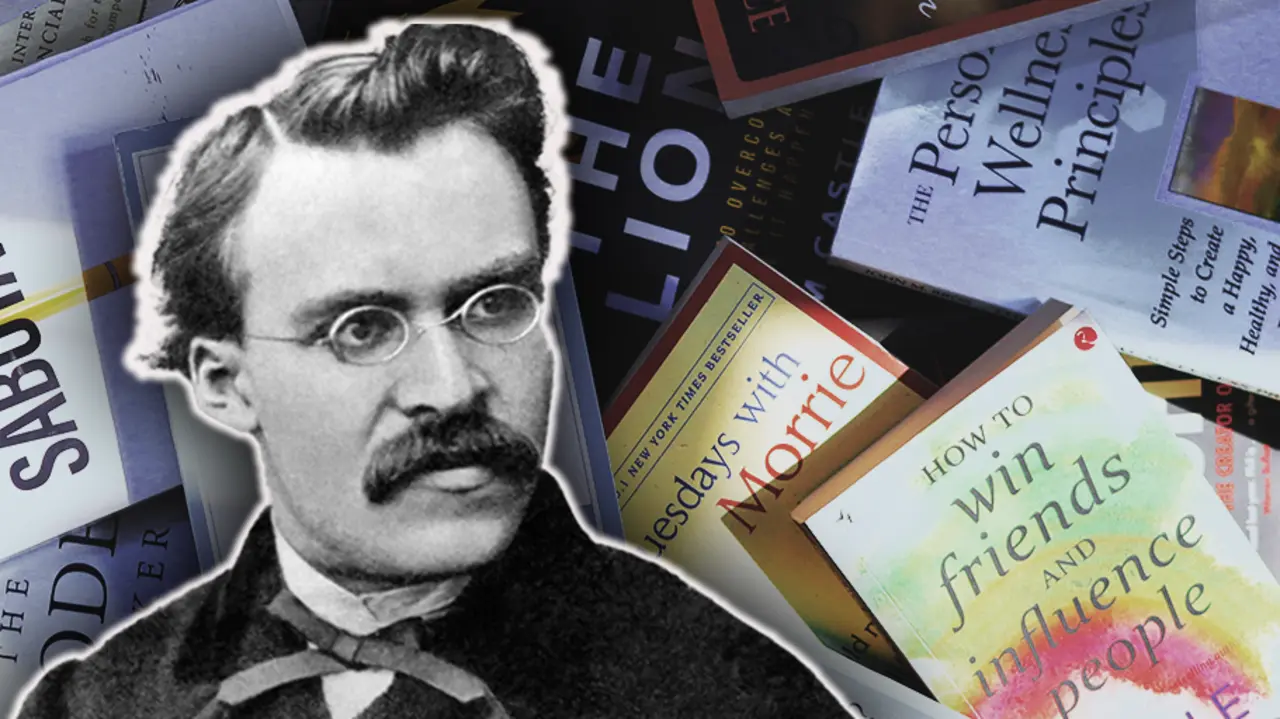
When the world itself is unhealthy, our modern obsession with self-improvement serves as little more than a plaster over systemic burnout. The booming self-help industry trains us to use our creativity to change ourselves rather than challenge the systems we live in. Drawing on Nietzsche’s idea that creativity should be the means by which we reshape the world, Jill Marsden argues that we should move from self-improvement to self-realisation. To live well is not just to fix oneself, but to change a world that is making us sick.
Anyone wishing to determine the value of art today has to know where to look. As arts provision slowly disappears from schools and universities across many parts of the world, the enthusiasm for creativity in the health and well-being sector has never been so strong. Defined as “creative approaches and activities which have benefits for our health and well-being,” the phenomenon of “creative health” has emerged over the last decade as an aspirational force driving better care and better value across the spectrum of global health services.
At first glance, it might seem as if this sector were having a Nietzschean moment. The proposition that active engagement with arts and culture fosters improved quality of life resonates with Friedrich Nietzsche’s conviction, first voiced in The Birth of Tragedy (1872), that art is the highest task and truly metaphysical activity of life. The artistic culture of the ancient Greeks draws Nietzsche’s fulsome praise for its exemplification of tragic wisdom, a philosophical way of life which Nietzsche elaborates in his own work as an art of living. Echoes of this idea can be heard in the premise that creative health is “the expression of the ancient wisdom that the exercise of the creative imagination is beneficial to our health and well-being.” For the ancients, philosophy was a mode of living and knowing which brought about a fundamental transformation in being, and for Nietzsche, this transformation is achieved through art.
Nevertheless, despite the consensus on the health gains of creativity, it would be a stretch to claim that the classical idea of “the good life” or Nietzsche’s art of living have sufficiently permeated the mainstream to vindicate the existential value of art. In fact, to appreciate the value that art has for life today, it is necessary to establish why the concept of well-being, despite its contemporary popularity, has relatively little to do with the art of living well.
___
The “well-being” phenomenon might be read as an artefact of neoliberal work culture, the panacea for the ills of our inherently unhealthy systems.
___