Image:

Caption:
Bertrand Joseph, IMM. Photo: N/A
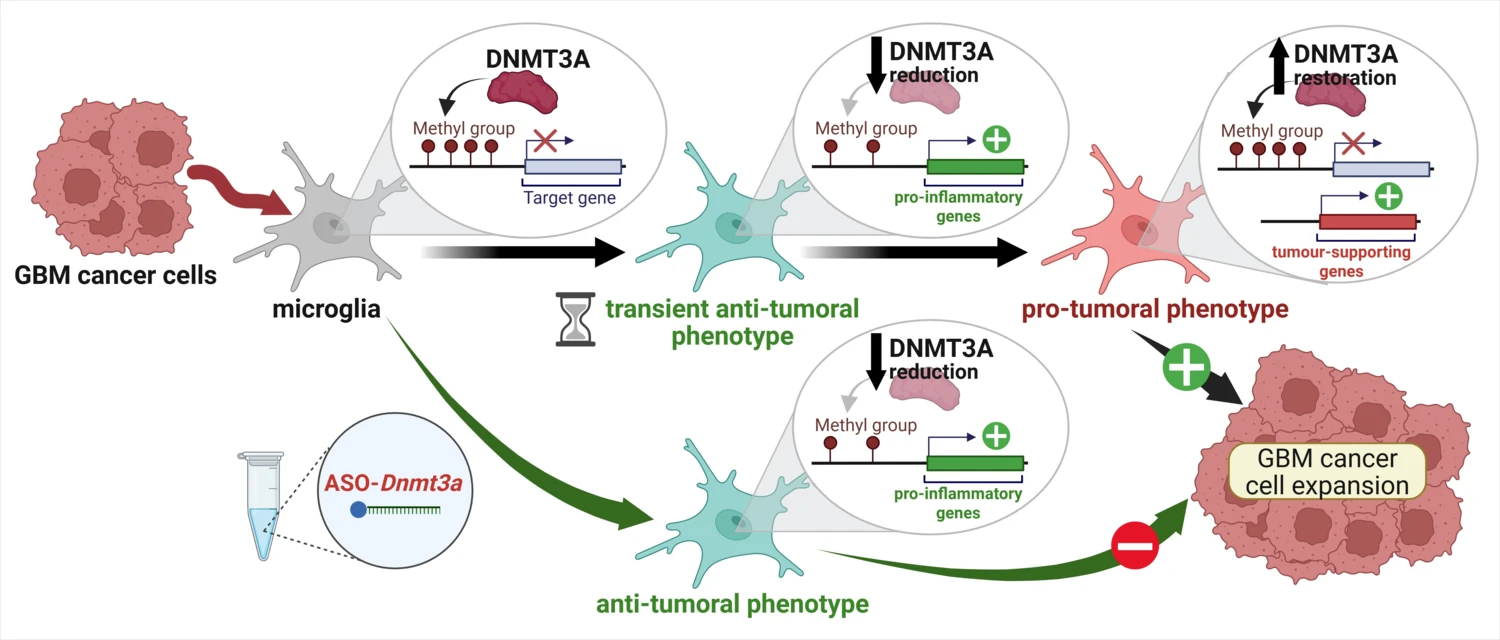
“Our results show that microglia have an inherent capacity to counteract tumour growth. The challenge is to preserve or enhance that function. DNMT3A now emerges as a potential key regulator”, say Bertrand Joseph, senior author and professor of molecular cancer biology at the Institute of Environmental Medicine.
The discovery opens up new avenues for future research, where the brain’s own immune cells could become an active part of glioblastoma treatment through more precise and cell-targeted strategies.
This work has been supported by the Swedish Research Council and the Swedish Brain Foundation, the Cancer Research Funds of Radiumhemmet, the Strategic Research Programme in Cancer, the Strategic Research Programme in Neuroscience, the InnoHK initiative of the Innovation and Technology Commission of the Hong Kong Special Administrative Region Government, the Swedish Cancer Society, the Swedish Childhood Cancer Foundation, the Karolinska Institutet Foundation, the Åke Wibergs Stiftelse, the Hedlunds Foundation, the Wallström Foundation, and the Swedish governmental grants for researchers working in healthcare. See the study for any reported conflicts of interest.
Publication
“Glioma-induced DNMT3A reduction in microglia promotes an anti-tumoral phenotype“, Cheray, M., Posada-Pérez, M., Fragkopoulou, A. et al. Cell Death & Differentiation, online 18 March 2026, doi: 10.1038/s41418-026-01712-x.