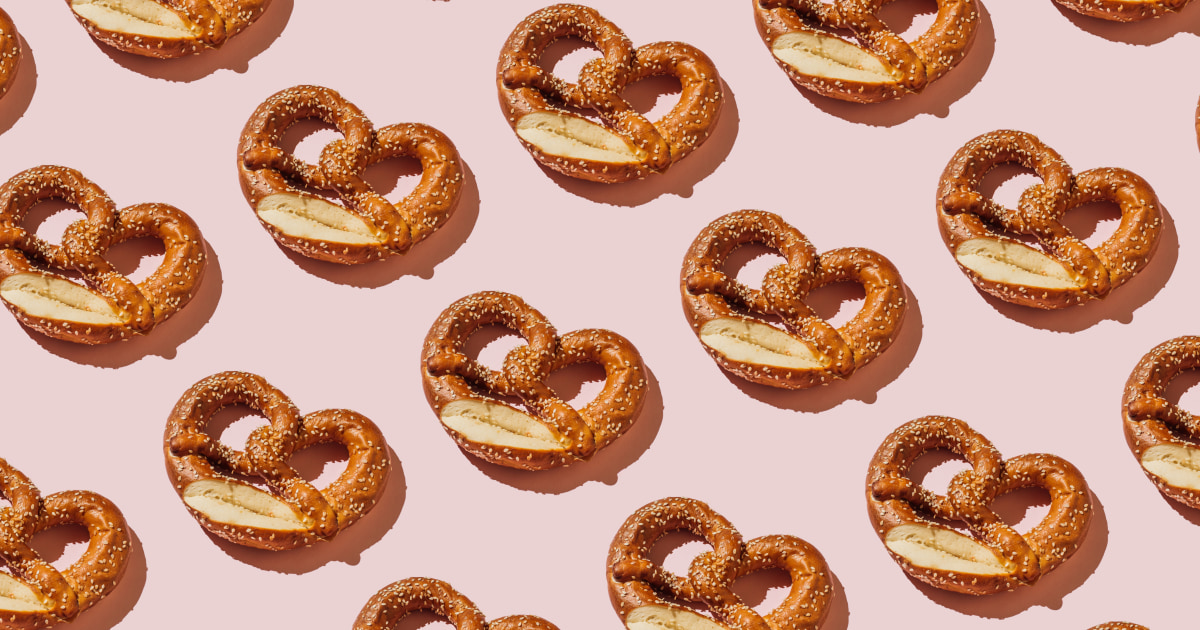
Pretzels are a classic snack eaten widely in the United States. But as the protein craze continues, carb-forward foods like pretzels tend to get overshadowed. The truth is we need carbohydrates, and they’re not the enemy.
Yet, conventional packaged pretzels still fall into somewhat of a nutritional gray area. They’re lower in fat than most chips and crackers, but still a processed snack with scant nutrients.
Pretzels are a baked bread product made from a dough, typically with wheat or rye flour, along with yeast, salt, sugar and some fat, Kristen Smith, registered dietitian nutritionist and spokesperson for the Academy of Nutrition and Dietetics, tells TODAY.com.
Sourdough pretzels are made from dough using a wild starter instead of yeast, which gets fermented — this lowers the gluten content and gives the pretzel a tang, similar to sourdough bread.
The dough is then formed into the classic knot or twist shape, and gets poached in an alkaline solution before baking, which gives the pretzels a distinct chewy texture and dark crust.
“They come in a variety of shapes and flavors, from classic soft pretzels to crunchy hard ones,” dietitian and TODAY nutrition editor Natalie Rizzo explains.
Pretzel Nutrition
The nutrition content of pretzels varies depending on the type of flour, flavorings and other ingredients.
According to the U.S. Department of Agriculture database, one serving (28 grams) of the average store-bought hard pretzels, unsalted, contain about:
110 calories22 grams of carbohydrates2.5 grams of protein1 gram of fat<1 gram of fiber
When it comes to micronutrients, pretzels don’t offer much.
In the U.S., packaged pretzels are often made using enriched flour, says Smith. This means the flour has been fortified with B vitamins and iron, which can make up for some of the nutrients that are lost during refining and processing.
Are Pretzels Healthy?
Don’t get it twisted — pretzels are not inherently “bad” for you. They can be part of a wholesome snack and an overall healthy diet, says Rizzo. But they aren’t a nutritional powerhouse on their own.
“They’re mostly refined carbs with little protein, fiber or healthy fats, so they won’t keep you full for long,” Rizzo explains.
That said, pretzels do tend to have less fat and calories than similar crunchy snacks, like chips or cheesy crackers.
Plus, the hefty dose of carbohydrates can provide the body with a quick boost of energy to help combat a hangry slump. Pretzels also make a great pre-workout snack, especially before cardio.
Carbohydrates are the body’s main source of fuel. When we eat them, they get broken down into glucose, which our cells can immediately use as energy to power through their functions.
Pretzels are also a perfect vehicle for hearty dips and spreads.
It’s fine to enjoy pretzels in moderation and as part of a balanced eating pattern, the experts emphasize. However, there are some drawbacks to consider.
Downsides of Pretzels
Pretzels are considered highly processed or ultra-processed foods, the experts note.
Due to their high refined carb content, eating a lot of pretzels can spike blood glucose, says Rizzo. You may feel hungry soon after it crashes. If you have diabetes, this can be problematic, so pretzels alone may not be the best snack for your blood sugar.
Another downside of pretzels is they can be high in sodium, says Rizzo. The American Heart Association recommends limiting sodium intake to no more than 2,300 milligrams per day — with an optimal goal of 1,500 milligrams or less for adults.
One serving of salted hard pretzels can pack up to 500 milligrams of sodium, which makes a big dent in your daily intake.
Pretzels contain very little fiber to nourish the good bacteria in the gut. And if they’re made with unenriched flour, you’ll get barely any vitamins or minerals.
Which Pretzels Are the Healthiest?
Not all pretzels are equal.
“There are many types of pretzels made with different ingredients to fit a range of nutrition needs and dietary choices,” says Smith. These include gluten-free, whole wheat and high-protein options.
“The healthiest pretzels are the ones made with whole grains or seeds, or those that are lower in sodium,” says Rizzo.
If you’re comparing two brands, opt for the one that has a little more protein or fiber, Smith adds. The shorter the ingredient list and more words you recognize, the better.
Be mindful that most store-bought, plain hard pretzels will still have a similar nutrition profile, says Rizzo, so the difference isn’t huge. And don’t be fooled by better-for-you branding.
“There are some pretzels being marketed as ‘healthier’ options, like protein pretzels, but they are still an ultraprocessed food that should be limited in the diet,” says Rizzo.
Less-Healthy Pretzels to Limit or Avoid
Rather than fixating on finding the most nutritious pretzel in the supermarket, the experts recommend trying to avoid or limit the less healthy options.
“Flavored pretzels, like those coated in chocolate, caramel or cheese, or those with lots of added salt or fat, are the least healthy. These varieties pack extra sugar, sodium and calories without much nutrition,” says Rizzo.
These tend to have a long and winding ingredient list, full of artificial ingredients and additives.
And the soft pretzels you can buy at ballgames or smell from your gate at the airport? They aren’t the healthiest option, either.
All that said, if you want to enjoy your favorite seasoned pretzels, knock yourself out — just stick to the serving size and enjoy them as an occasional treat rather than a daily snack, the experts note.
Nutritious Pretzel Pairings
The best way to make pretzels a more nourishing, satisfying snack is to pair them with foods rich in protein, fiber and healthy fats, says Smith.
These nutrients will “balance out” the refined carbs, says Rizzo, and keep you feeling fuller for longer.
Here are some of the expert’s favorite healthy pretzel pairings:
HummusBean dip Greek yogurt tzatzikiLow-fat cheeseGuacamoleNut butterFruit or veggies