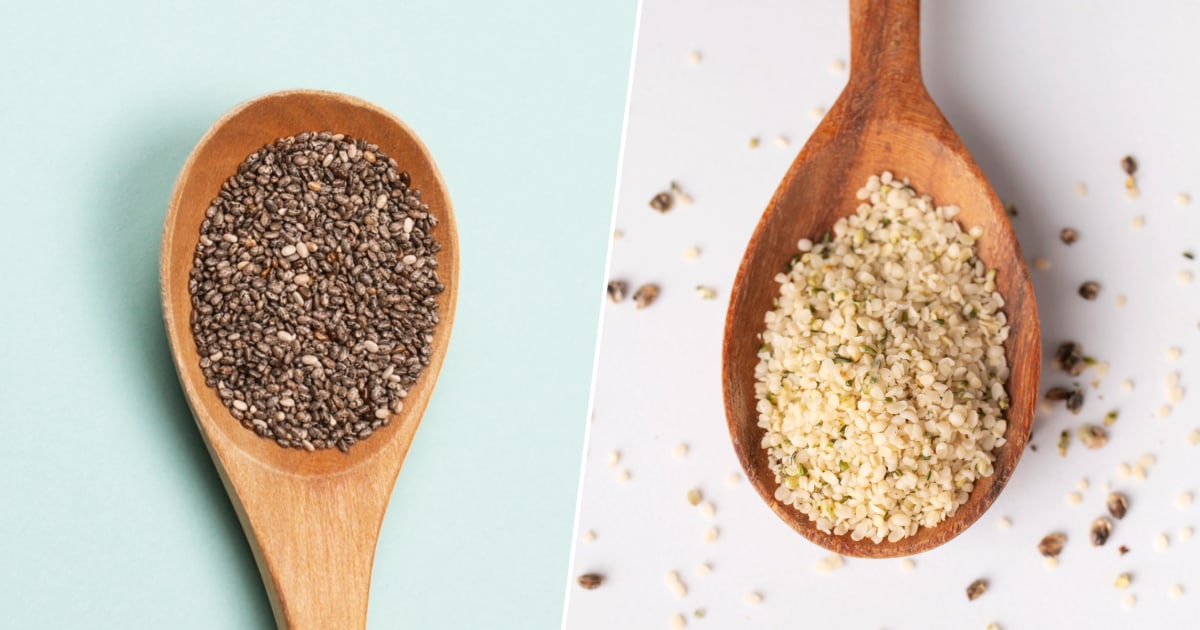
The easiest way to boost the nutrition of any meal is to sprinkle it with a serving of seeds. And, while seeds share many nutrients in common, there are some notable differences between chia seeds and hemp seeds.
Both chia seeds and hemp seeds (also called hemp hearts) are among two of the healthiest types of seeds you can eat, dietitians recently told TODAY.com. They’re packed with vitamins, minerals and other nutrients that support your overall health. Plus, they add a great crunch to any meal.
But, if you have to choose one, take a moment to think about your nutritional goals and the type of meal you’re making to pick the right one for your needs.
Chia Seeds Nutrition
A 1-ounce serving of chia seeds will provide around:
138 calories5 grams protein12 grams carbohydrates10 grams fiber9 grams fatHemp Seeds Nutrition
In an ounce of hemp seeds, you’ll get about:
166 calories9.5 grams protein1 gram fiber3 grams carbohydrates15 grams fatProtein
While seeds aren’t usually a major source of this macronutrient, they provide a little boost in your day.
Experts generally recommend aiming for at least 20 grams of protein at every meal, so a sprinkle of chia seeds or hemp seeds can help you hit that alongside other protein-rich foods.
And, as registered dietitian Frances Largeman-Roth told TODAY.com previously, seeds are an important source of plant-based protein. Replacing some animal protein with protein from plant sources has a ton of health benefits, “largely due to reducing consumption of saturated fats and sugar,” Largeman-Roth said.
If you’re prioritizing protein in your meals right now, especially plant-based protein, hemp seeds will likely be a better choice than chia seeds.
A serving of hemp seeds (about 3 tablespoons) will net you nearly 10 grams of filling protein, while the same amount of chia seeds will only provide 5 grams. As seeds go, 5 grams of protein is still pretty impressive.
That’s why Natalie Rizzo, registered dietitian and TODAY nutrition editor, listed both hemp and chia seeds among the top high-protein seeds.
But hemp seeds are the clear winner here, providing nearly double the protein of chia seeds per ounce.
Fiber
While social media may have you obsessed with protein, fiber is the nutrient we should probably be getting more of, dietitians say. Not only does fiber help keep your gut healthy and regular, but it also helps keep cholesterol and blood sugar in check.
And fiber is a superpower for chia seeds. In fact, registered dietitian Whitney Linsenmeyer, Ph.D., previously called chia seeds the “all-star” of fiber.
A full serving of these little seeds gets you a whopping 10 grams of fiber, which is nearly half of the recommended daily value for women. Hemp seeds, however, only contain about 1 gram of fiber per ounce.
So, while hemp seeds may beat chia seeds in the protein game, chia seeds are the champ when it comes to fiber.
Other Nutrients
Like all seeds, both chia seeds and hemp seeds are packed with nutrients, including healthy fats, vitamins, minerals and antioxidants.
Both are high in omega-3 fatty acids, the type of polyunsaturated fat that’s known to have benefits for heart health. (Rizzo previously crowned chia seeds the type of seed with the most omega-3s and included hemp seeds as a runner-up.)
Those plant-based omega-3s are a type of anti-inflammatory compound called alpha linolenic acid (ALA), Largeman-Roth explained, which our bodies can’t make on their own.
Chia seeds are also high in calcium, which is especially helpful for people who don’t eat animal products, Rizzo says. If you follow a completely plant-based diet, chia seeds can help you get more of this mineral to support bone health.
Meanwhile, hemp seeds provide a good dose of your daily magnesium — about 50% of your daily value — as well as other minerals like zinc, iron and potassium.
Should You Eat Chia Seeds or Hemp Seeds?
Both chia seeds and hemp seeds are good for you, providing protein, fiber, omega-3s and a slew of other micronutrients.
If you have to decide between them, consider your nutritional goals. Those who are focusing on hitting a high protein goal will find more of this macronutrient in hemp seeds, while those who are prioritizing gut-healthy fiber will want to look to chia seeds instead.
Also consider how you want to eat these seeds. A serving size is about an ounce of each, which amounts to 2 tablespoons of chia seeds or 3 tablespoons of hemp seeds — which is a lot of seeds to eat all at once.
Dietitian Grace Derocha previously recommended making chia seed pudding to get more fiber in your day because it’s one of the few ways to get the full serving of chia seeds at once.
Chia seeds naturally swell and create a gel texture when soaked in liquid, which is the base for chia seed pudding. So, by soaking them overnight in water, yogurt or your milk of choice, you can create a healthy, fiber-packed make-ahead breakfast.
It also makes a great dessert, Derocha said, adding that she tops her chia pudding with fresh fruit for even more fiber.
Meanwhile, hemp seeds make a great, high-protein addition to oatmeal, granola, smoothies and baked goods. You can also sprinkle them over Greek yogurt or cottage cheese bowls for a little extra protein.
Because seeds excel in different nutritional arenas, it’s worth getting a variety of seeds (and nuts!) in your diet to cover all your bases.