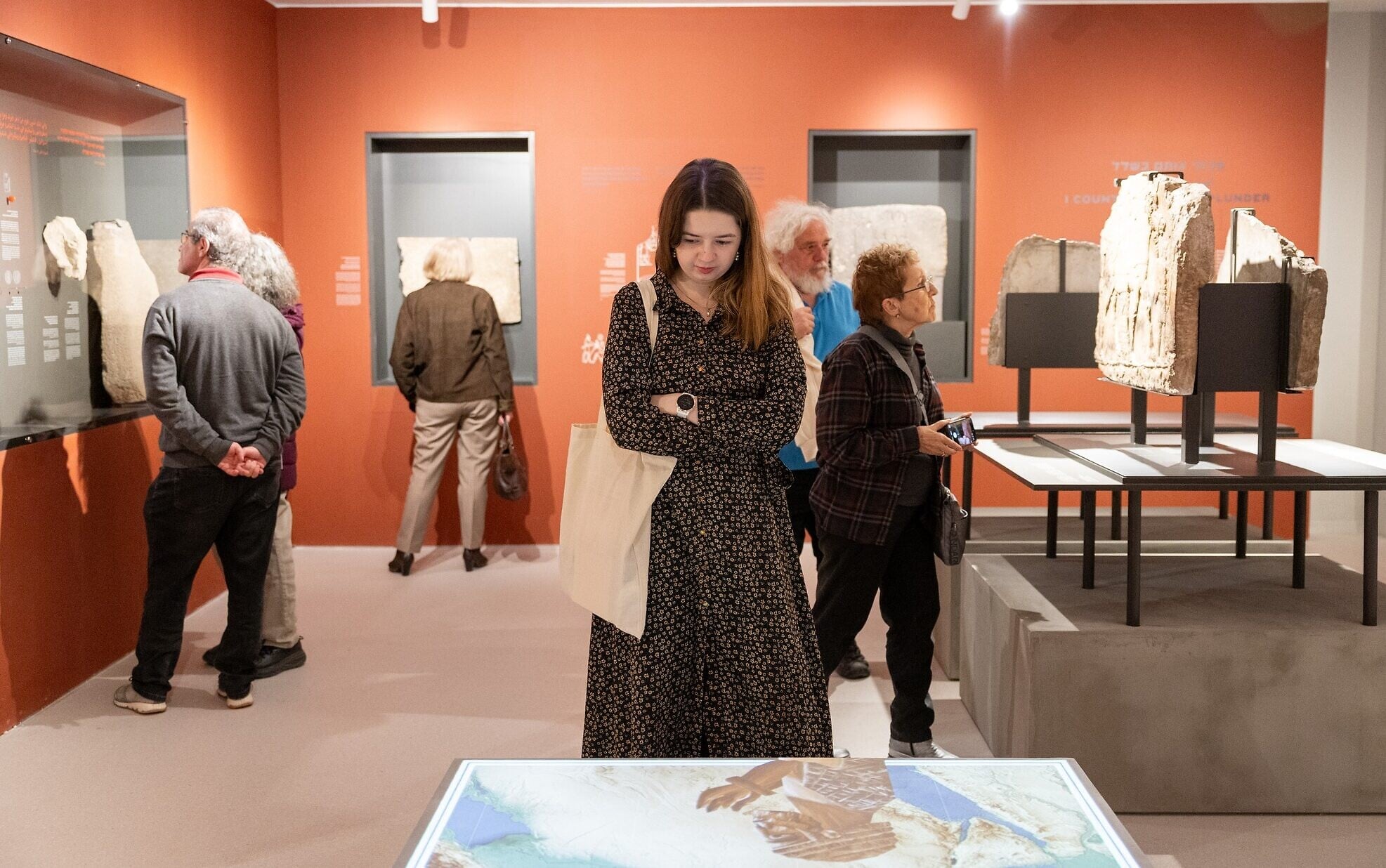
When the US-Israel war with the Iranian regime began on February 28, sending Israelis to their safe rooms and bomb shelters under a hail of Iranian missile fire, museums immediately closed their doors in accordance with the IDF’s Home Front Command’s prohibition against most gatherings.
Within several days, however, some of the smaller museums opened their doors for the prescribed gatherings of 50 people, if their buildings had appropriate safe spaces for visitors to take shelter if needed.
“Once it was clear that this wasn’t going to be just a day or two, we thought about what people need, what can we do?” said Risa Levitt, executive director of Jerusalem’s Bible Lands Museum.
Levitt and her staff had already been conducting some of their own research about cultural institutions and how visits to museums could reduce stress and help people suffering from post-traumatic stress disorder and other traumas.
“I said, ‘Let’s open as a faith space,’” said Levitt, who moved to Israel in January 2023 from San Diego, where she served as a professor of Hebrew Bible and Judaism at San Diego State University, as well as director of the Jewish Studies program.
Get The Times of Israel’s Daily Edition
by email and never miss our top stories
By signing up, you agree to the terms
The Bible Lands Museum, with two bomb shelters in its basement and a robust family program regularly held on Saturdays, was already accustomed to entertaining children and their parents.

Family activities at the Bible Lands Museum during the 2026 US-Israel war with Iran (Courtesy)
“We figured we could invite up to 50 people in to do something, to just get out of the house in a relaxed atmosphere, for something to do with the kids,” said Levitt. “We were confident we could take care of people should something happen.”
They quickly sold out two rounds of 50 tickets for morning and afternoon gatherings, placing bracelets on each visitor to keep track of how many guests were admitted and to ensure they left after the allotted two hours.
“Sure enough, once in the morning round and once in the afternoon round, we marched them all to the shelters [during a siren] and then let them back into the galleries,” said Levitt.
Their neighbor, the Bloomfield Science Museum, has been operating under the same structure, with two shelters, a limited number of tickets sold each day, and the stipulation that all children under the age of 16 must be accompanied by an adult.
This kind of limited opening is too complicated for their other neighbor, the Israel Museum, to contemplate right now.
“It’s a much bigger institution,” said Levitt, “everything changes when you’re that size.”
On the first and second days of the war, the Israel Museum and the nearby National Library posted photos of their staff moving artworks and valuable artifacts into storage, as did the Tel Aviv Museum of Art and Haifa Art Museum.
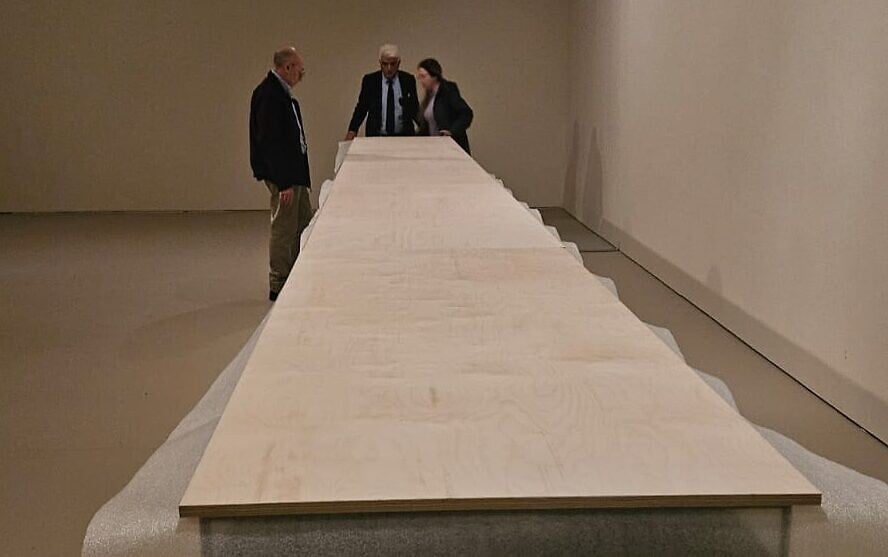
The Israel Museum puts the long-awaited exhibit of the Isaiah Scroll away as Iran began launching missiles at Israel on February 28, 2026 (Courtesy)
Across town, the Tower of David Museum, situated within the thick walls of the ancient citadel, opened to the public after removing some of the precious objects from glass vitrines for safekeeping.
“All of our gallery rooms are made from sturdy ancient walls and, as such, are safe rooms,” said museum director Eilat Lieber.
Back at the Israel Museum, the new director, Yasha Jacob Grobman, who officially began his job on the second day of the war, wrote in a newsletter that the museum’s Youth Wing staff was traveling around the city with the MuseumMobile to offer art workshops at neighborhood shelters.
Like other museums, including the Tel Aviv Museum of Art, ANU Museum of the People and others, the Israel Museum offered online activities, including gallery tours and talks.
Across the street, the National Library is also closed to the broader public and operating at limited capacity. The reading halls are open for Research Card holders only, and advance registration is required.
The Bible Lands Museum, however, has always been the smaller neighborhood institution. It was founded by Elie Borowski in 1992 to house his personal collection, with galleries displaying hundreds of artifacts, including ancient documents, idols, coins, statues, weapons, pottery and seals from across the ancient Near East.
Like most Jerusalem museums, it receives funding from various government ministries as well as the Jerusalem municipality, and budgets are more scarce than ever after more than two years of war.
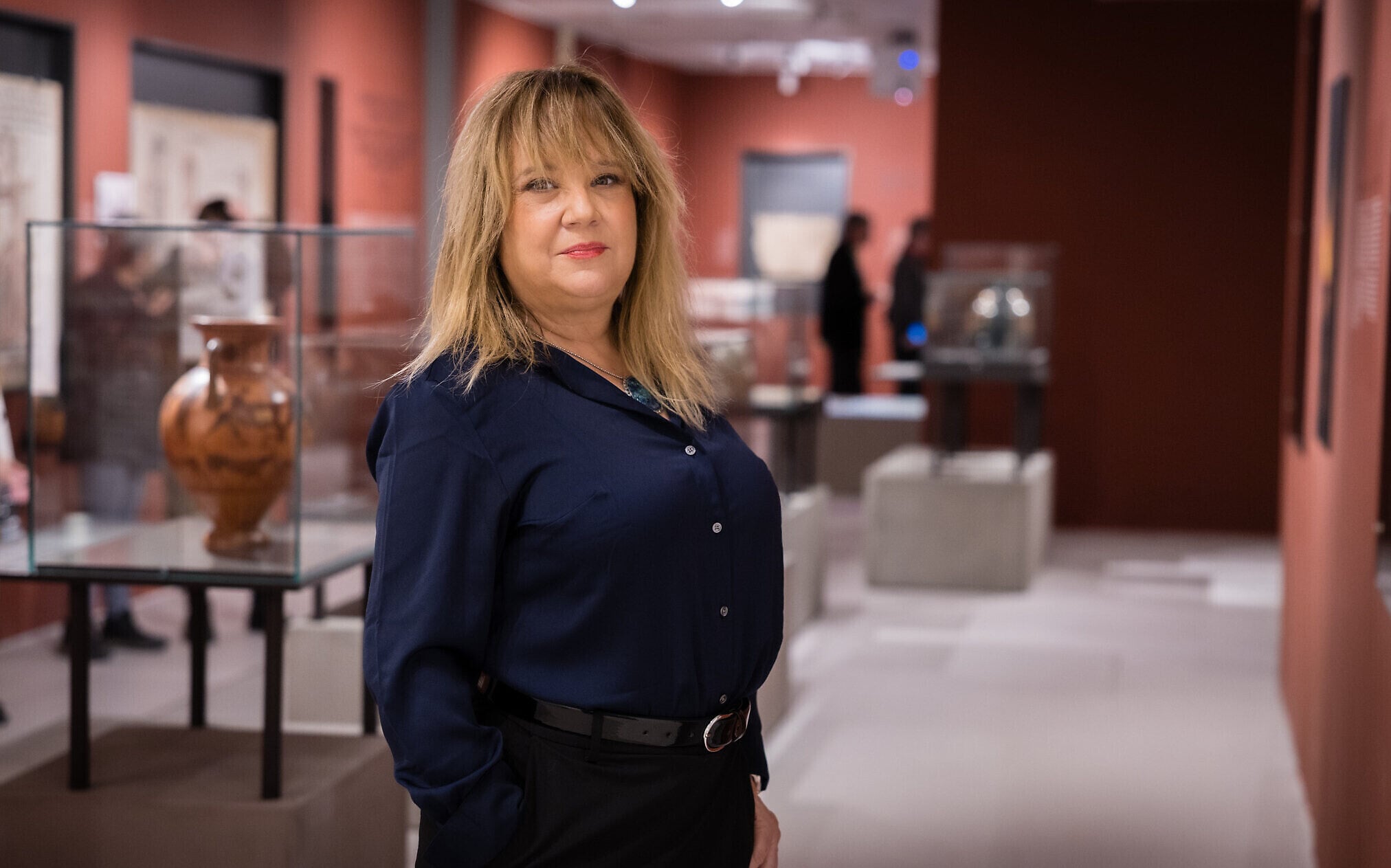
Bible Lands Museum director Risa Levitt at the opening of ‘As Soon as the War is Over,’ at the Bible Lands Museum on February 23, 2026 (Yael Ilan)
Still, said Levitt, “we’re smaller and more agile. After October 7, it was so clear what people needed, and we opened for free and quickly. This time it’s different because it’s not so clear how long this will be, or what Passover will be like. I have to make sure the museum doesn’t go bankrupt.”
During the Passover holiday, the Bible Lands Museum, like most museums in Israel, is open to the public with free admission, sponsored annually by Bank Hapoalim.
“That’s what we were set to do,” said Levitt. “As every day passes, and even though no official word has come out, it seems clear to me that it won’t happen in that format. Either they’ll pull out, and we’ll do what we have now, or we’re working on plan B.”
It’s disappointing for Levitt, who opened a major exhibit titled “As Soon as the War is Over” five days before the war began. The display offers a broad look at what it means to win and lose wars.
The exhibit is centered on a stone relief panel from Sennacherib’s palace in Nineveh, showing captives being led away after a siege as they became prisoners of war. The loaned piece led Levitt and her staff to examine episodes of war and to think about victory and peace.
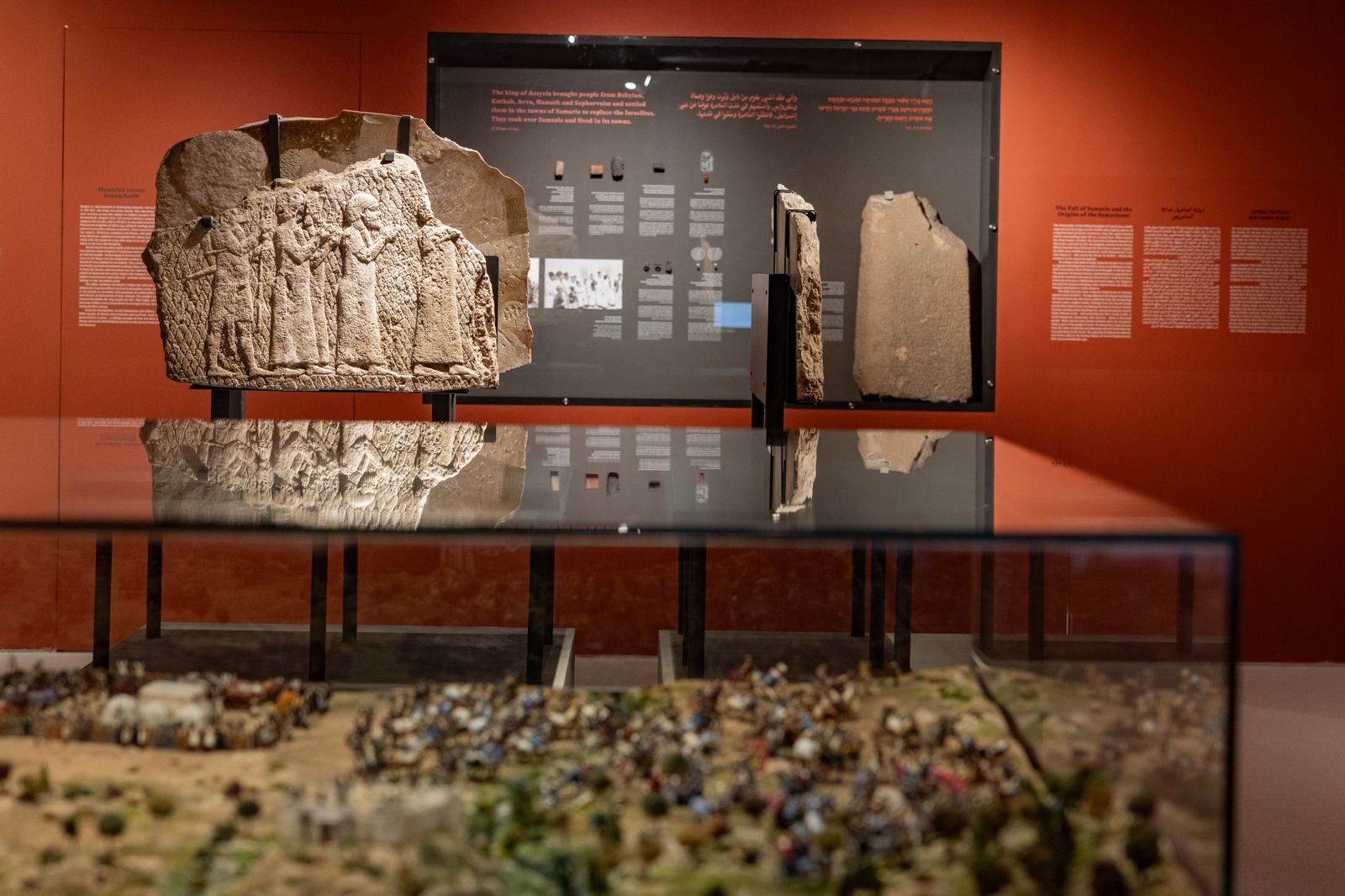
The stone relief panel from Sennacherib’s palace in Nineveh, the centerpiece of ‘As Soon as the War is Over,’ at the Bible Lands Museum on February 23, 2026 (Yael Ilan)
As often happens, they worked with their fellow institutions, including the Israel Museum, the Israel Antiquities Authority and the Eretz Israel Museum.
And for now, the exhibit is only being seen by a limited number of visitors.
“It’s about the cost of fighting and what is peace,” said Levitt. “At the moment, I have a hard time thinking about marketing it.”