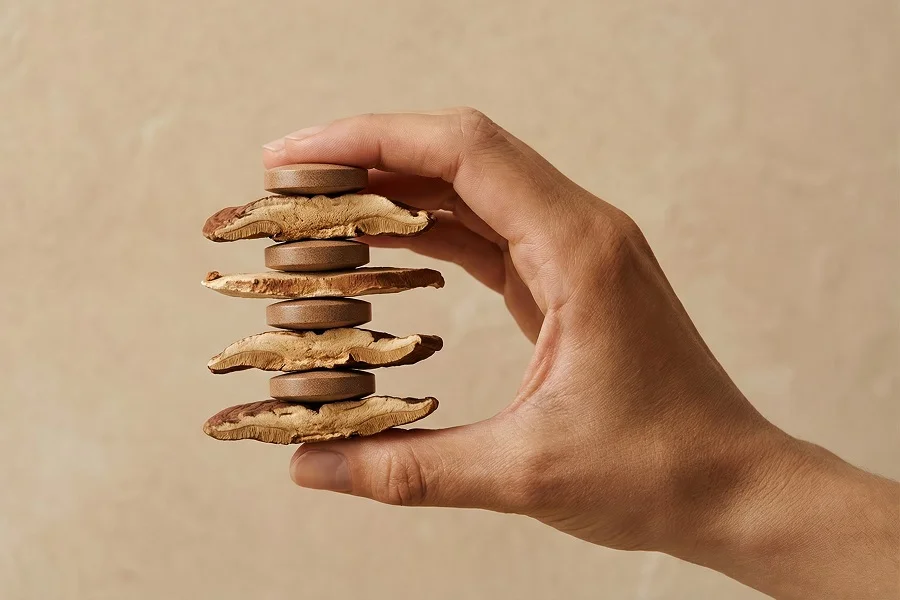
With mushroom supplements growingly available and recognized by consumers for broad immunity and brain health claims, Hifas da Terra emphasizes the growing focus on clinically backed claims and traceable ingredients for health and wellness. The European biotech company recently launched its medicinal mushroom supplements on the US market.
The company’s solutions are based on over 25 years of research and clinical development and include products with mushrooms’ fruiting bodies and full mushrooms, including their mycelium or root network.
Hifas da Terra conducts placebo-controlled clinical trials to substantiate the efficacy of its mushroom formulas, which it considers an “uncommon level of scientific rigor” in the supplement category.
Nutrition Insight speaks to Hifas da Terra founder, biologist, and oncology clinical research specialist Dr. Catalina Fernández de Ana Portela about evolving research approaches and regulatory differences between the US and EU markets.

What challenges or opportunities do you see in the US regulatory landscape compared to Europe?
Fernández de Ana Portela: The US is a fascinating market because it moves fast — sometimes faster than science. While regulatory flexibility has allowed for innovation, it has also created inconsistency in quality and claims, which is not sustainable in the long term.
As the category matures, there will be increasing pressure for transparency, standardization, and real evidence. That shift will separate companies very quickly. For us, coming from a more demanding scientific and regulatory environment, this is an opportunity. We are already operating at a level of rigor and validation, which we believe will become the expectation, rather than the exception.
How does your formulation approach differ from typical mushroom products on the US market?
Fernández de Ana Portela: Most of the market is still built around ingredients and storytelling rather than science and outcomes. At Hifas da Terra, we take a completely different position. We don’t start with a mushroom; we start with a clinical objective. We ask: What do we want to improve? Which biological pathway do we need to modulate? And what level of evidence is required to support that?
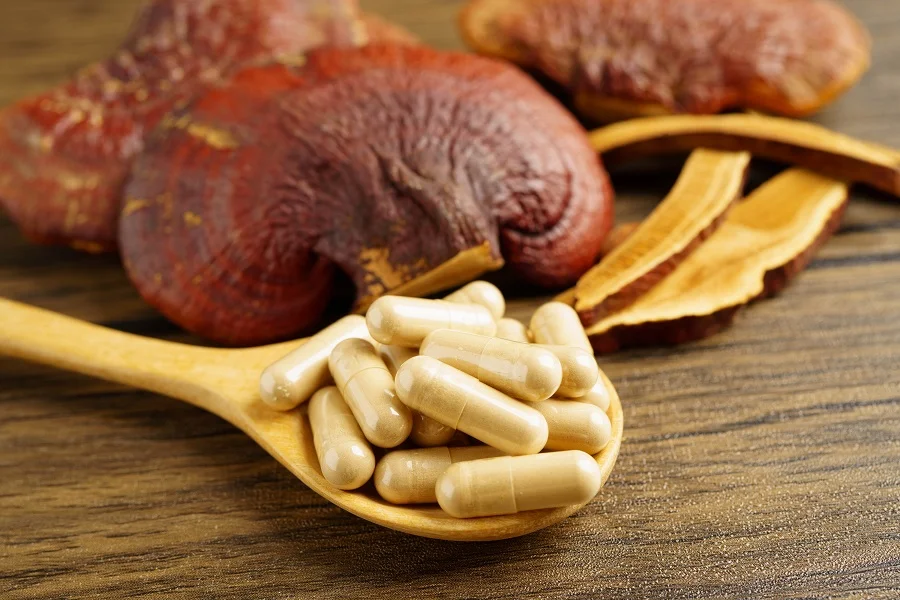
Hifas da Terra conducts placebo-controlled clinical trials to substantiate the efficacy of its mushroom formulas, which it considers an “uncommon level of scientific rigor” in the supplement category.
We think in terms of biology, not just ingredients. The starting point is always the mechanism, whether it is neuroinflammation, immune dysregulation, hormonal signaling, or longevity. Once we define that, we identify which compounds have the strongest evidence for influencing those processes.
From there, we design formulations based on specific bioactive compounds, defined dosages, and measurable effects, all of which we validate through clinical research. Different mushroom species offer different functional molecules, but what really matters is how those molecules interact with the body. That’s why we focus on mechanisms of action rather than tradition alone. Importantly, we don’t believe in one-size-fits-all solutions.
Real value comes from precision — selecting and combining extracts to target specific outcomes and then validating those combinations clinically. This is how you move from a generic supplement to something that can genuinely support health in a measurable way.
What are some opportunities for new product developments?
Fernández de Ana Portela: For me, format innovation is strategic, not cosmetic. We need to think about how to deliver maximum efficacy with maximum adherence. That means developing formats that are intuitive, convenient, and aligned with specific use cases.
I see strong potential in targeted, condition-specific formats that fit seamlessly into daily routines, as well as advanced delivery systems that improve bioavailability and speed of action. We are also looking at formats that start to bridge the space between supplements and clinically relevant solutions.
Ultimately, the real innovation is not the format itself, but whether that format delivers a real, noticeable, and measurable benefit. That is where the category is going — from promises to performance. Our mission remains to improve lives worldwide through the power of mushroom bioscience.
We are moving from a market driven by curiosity to one driven by credibility. The next phase will be defined by a few key shifts: moving from claims to clinical proof, from ingredients to mechanisms of action, from general wellness to targeted, condition-specific solutions, and finally, from consumer-only interest to health care integration.
The brands that will lead are not necessarily the ones with the best marketing, but the ones that can demonstrate efficacy. I’m convinced that in a few years, the question will no longer be: “Does it contain mushrooms?” but rather: “What does it do and where is the evidence?”