



A small, often overlooked organ may play a far greater role in health than previously thought. Researchers from Denmark’s Aarhus University found that individuals with better thymus function respond more effectively to immunotherapy and face lower risks of cancer, cardiovascular disease, and early death.
Two new studies titled Thymic health and immunotherapy outcomes in patients with cancer and Thymic health consequences in adults, published in Nature, show that the thymus, once thought inactive in adults, remains active in adulthood and is closely linked to immunity, cancer treatment outcomes, and overall survival. Researchers from Denmark’s Aarhus University found that individuals with better thymus function respond more effectively to immunotherapy and face lower risks of cancer, cardiovascular disease, and early death.
What is the thymus, and why was it overlooked in adults?
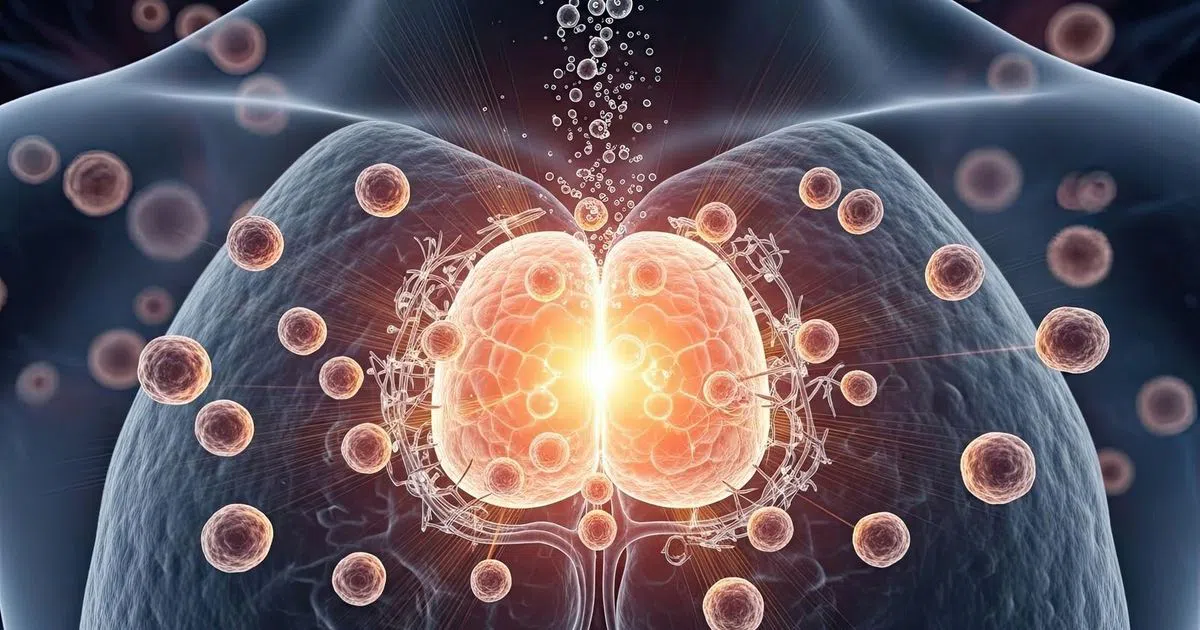
The thymus is a small organ located behind the breastbone that trains T cells, which are the immune system’s frontline defenders against infections and cancer.
According to the study, for decades, scientists believed the thymus becomes largely inactive in adulthood because it shrinks with age. But these new findings challenge that assumption.
Nicolai Birkbak, a professor at the Department of Clinical Medicine at Aarhus University and the Department of Molecular Medicine at Aarhus University Hospital, and one of the researchers behind the studies, said in a statement available on the website of Aarhus University, “This is significant and potentially paradigm-shifting new knowledge… it challenges the prevailing view that the thymus has no importance in adult life.”
The research now shows the thymus continues to influence immune strength well into adulthood.
How does thymus health affect cancer treatment outcomes?
One of the studies analysed 3,476 cancer patients receiving immunotherapy, the treatments that activate the body’s own immune system to fight tumours.
The researchers found:
Patients with higher thymic health had better survival outcomes
They showed lower risk of disease progression and death
The effect was seen across multiple cancers, not just one type
According to the study authors, thymus health performed as a strong predictor of outcomes, comparable to existing tumour-based biomarkers like PD-L1.
Prof Birkbak said, “Those with well-preserved thymus function respond better and live longer.”
Why does immunotherapy depend on thymus function?
The researchers explain that immunotherapy works by activating T cells to attack cancer. Since the thymus produces and matures these T cells, its health directly affects how strong that immune response can be.
The study found that better thymic health was linked to:
Greater T-cell diversity
Stronger immune signalling pathways
Improved adaptive immune competence
This shifts the focus from just the tumour to the patient’s immune system.
“It is important to consider the patient’s overall immunological status, and not focus solely on the tumour,” Prof Birkbak noted.
Does thymus health affect lifespan and disease risk?
In the second study, researchers analysed over 27,000 adults from large long-term cohorts and found that thymic health is strongly linked to survival.
Key findings include:
People with higher thymic health had significantly lower mortality
They had reduced risk of lung cancer and cardiovascular disease
Low thymic function was linked to shorter lifespan
For example, in one cohort, mortality after 12 years was nearly double in people with poor thymic health compared to those with better function.
What lifestyle factors influence thymus decline with age?
The research highlights that thymus ageing is not uniform, it varies widely between individuals. Lifestyle factors that may accelerate thymus shrinkage include:
Smoking
Obesity
Physical inactivity
The studies found: “A thymus with low function is associated with an increased risk of early death and of developing cancer or cardiovascular disease.”
This suggests thymus health is not just biological, but partly modifiable.
How can thymus health be measured using new technology?
Another one of the breakthroughs in these studies is the use of AI-based analysis of CT scans to measure thymic health.
Researchers developed a deep-learning system that:
Analyses routine chest scans
Assigns a “thymic health score”
Predicts immune strength and outcomes
This could make thymus evaluation a practical tool in clinical settings.
What do these findings mean for future cancer treatment?
According to the researchers, these findings could reshape how doctors approach disease prevention and cancer care.
Potential future implications include:
Better patient selection for immunotherapy
Early identification of high-risk individuals
New therapies aimed at boosting thymus function
“It opens new perspectives to identify individuals with rapid thymus decline and investigate whether it is possible to slow or influence the process,” said Prof Birkbak in the statement.