SUSTAINING LIFESAVING EFFORTS
In the interview, Mr Ong called for more volunteers who can step in during emergencies, as well as donations to sustain initiatives focused on prevention and reduce long-term healthcare costs.
“We want to train as many people as possible to be first responders, to know how to respond, how to react, and how to support this group of people,” he said.
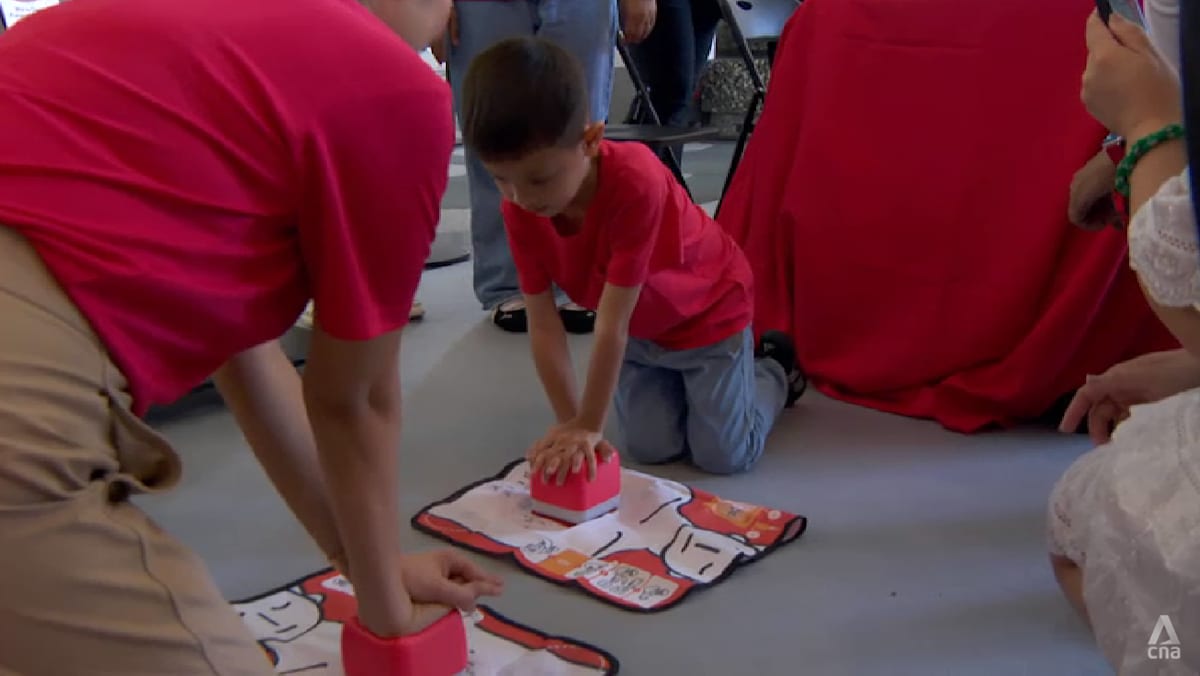
He shared that the foundation is reaching out to institutes of higher learning and corporates with its Restart A Heart programme, a simplified CPR and automated external defibrillator (AED) training course that equips laypersons with essential lifesaving skills.
It is also working with partners such as the Singapore Civil Defence Force, St John Singapore and the Singapore Red Cross to ensure more Singaporeans know how to respond in a cardiac emergency.
Drawing from his two decades in the finance and banking sector, Mr Ong noted that many people “spend days and nights just focusing on the business and the numbers” while paying insufficient attention to their health, particularly heart health.
However, the measures also come with their own set of challenges.
Mr Ong said there is a common misconception that the Singapore Heart Foundation is funded by the government, when in fact it relies largely on donations.
He explained that 99 per cent of its activities and subsidies for clients are supported by donations, which makes funding a key challenge.
“With the right level of financial support, we can do more, we can expand, we can reach out and we help more,” he added.
He also emphasised the importance of taking proactive steps to reduce the risk of cardiovascular disease: “I find that when … people start early (with prevention), they live a healthier life. Then we can actually reduce the country’s health cost burden in the long run.”