There is a quiet revolution taking place in the baby and toddler food market right now, and it centers around sorghum. Baby food companies in the United States have discovered the multi-faceted value of food-grade sorghum, and it is taking its rightful place in this $80 billion industry.
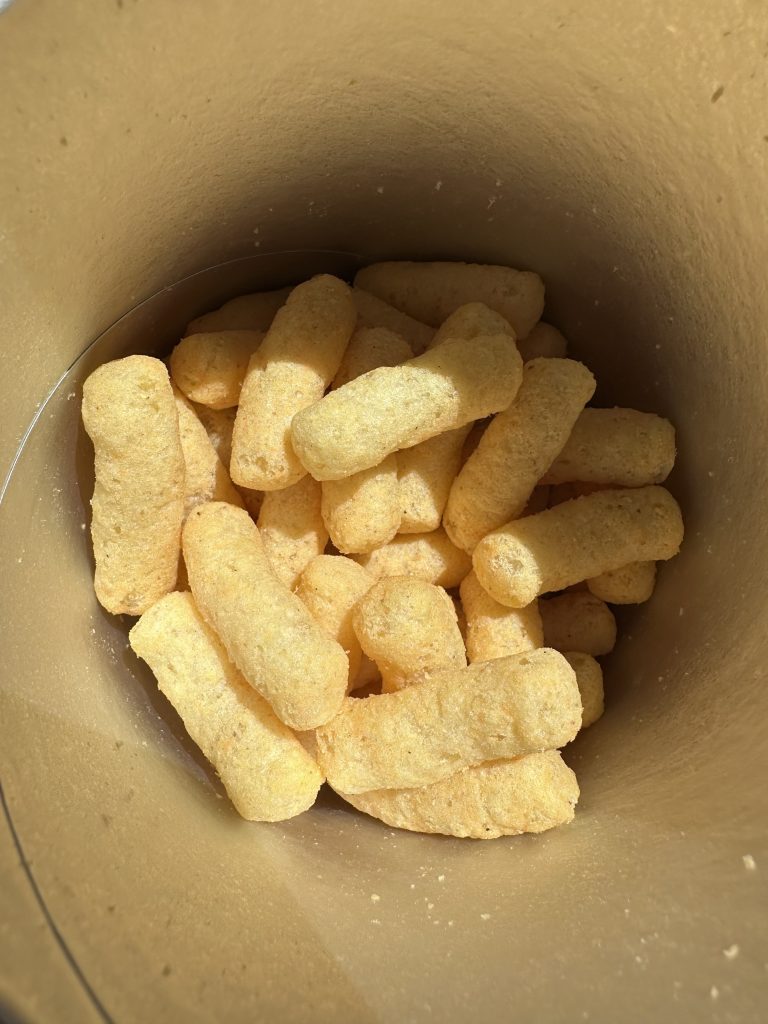 Gerber’s Lil’ Crunches are made with whole grain sorghum meal as the first ingredient. (Journal photo by Lacey Vilhauer.)
Companies like Gerber, Once Upon a Farm and Mission Mighty Me, are celebrating sorghum for its nutritious, non-GMO, gluten-free, sustainable qualities and shifting away from traditional ingredients such as wheat and rice for puffed snacks and other foods.
Lanier Dabruzzi, director of nutrition and food innovation at the United Sorghum Checkoff Program, said the sorghum food market has been expanding in general, but the baby and toddler food sector in particular has seen widespread growth within the food industry. She said this shows that sorghum producers can diversify beyond feed and fuel.
Part of the reason for sorghum’s popularity is because of a significant shift in consumers wanting to know about the products they are serving their children, and they have expressed interest in ingredients that are as good for the planet as they are for our bodies. Dabruzzi said sorghum fits that bill.
“Americans are more interested than ever in not only where their food comes from, but how it interacts with the land, environment and climate around them, and then how that food affects their family and their family’s health,” she said.
Small bites, big nutrition
Sorghum is known as a super food. It is rich in protein, fiber, phosphorus, zinc, thiamin, riboflavin, niacin, vitamin B6, selenium, copper, iron, magnesium, and manganese. According to a fact sheet from USCP, which has been verified by the U.S. Department of Agriculture, sorghum supports the immune system, energy levels and a positive mood. It can also aid in weight management, digestion, and blood sugar regulation.
Sorghum is a natural antioxidant, with certain varieties having higher antioxidant levels than blueberries. These antioxidant properties can lower risks for cancer, heart disease and diabetes. According to USCP, research has shown that sorghum leaf extract has more anti-inflammatory properties than Ibuprofen.
“As a dietitian, I am very proud to be able to talk about sorghum nutrition,” Dabruzzi said. “It is just tremendous for all people, but especially when you’re talking about babies and toddlers when every bite counts. With these little bites that they’re taking as compared to what we’re eating on a normal basis, making every bite count is so important in maximizing that nutritional bang for your buck.”
Dabruzzi put this into perspective when she explained the nutrition requirements for children.
 Elijah Vilhauer checks out a tractor during sorghum harvest. (Journal photo by Lacey Vilhauer.)
“They need one and a half times more protein, five and a half times more iron and more than four times more zinc per kilogram of body weight than an adult,” she said. “You can maximize that nutrition with sorghum because it is extremely nutrient rich, more so than some other grains.”
Since sorghum is gluten-free, it is also an ideal choice for children with gluten intolerance or certain allergies.
“Many times, when gluten-free products are made, they are made with grains that don’t have as much nutrition as sorghum,” Dabruzzu explained. “When we’re talking about babies and toddlers, sorghum has essential nutrients that are important for growth and brain development. As that brain is developing when they’re little, it is so important to get those nutrients in their body.”
Picky eating is a common issue for parents with toddlers, and making sure children are consuming enough protein and fiber can be a chore. Sorghum’s protein and fiber levels can help kids feel full longer and power them through the day, even if they do not eat a full meal. Additionally, Dabruzzi said sorghum is used in multiple forms that even picky eaters love. Some of these include whole grain, pearled grain, whole grain and white sorghum flour, puffs, bran, and popped sorghum.
“If animal protein isn’t as palatable at this point in their life, having a plant-based source of protein like sorghum is great,” she explained. “There are so many ways that it can be used. As a child’s palette changes, there really are endless possibilities of how they could enjoy this grain.”
Why sorghum?
Although Dabruzzi said all sorghum is edible, and thus considered food-grade, there are certain preferences end-users look for in grain destined for baby food. Food companies will pay a premium for these ingredients, but much of that comes down to what the customer is looking for. Some require certification for organic, gluten-free or kosher. White-tan sorghum is usually preferred because its coloring gives a blank canvas for adding flavors or coloring; however, there is no difference in taste between colors; it’s all cosmetics.
“If you change a product, there can be consumer perception or pushback, so the more similar you can make it look to the way it was prior, the better,” Dabruzzi said. “If you’re making a bread, using white sorghum flour will look much more similar, to say, a wheat-based flour, than anything else.”
Sorghum is also very easy to work with when making puffed baby and toddler snacks that must pass through an extruder to be formed into different shapes and textures.
“Sorghum extrudes beautifully,” Dabruzzi said. “It’s just the way the grain is made.”
 A combine ride during sorghum harvest. (Journal photo by Lacey Vilhauer.)
Additionally, baby food companies are sourcing all of their sorghum from the Sorghum Belt, which reaches from Texas to the Dakotas, with Kansas being the No. 1 producing state. This keeps the ingredients local, without having to import it from abroad. Close proximity makes it more attractive for end-users because of a shorter supply chain, economical shipping costs, and cutting out complications with tariffs.
Sorghum’s sustainability is also a major selling point for end-users to advertise on their food packaging and in marketing campaigns. Once Upon a Farm has worked with USCP to promote sorghum. A section of its website states the many benefits of sorghum as a crop and an ingredient.
“Along with being a nutritious and versatile ingredient, sorghum flour has many ecological benefits,” the website states. “A highly drought-tolerant crop, sorghum can be grown in a wide variety of soils, climates, and altitudes. It requires much less water than other grains to thrive and is well-adapted to heat and drought. It also promotes biodiversity as it’s often grown in rotation with other crops. As proud champions of organic agriculture, we are always trying to find the best ingredients—good for your children, and good for our planet.”
Sorghum has a beautiful story to tell of sustainability and nutrition, and with a strong foothold in the baby and toddler food arena, its tenure within the niche food industry is only expected to grow, and so will profit for specialty sorghum growers. Instead of telling kids to eat their Wheaties, we may soon be telling them to eat their sorghum!
Lacey Vilhauer can be reached at 620-227-1871 or [email protected].