
3 min readNew DelhiMar 25, 2026 04:00 PM IST
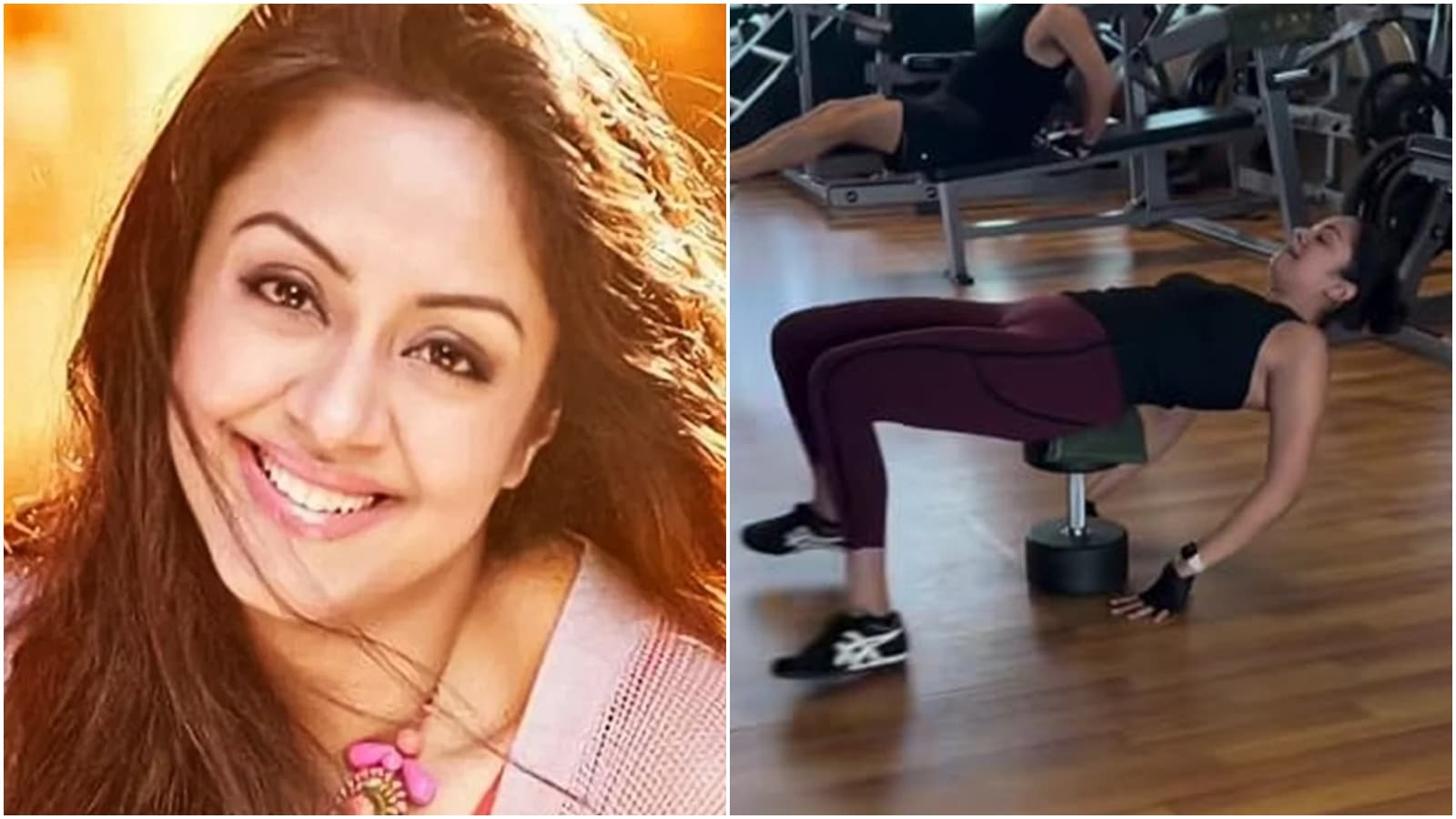
Tamil actor Jyotika recently impressed her fans and followers by showcasing her core strength as she balanced on a single dumbbell during a hip thrust. “Core balance”, she shared an Instagram Story. Praising her consistency, her trainer, Mahesh Ghanekar, wrote a note on his Instagram. “Your core shows your discipline. Energy. Effort. Consistency. Nothing comes easy. This is not an exercise but a reflection of your lifestyle. Daily routine. Daily discipline. Daily grind. We don’t get this by chance, but we have to build it,” he wrote.
He also issued a disclaimer that it should only be attempted “under expert guidance”.

Consultant dietitian and fitness expert Garima Goyal said this kind of movement reflects advanced control rather than just raw strength. “Strength combined with balance is what builds long-term functional fitness,” said Goyal.

Jyotika’s balance using a single weight demonstrates strong lower-body control and deep core engagement. “Performing a single dumbbell hip thrust with the upper back supported on a weight challenges glute strength while forcing the core and pelvic stabilisers to work harder to maintain alignment,” said Goyal.
She explained that unilateral movements like this help correct muscle imbalances, improve hip stability, and enhance coordination. “Strong glutes and a stable core are essential for protecting the lower back, improving posture and supporting efficient everyday movement. This kind of training reflects functional strength, where control and balance are just as important as lifting heavy,” said Goyal.
According to Goyal, this variation forces the body to recruit stabilising muscles around the ankles, knees, hips, and core to maintain alignment. “The smaller base of support means the nervous system must work harder to coordinate movement, improving neuromuscular efficiency. Such exercises are excellent for building joint stability, improving posture, and strengthening deep core muscles that support the spine,” said Goyal.
However, balance-loaded exercises should only be attempted once foundational strength and mobility are established. Without adequate control, there is a risk of knee or ankle strain. Progression and supervision are important, said Goyal.
DISCLAIMER: This article is based on information from the public domain and/or the experts we spoke to. Always consult your health practitioner before starting any routine.