Based on the recent, largest study on non-meat eaters, which controversially suggested dietary health risks for vegans, Nutrition Insight speaks with the European Food Information Council (EUFIC) to explore why the study findings should not be simplified.
Its content manager and in-house nutrition expert, Laura Bosman, argues that several media headlines have simplified the findings to suggest “vegan diets raise colon cancer risk.” She asserts that the “biggest flaw” among these headlines is that presenting a single, uncertain association as a causal effect. She also believes these headlines do not adequately address key limitations of the research.
The study in the British Journal of Cancer involved 1.8 million participants and showed that vegetarian diets have a lower risk of several cancers but a higher risk of esophageal squamous cell carcinoma compared to meat, poultry, pescatarian, and vegan eaters.

The study attracted the attention of various experts who lauded the study design but cautioned careful interpretation of the findings.
Bosman says: “This was a pooled analysis of prospective cohort studies (a type of observational study), so it can show associations over time, but it cannot prove that a vegan diet itself caused colorectal cancer.”
“Neither did the study directly measure the biological mechanisms behind the observed association. To make an evidence-based recommendation to potentially advise against following a vegan diet for colorectal cancer prevention, we need to consider the totality of evidence — including findings from multiple study designs, consistency across populations, and biological plausibility.”
Question of robust, consistent evidence
Bosman explains that nutrition guidelines are based on systematic reviews and meta-analyses and not single studies. There is broad evidence that red and processed meat increase risk of colorectal cancer, while diets rich in whole grains, fiber, fruits, vegetables, pulses, nuts and seeds lower the risk.
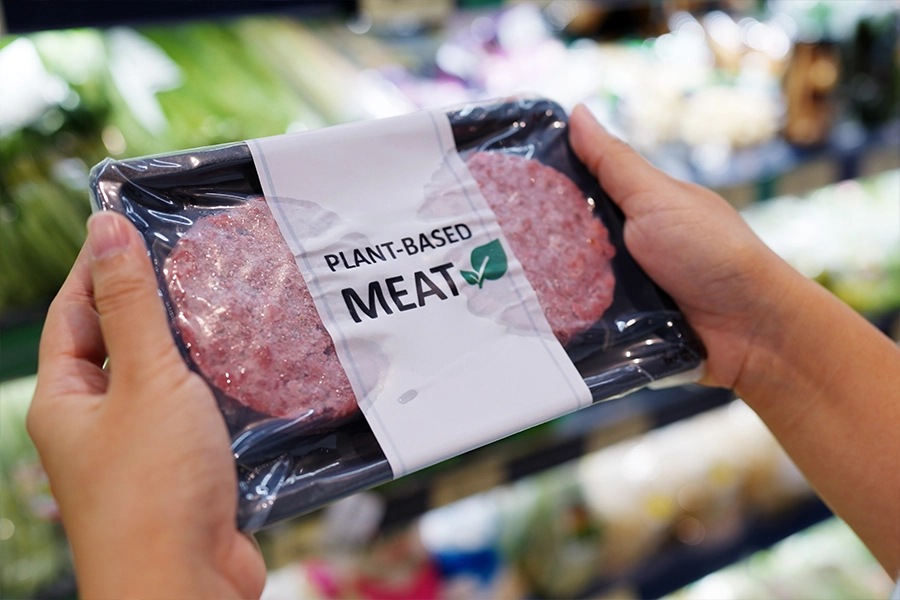 Plant-based diet quality and nutrient adequacy remain central to colorectal cancer prevention, EUFIC says.“Well-planned vegan diets typically emphasize many of these protective components and have been associated with favorable outcomes for cardiovascular health, cancer, and other chronic diseases.”
She notes vegans should pay attention to iodine, iron, zinc, riboflavin (vitamin B2), vitamin B12, and vitamin D
“The current study should be interpreted as one piece of evidence within a much larger body of research, rather than a basis for changing dietary recommendations or concluding that vegan diets increase colorectal cancer risk.”
Bosman maintains that dietary guidance should be based on robust, consistent evidence. She suggests that the study was not strong, as the vegan colorectal cancer result was based on 93 incident cases among vegans across seven studies. Also, in five of those studies, there were fewer than ten vegan cases.
“That makes the estimate statistically less stable: with small numbers, chance variation (random fluctuations in a small number of cases), misclassification (for example, people being inaccurately classified as vegan based on a single dietary assessment or changing their diet over time), and differences between cohorts (such as variations in diet, fortification practices, screening rates, or population characteristics across countries) can have a larger influence on the final pooled estimate.”
She also underscores the sensitivity analysis. The study researchers excluded the first four years of follow-up, making the association no longer statistically significant. This is important for dietary guidance, as it is based on consistent findings tested under different assumptions.
“When a result changes after a standard check like this, it suggests the finding may be influenced by early cases or underlying biases, rather than reflecting a stable relationship. For that reason, the result should be interpreted cautiously and not taken as strong evidence on its own.”
Quality of vegan diet
The study also made no distinction between whole-food plant-based and processed vegan diets, which are high in refined carbs or sugar. It only classified people based on whether they ate animal products.
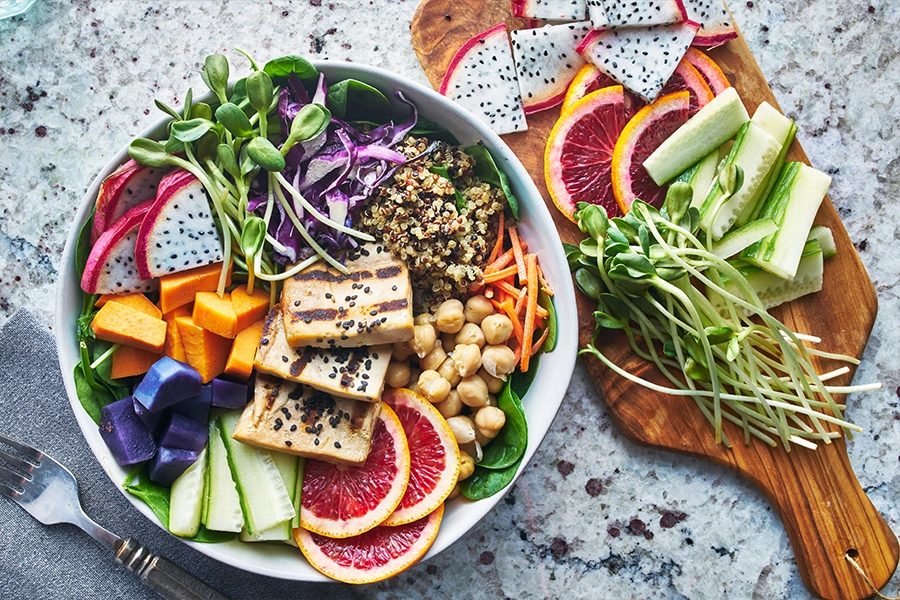 EUFIC calls for nuance as a large observational study is misread as proof that vegan diets cause colorectal cancer.“The practical message is that this study does not tell us that all vegan diets carry the same risk profile,” states Bosman. “That means the study cannot identify whether the observed association relates to vegan status itself, nutrient adequacy, or diet quality.”
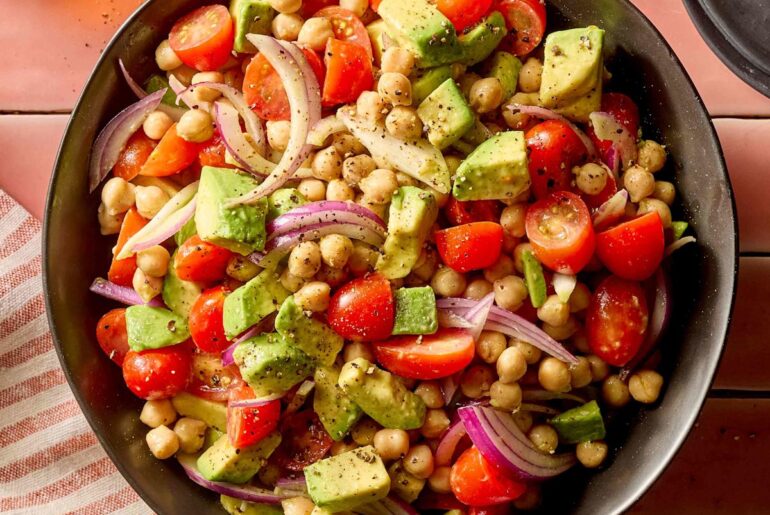
“Nutritionists should counsel clients on diet quality within vegan eating patterns. In practice, that means building diets around legumes, whole grains, vegetables, fruits, nuts, seeds, and fortified foods (such as fortified soy drinks) while keeping foods higher in fat, salt, and sugar in moderation.”
Bosman also points out that the researchers found that vegans had the highest consumption of whole grains and fiber, which is generally known to lower colorectal cancer risk.
“Additionally, one important consideration is calcium intake. Vegans in these cohorts had the lowest calcium intakes (around 590 mg/day, below the UK adult reference intake of 700 mg/day), and low calcium has been linked to colorectal cancer risk in other research. This highlights the importance of including calcium-rich or fortified foods, such as fortified plant drinks and calcium-set tofu, and supplementing where needed.”
She notes that calcium balance can be influenced by other nutrients, such as sodium, phosphorus, and vitamin D. This makes it essential to have a good balance of all these micronutrients.
“Overall, the study supports more nuanced counseling: rather than concluding that vegan diets increase cancer risk, it highlights that diet quality and nutrient adequacy are key and that this study cannot disentangle those factors,” she points out.
Bosman concludes that the practical learning point is to ensure that vegan diets are nutritionally complete, especially nutrients linked to colorectal cancer risk.