
This article contains affiliate links; if you click such a link and make a purchase, we may earn a commission.

This One Supplement Could Slow the Aging Process Westend61
“Hearst Magazines and Yahoo may earn commission or revenue on some items through these links.”
Researchers just discovered yet another reason you might want to take an omega-3 supplement. When they analyzed data from 777 participants aged 70 and older in the DO-HEALTH trial, they found that taking 1 gram of omega-3 fatty acids daily was associated with slower biological aging. Yes, many factors affect how quickly you age, but taking a supplement could be an easy way to help keep your cells younger for longer.
Omega-3 fatty acids are involved in the structure of our cell membranes, provide energy for our body and help form signaling molecules for our cardiovascular, pulmonary, immune and endocrine systems, according to the National Institutes of Health. In addition to many other health benefits, this new research suggests that omega-3 fatty acids may also play a key role in the aging process.
“One of the most critical questions in the field of rejuvenation is whether a treatment exists that can effectively rejuvenate humans, not just mice,” says Heike Bischoff-Ferrari, Dr.P.H., M.P.H., a clinical scientist and medical doctor with a focus on healthy longevity at the University of Basel, Switzerland, and co-author of the new study. “This motivated us to explore whether three simple interventions — omega-3, vitamin D and exercise — influence the most reliable molecular markers of biological age: epigenetic clocks.”
Here’s everything you need to know.
What is biological age?
Epigenetic clocks are tools that detect chemical changes in genetic material to identify patterns and, in turn, measure biological age. “We age in a spectrum,” says Bischoff-Ferrari. “Some people are biologically younger than their chronological age (age in our passport), and others are biologically older.”
A variety of epigenetic clocks have been invented to measure biological age in different ways, so there isn’t a single test that can tell you definitively what your biological age is. The researchers who conducted this study used four epigenetic clocks to get a range of measurements.
“The good news is that we know today that only a small part (10 to 30%) of the variability of health span is explained by our genes,” says Bischoff-Ferrari. “The rest is determined by our environment, socioeconomic factors and especially lifestyle, such as exercise and diet.” Bischoff-Ferrari and her colleagues used epigenetic clocks to measure the biological ages of people who took 1 gram of an algae-based omega-3 supplement daily, 2,000 IU of vitamin D daily, and/or participated in a 30-minute strength-training exercise program three times per week.
What did the study find?
People who took an omega-3 supplement daily for 3 years had a biological age that was, on average, 3 months younger than their chronological age, according to 3 of the 4 epigenetic clocks. The fourth clock showed “there was an additional benefit if omega-3 was combined with vitamin D and exercise,” says Bischoff-Ferrari. Three months may not sound like much, but Bischoff-Ferrari says it’s enough to have an impact at the population level.
No one knows exactly why omega-3 fatty acids could have such a strong effect on the aging process, but there are plenty of hypotheses. “Notably, these results complement previous clinical findings in the same trial (DO-HEALTH), which found that omega-3 lowered the rate of falls by 10% and reduced the rate of infections by up to 13%, while omega-3, vitamin D and exercise combined lowered the risk of pre-frailty by 39% and invasive cancer by 61%,” says Bischoff-Ferrari.
It seems omega-3 fatty acids, vitamin D, and exercise could provide a triple whammy of aging protection. “It is well-documented in basic science that vitamin D prevents uncontrolled cell growth and has anti-inflammatory benefits,” says Bischoff-Ferrari. Meanwhile, exercise is famous for being “a major driver of healthy longevity with protective effects on most age-related chronic diseases, such as heart disease, cancer, osteoporosis and diabetes,” she says.
This study shows how powerful small lifestyle changes (such as taking a supplement or starting a new exercise regimen) can be in protecting our health and slowing the aging of our cells.
fcafotodigital – Getty Images
What are the best sources of omega-3 fatty acids?
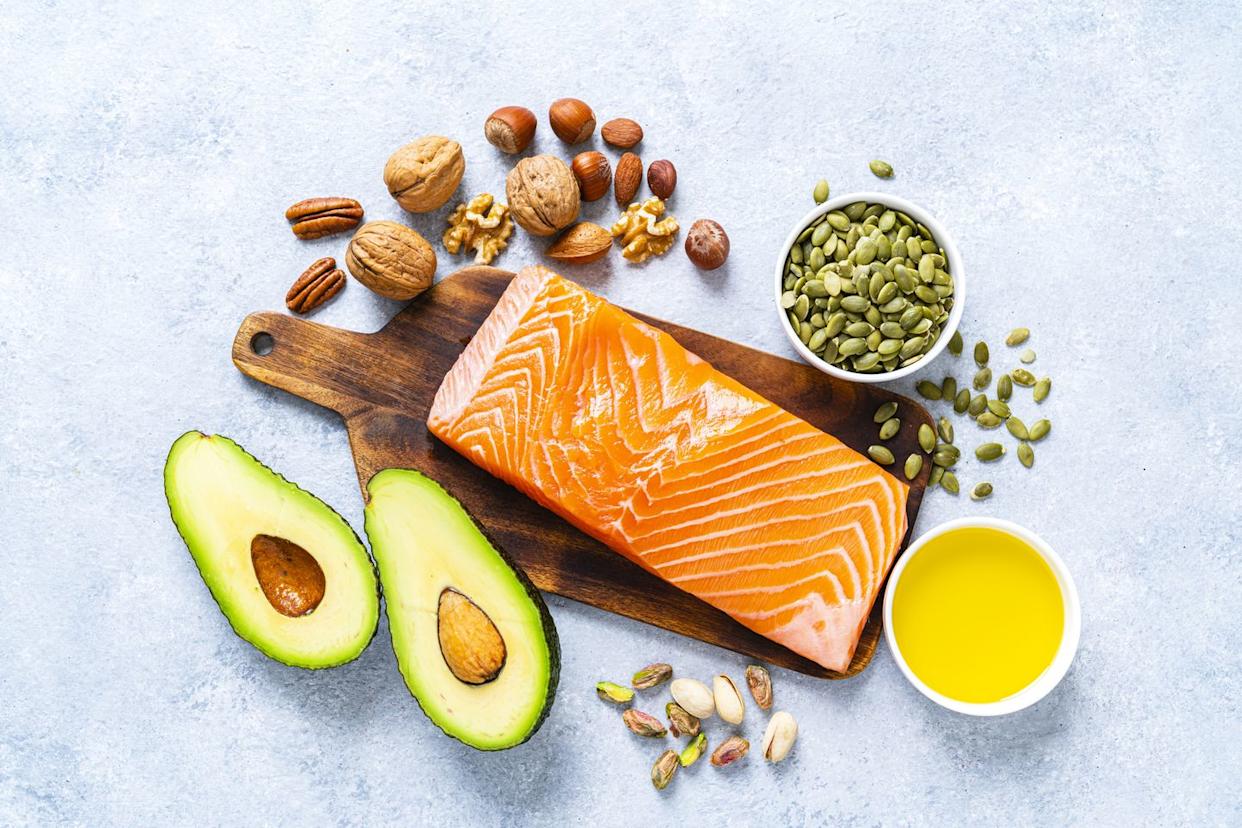
As important as they are for our health and longevity, omega-3 fatty acids aren’t easily created in our bodies, so we need to source them from food and supplements. Foods rich in omega-3s include fatty fish (such as salmon), nuts (like walnuts), seeds (such as chia seeds), plant oils (such as soybean oil), and fortified foods (such as some eggs, yogurt, and drinks).
There are three main types of omega-3 fatty acids: ALA, DHA, and EPA. There are no set recommendations for the amount of DHA and EPA you should consume, but males aged 14 and older should aim for 1.6 grams of ALA every day, while the goal is 1.1 daily grams of ALA for females aged 14 and older. People breastfeeding should aim for 1.3 grams of ALA per day, and those who are pregnant should aim for 1.4 grams per day. If you’re not getting enough from your diet, you may want to ask your doctor about taking an omega-3 supplement.
You Might Also Like