Standing workouts aren’t just a more accessible alternative to floor-based sessions; they can be even more effective in some regards, and you can certainly achieve all manner of fitness goals without hitting the deck for your exercises.
“Standing core exercises can be a fantastic way to build real-world strength; the kind that improves balance, posture and how your body moves day to day,” say Cyan Koay and Matt Van Mol, founders of Strong Band, who make resistance bands with “progress lines” on them to help you judge the resistance you’re using and see your progress.
Article continues below
You may like
The benefits of standing core workouts
(Image credit: Getty Images)
“When we train our core from a standing position, we’re also training our entire body to work together as a system,” say Koay and Van Mol. “This includes muscles around your foot and ankle up to your shoulders and neck.
“This means standing core training has great real-world carry-over and is a fantastic way to get strong for everyday activities as well as sports.
“Standing core exercises train your core in a functional, upright position, improve your balance and coordination, engage more muscles, including your glutes and shoulders, and can reduce strain on the neck compared to floor-based exercises.
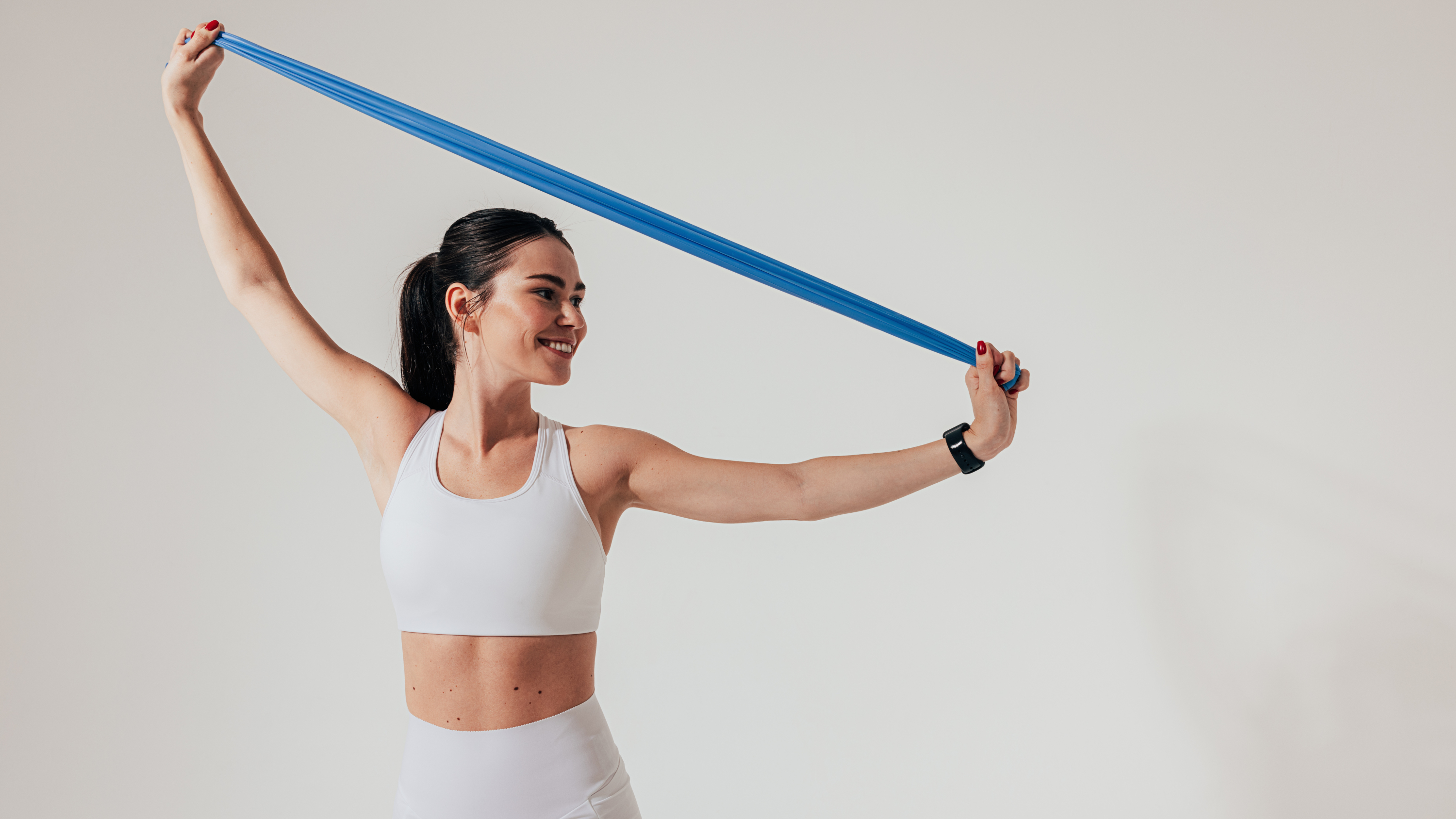
“Adding a resistance band increases the tension and forces your core to work harder, which, when done regularly, gives your body a reason to adapt and get stronger.”
Standing core workout with resistance bands
Complete two rounds of the following exercises, doing 12 reps on each side and resting for 20 seconds between exercises, then taking a longer 60-second break between the two rounds.
For this workout, Koay suggests using an X-Light or Light resistance band — she is using the Light band herself in the Instagram post above.
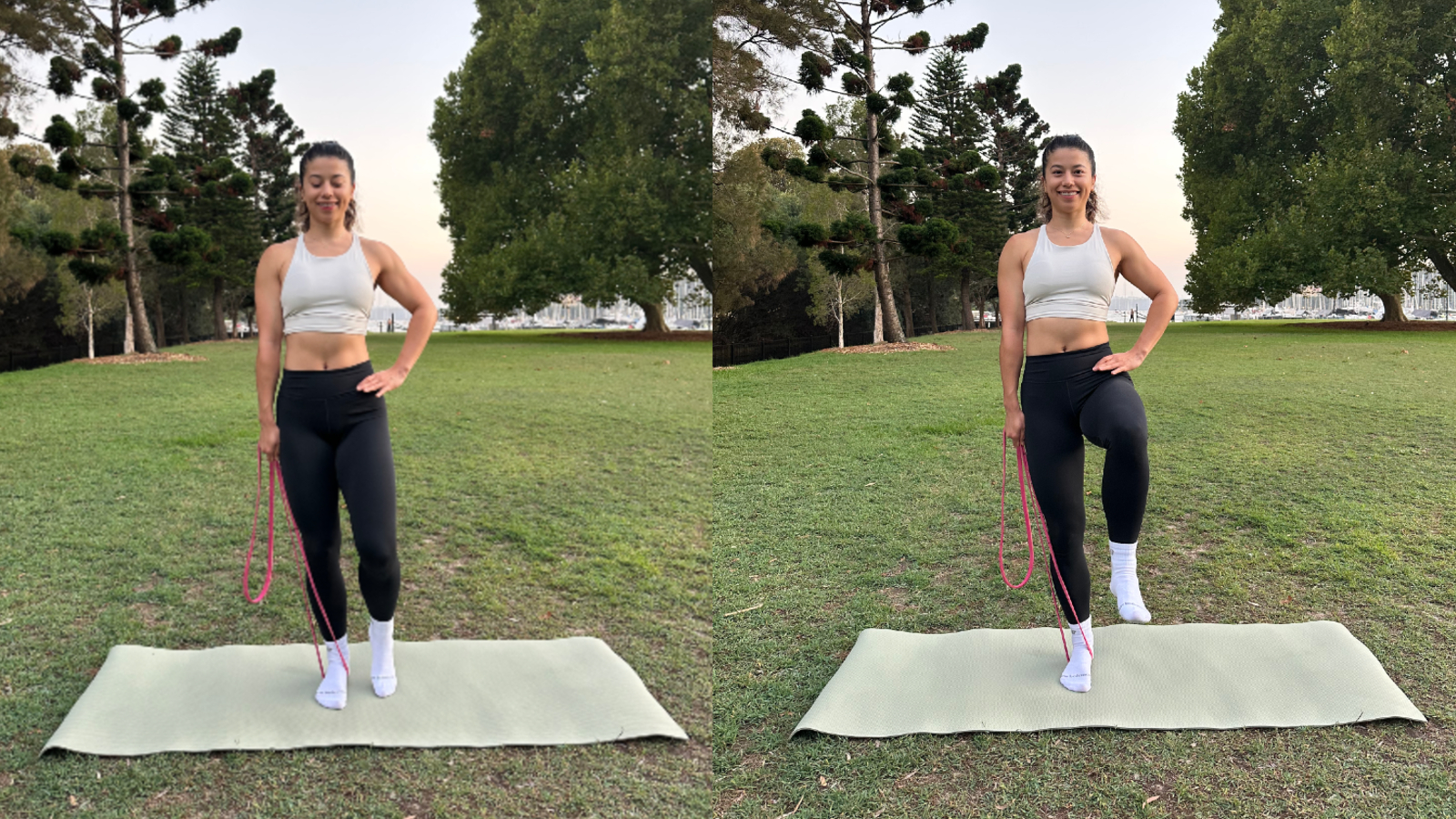
Suitcase march
(Image credit: Cyan Koay/Strong Band)
What it works: Deep core stabilizers, hip flexors, foot and ankle, balance
What to read next
“This move looks simple, but it’s deceptively challenging,” say Koay and Van Mol. “Your core has to work hard to keep your body upright as you lift one leg at a time.
Stand on the band with one foot and hold it in the same-side hand at around knee heightStand tall, keeping most of your weight on one foot and gently brace your coreLift the opposite knee to hip-height, then lower with controlPerform all your reps on one side, then repeat on the opposite side.
“To progress the move, hold slightly lower down the band to increase the resistance and challenge,” say Koay and Van Mol. “You can also hold further up the band to decrease the resistance.”
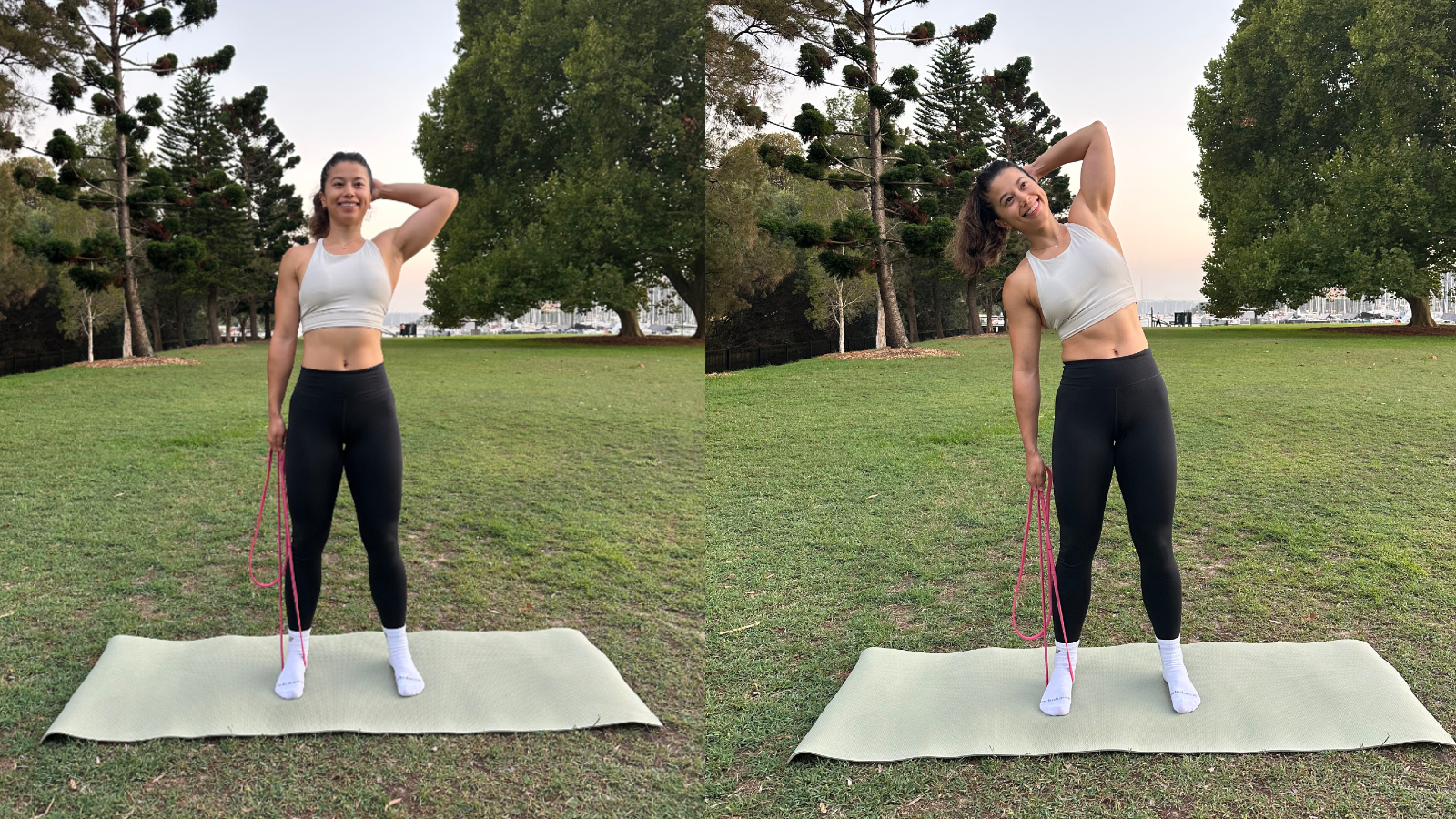
Side bend
(Image credit: Cyan Koay/Strong Band)
What it works: Obliques
“A controlled side bend helps strengthen the muscles that support your spine and improve lateral stability,” say Koay and Van Mol.
Stand on the band with one foot and hold it in the same-side hand at around knee heightStand tall. You should feel the band already pulling you to one sideSlowly bend sideways, lowering your hand toward your kneeReturn to upright using your core, not momentumPerform all your reps on one side, then repeat on the opposite side.
“To progress the move, hold slightly lower down the band to increase the resistance and challenge,” say Koay and Van Mol. “You can also hold further up the band to decrease the difficulty.”
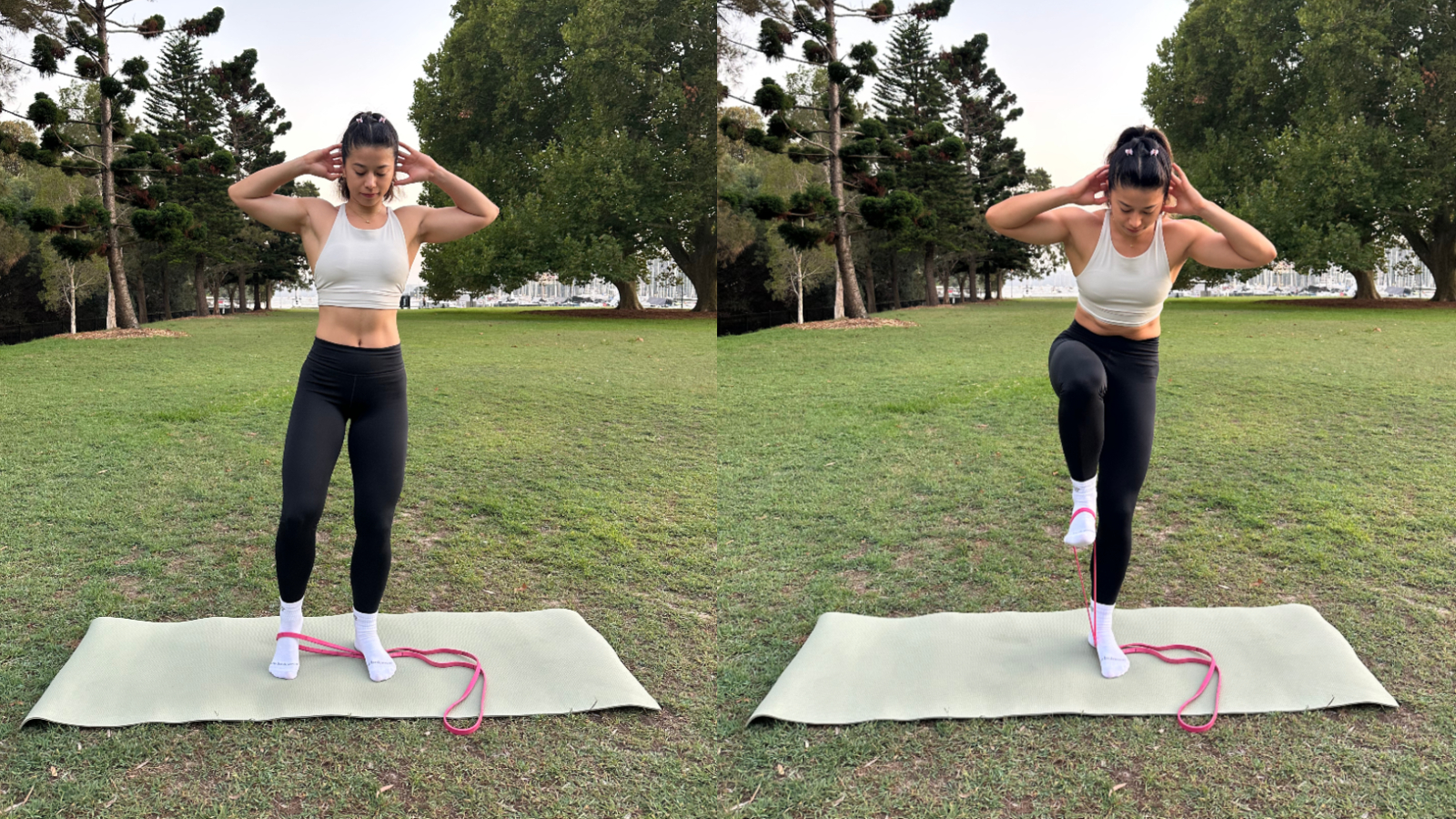
Banded crunch
(Image credit: Cyan Koay/Strong Band)
What it works: Rectus abdominis
“This is a standing alternative to traditional crunches,” say Koay and Van Mol. “You can also do this without a band and still get a good challenge. If you find it hard to balance, hold onto a wall or chair.”
Loop the band around one foot, and stand on the ball of your footStand on the band with your opposite foot, and put most of your weight into this legDrive your knee up from the side that is looped around your foot, and slightly crunch forward by bringing your ribs toward your hipsReturn to your starting position with controlPerform all your reps on one side, then repeat on the opposite side.
“For a greater challenge, step onto the band slightly closer to the foot that the band is looped around,” says Koay and Van Mol. “Or to make it easier, step slightly further away.”
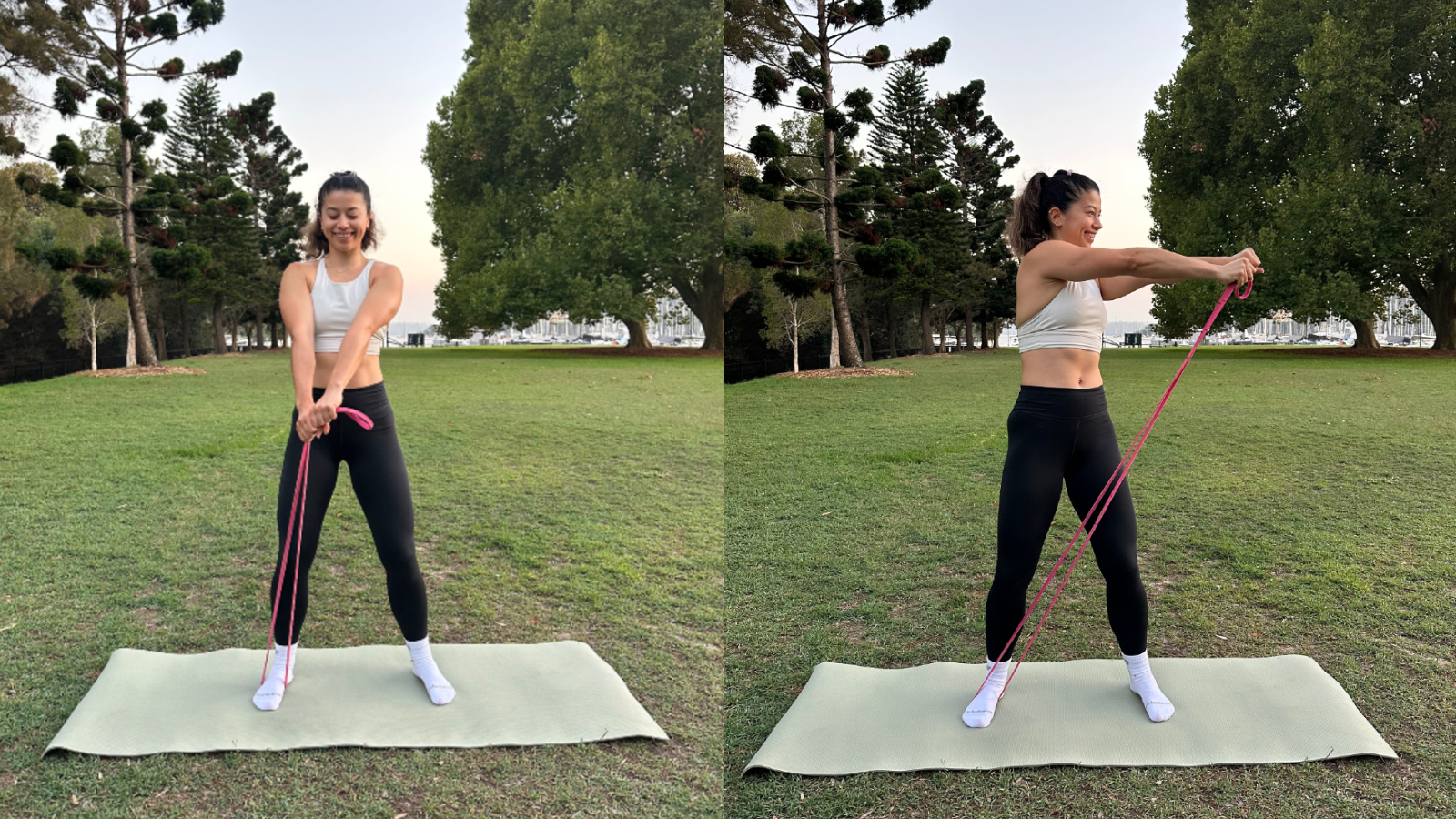
Banded woodchop
(Image credit: Cyan Koay/Strong Band)
What it works: Obliques, rotational strength
“This rotational movement mimics real-life twisting patterns and builds strength throughout your entire core,” say Koay and Van Mol.
Stand on the band with one foot and hold the other end with both handsKeeping your arms straight, start with your hands low and in line with your foot standing on the bandPull diagonally across your body to the opposite side, finishing with your hands in line with your shouldersControl the movement back down to the starting positionPerform all your reps on one side, then repeat on the opposite side.
“Hold the band slightly further down the band toward your foot to increase the resistance,” say Koay and Van Mol.
Looking for more fitness ideas?
Follow Tom’s Guide fitness on Instagram for more workouts, routines, tips, and tricks.

Follow Tom’s Guide on Google News and add us as a preferred source to get our up-to-date news, analysis, and reviews in your feeds.
More from Tom’s Guide