By contrast, when kale is consumed with a dressing or emulsion that includes olive oil, the oil is digested in the gut, forming tiny particles called “mixed micelles” that carry carotenoids and other fat-soluble nutrients through the gastrointestinal tract and across the intestinal lining, she says. “This process greatly enhances their absorption and overall bioavailability.”
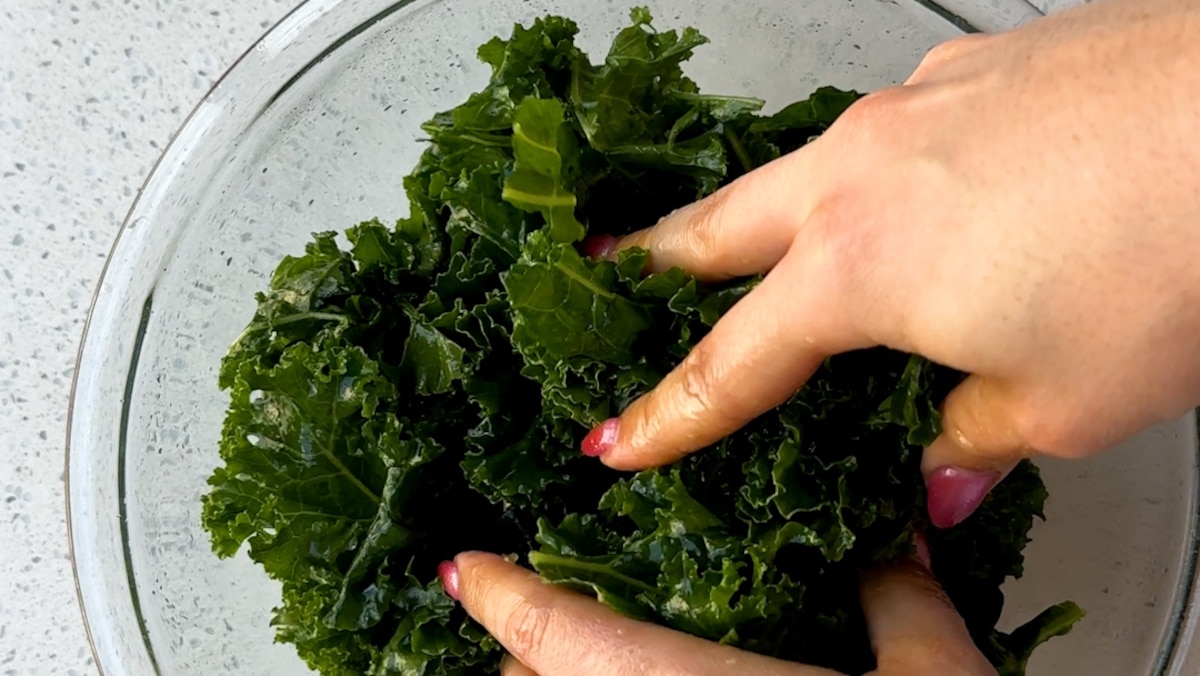
How to prep kale
Massaging kale with olive oil is likely to have a similar effect because it “would help break down some of the cell walls, leading to increased carotenoid release,” adds study coauthor David Julian McClements, a professor in the department of food science at the University of Massachusetts. (Bazilian describes this effect as akin to a “jail break” for the nutrients.) The presence of the small fat droplets from the oil would then enhance absorption of those nutrients.
Whether you choose to consume kale raw or cooked, “it’s the presence of the fat in the emulsion that does the trick, making the carotenoids more bioavailable,” says Keith Ayoob, a registered dietitian-nutritionist in New York City and an associate professor emeritus of pediatrics at the Albert Einstein College of Medicine. “Kale really needs fat to be present, but it doesn’t take a lot of fat and it doesn’t have to be olive oil. It could be another healthy oil like canola oil.”
Pairing kale with foods like avocado or nuts would also improve the absorption of fat-soluble nutrients, Zhang adds.
In the study, the researchers cooked the kale by boiling it, but the effects are likely similar for other cooking methods such as steaming, braising, or roasting with an oil-containing emulsion, McClements says. With any cooking method, the presence of small fat droplets can solubilize and transport the nutrients in kale through the gastrointestinal tract.