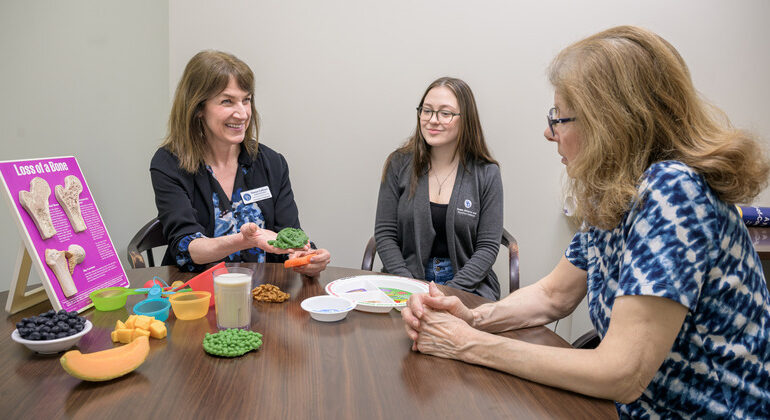
Syracuse University is home to more than a dozen registered dietitians spread across the David B. Falk College of Sport, Campus Dining, Human Resources, Athletics and the Barnes Center at The Arch. Recently, they started meeting as a cross-campus coalition.
The group came together through Molly Morgan, associate director of health and wellness for faculty and staff in Human Resources, who joined the University last year and quickly realized that dietitian colleagues were embedded across a range of schools, colleges and units.
She floated the idea of regular meetups, and the response was unanimous. The coalition’s goal: foster collaboration, align on best practices and amplify the collective impact of their work across the campus community.
As we celebrate National Nutrition Month in March, six dietitians with wide-ranging expertise share the myths they spend the most time correcting—and the tips they wish more people would actually try.
Myths Worth Busting
‘Natural’=Healthy
The word “natural” on a label feels reassuring, but it’s an overgeneralization. Plenty of natural substances—lead and arsenic among them—are anything but good for you (remember the apple juice scare of 2024?). Meanwhile, some artificial additives serve real purposes: extending shelf life, improving texture or boosting a food’s nutritional profile. The takeaway? Read the full label, not just the buzzword. — Nikki Beckwith, M.A., RD, CDN, director of the master of arts in nutrition science program, Falk College
Carbs Are the Enemy
A lot of people think that carbohydrates make you gain weight, but in reality they are the body’s main energy source. Whole carbs like fruits, vegetables, beans and whole grains deliver fiber, vitamins and sustained energy. The real issue isn’t carbs themselves; it’s the type and quantity people reach for. — Ashley Russo-Leone, M.A., RD, CDN, CNSC, assistant director of nutrition management, Campus Dining
Your Body Needs an Annual Detox or Cleanse
A common myth is that you need to detox or do a “cleanse” at least once per year. The human body has its own detoxification crew working around the clock: the liver, kidneys, lungs, lymphatic system, colon and skin. Most healthy bodies do not need help eliminating toxins and harmful substances. They need consistent, balanced nutrition. — Ashley Russo-Leone, M.A., RD, CDN, CNSC, assistant director of nutrition management, Campus Dining
A ‘Nutritionist’ and a ‘Registered Dietitian’ Are the Same Thing
In most states, anyone can call themselves a nutritionist—no degree, no exam, no oversight required. Becoming a registered dietitian (RD) or registered dietitian nutritionist (RDN), on the other hand, requires rigorous education, supervised practice hours, a credentialing exam and ongoing continuing education. If you’re managing a health condition, navigating food allergies or fine-tuning athletic performance, that distinction matters. — Molly Morgan, RDN, CDN, CSSD, associate director of health and wellness for faculty and staff
Tips Worth Trying
Think 80/20, Not All-or-Nothing
Dietitians are not the food police. A more sustainable framework: about 80% of the foods you choose should align with your health goals and nutritional needs, leaving 20% for flexibility. Perfection isn’t the point, consistency is. — Jessica Garay, Ph.D., RDN, CSSD, CSCS, FAND, assistant professor of nutrition and food studies, Falk College
Push Back on the Protein Hype
From protein coffee foams to meat add-ons at every counter, today’s marketing makes it seem like more protein is always better. It’s important, sure, but excess calories from protein can lead to weight gain just like excess calories from anything else. Most people can meet their daily needs without the extras, and over-focusing on protein can crowd out variety and other essential nutrients. Unsure how much you actually need? A registered dietitian can help. — Nikki Beckwith, M.A., RD, CDN, director of the master of arts in nutrition science program, Falk College
Breakfast Breaks the Fast—Literally
After a full night of sleep, your body’s energy tank is running on empty. Skipping breakfast extends that deficit and can leave you dragging well into the afternoon. It doesn’t have to be elaborate. Even a small meal with protein and complex carbs can make a noticeable difference. — Jessica Garay, Ph.D., RDN, CSSD, CSCS, FAND, assistant professor of nutrition and food studies, Falk College
Feeding Kids? Stock Smart and Let Them Play
When it comes to young eaters, two strategies go a long way. First, focus less on curating a perfect diet and more on what’s visible and convenient in the house. Kids tend to grab what they see, so keeping fruit, yogurt, nuts and whole-grain snacks at eye level—while limiting ultra-processed options—quietly shapes better habits without mealtime battles.
Second, let little ones explore. Touching, smelling, squishing, and yes, making a mess with food are legitimate steps toward acceptance. Food play is food learning, and pressuring a child to “just take a bite” often backfires. — Maryam Yuhas, Ph.D., RD, assistant professor of nutrition and food studies, and Lynn S. Brann, Ph.D., RDN, FAND, associate professor of food and nutrition studies, Falk College
Hungry at Night? Eat. (Just Eat Smart.)
Hunger is hunger, regardless of what time the clock reads. If you’re genuinely hungry at night, eat something, ideally a reasonable portion with both carbohydrates and protein. Protein promotes fullness and helps slow the rate at which carbs hit your bloodstream, which beats the alternative of raiding the chips bag on autopilot. — Jessica Garay, Ph.D., RDN, CSSD, CSCS, FAND, assistant professor of nutrition and food studies, Falk College