 Listen to this article
Two tobacco companies are claiming that a nearly 30-year-old national settlement agreement makes them immune from an environmental lawsuit brought by Baltimore City.
In a motion for summary judgment filed last month, several tobacco companies argued the 1998 Tobacco Master Settlement Agreement, which resolved health claims and resulted in billions of dollars for health costs and anti-smoking initiatives, prevents Baltimore from suing over the pollution caused by cigarette butts.
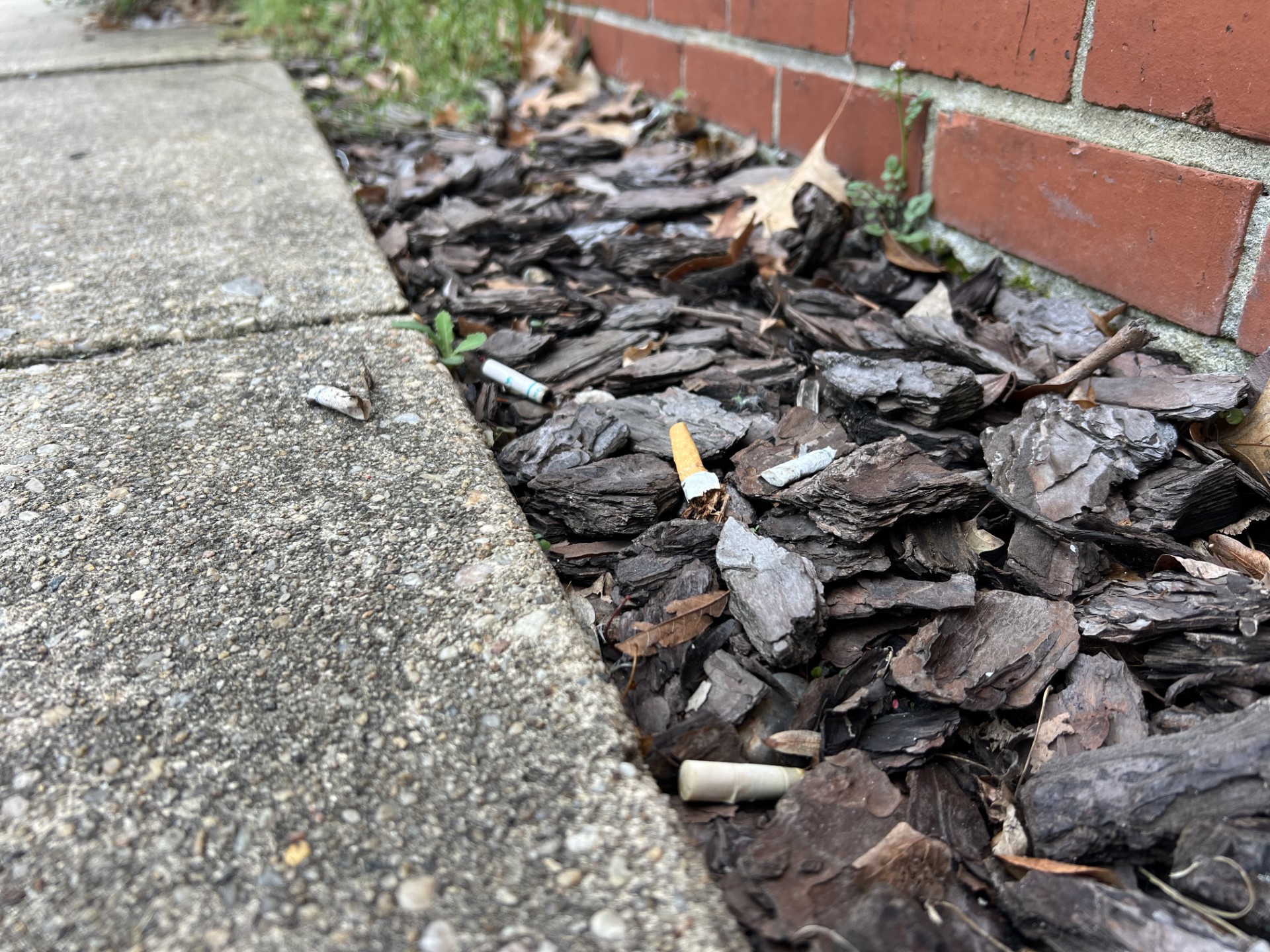
Baltimore filed in November 2022 a first-of-its-kind pollution lawsuit against many of the biggest tobacco companies, claiming it spends more than $5 million a year removing cigarette filters from city streets.
The commonly used cellulose acetate cigarette filters are not biodegradable and leach microplastics and other pollutants into the environment, the city argued, adding that biodegradable filters could be used instead.
The defendants said Maryland has received more than $3 billion in settlement payments and continues to receive more than $140 million annually. They argued the settlement uses the “broadest possible language” preventing claims and “plainly covers” the city’s claims.
“In exchange for these large, perpetual payments, Maryland — on its own behalf and on behalf of all of its political subdivisions including the City of Baltimore — released all claims in any way related to the use of, or exposure to, manufacturer Defendants’ cigarettes,” the defendants’ motion argued.
The city responded Tuesday with its own cross-motion for summary judgment. It argued the 1998 settlement only contemplated claims related to the health effects of smoking, not claims for environmental harm. It further argues that Maryland’s participation in the agreement did not prevent the city from making its own claims.
“Defendants fail in their misleading attempt to reframe the (settlement) as a global immunity agreement for all harms flowing from cigarettes,” the city’s motion states.
“Defendants’ argument collapses because Baltimore’s claims are not healthcare reimbursement claims and do not seek recovery for smoking-related human health injuries,” it states.
Soon after the case was filed, the defendants removed it to Maryland U.S. District Court and argued the city’s claims were preempted by federal law. In January 2024, U.S. District Judge Julie Rubin remanded the case back to Baltimore City Circuit Court.
Last year, Baltimore City Circuit Judge Dana Middleton allowed the case to move forward, denying key parts of the defendants’ motion to dismiss. Middleton denied some of the city’s claims, including trespass, but wrote that the city had adequately stated claims of public nuisance, strict liability failure to warn and negligent failure to warn.
In both opinions, the judges noted that the city’s claims were for environmental harm, not public health.
“For decades, the tobacco industry has known that cigarette filters contain non-biodegradable plastics that contaminate the environment indefinitely,” Paul Napoli, a partner at Napoli Shkolnik who represents the city, stated in a news release.
“The City of Baltimore has spent millions cleaning up that plastic waste from its streets and waterways, we are confident that the tobacco industry will not escape accountability for years of environmental destruction.”