A retired senior couple happily having breakfast at home. – PeopleImages // Shutterstock
Nutrition after 60: 10 habits that support healthy aging and independence
March is National Nutrition Month, an annual campaign led by the Academy of Nutrition and Dietetics that encourages people to think about how everyday food choices support long-term health.
As people age, nutrition plays an increasingly important role in overall well-being. Changes in metabolism, appetite, mobility, and even medications can affect how the body processes nutrients. What worked in our 30s or 40s may not always meet the body’s needs later in life.
Good nutrition does more than help prevent illness. It supports muscle strength, brain health, and balance, while helping lower the risk of falls and other health complications that can affect independence.
Drawing on guidance from organizations including the Centers for Disease Control and Prevention, the National Institute on Aging, and the National Council on Aging, health technology company QMedic presents 10 nutrition habits that can help support healthier aging.
While nutrition advice can sometimes feel overwhelming, many of the habits that support healthy aging are surprisingly simple and can fit easily into everyday routines.
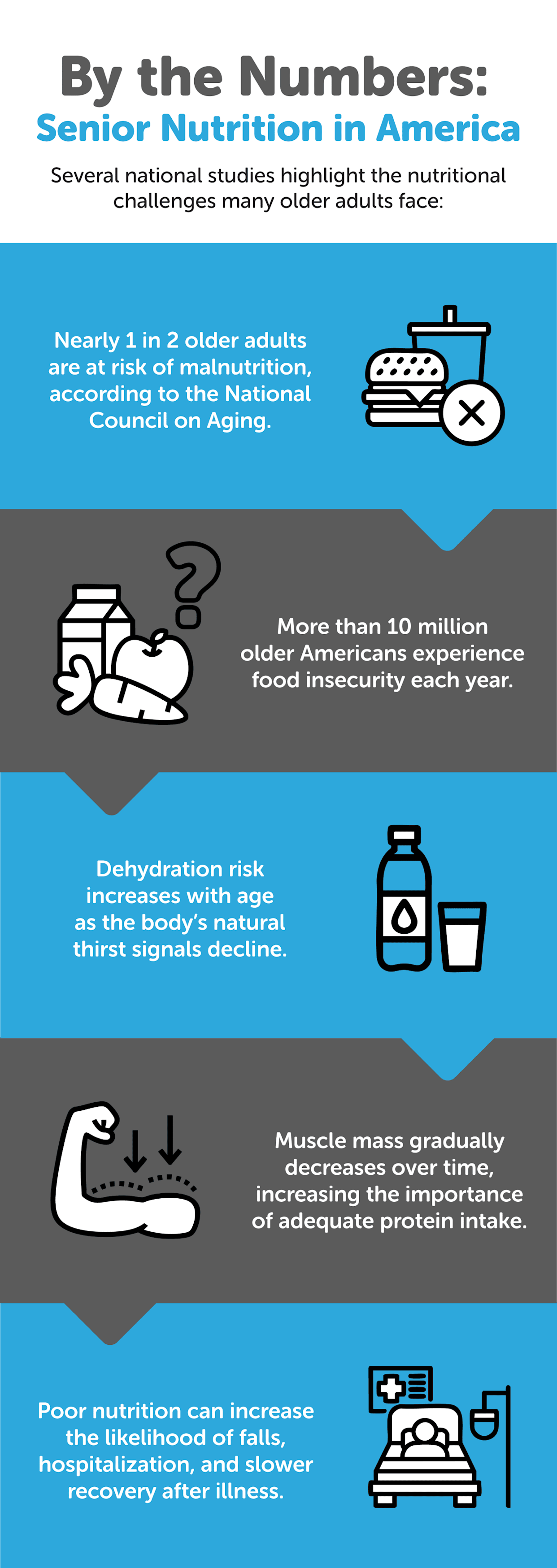
An infographic on the senior nutrition in America. – QMedic
10 Nutrition Habits That Support Healthy Aging
Prioritize protein to help maintain strength.
Muscle mass naturally declines as we age, which can affect balance, mobility, and overall strength. Protein helps maintain muscle and supports recovery from illness or injury. Foods like eggs, fish, lean poultry, beans, yogurt, nuts, and seeds are all good options to incorporate into regular meals.
Stay hydrated throughout the day.
Many older adults experience reduced thirst signals, which means dehydration can happen without realizing it. Drinking water regularly, along with fluids like tea, soups, and water-rich fruits and vegetables, can support circulation, energy levels, and mental clarity.
Add more fiber to daily meals.
Fiber supports digestive health and plays a role in maintaining stable blood sugar and cholesterol levels. Whole grains, oats, beans, fruits, and vegetables are simple ways to increase fiber intake.
Support bone health with calcium and vitamin D.
Bone density naturally decreases with age, which can increase fracture risk. Calcium-rich foods like dairy products, fortified plant-based milks, leafy greens, and certain fish help support bone strength. Vitamin D helps the body absorb calcium more effectively.
Eat a variety of colorful fruits and vegetables.
Different colors in fruits and vegetables often signal different nutrients and antioxidants. Including a wide range of produce, like berries, leafy greens, peppers, and sweet potatoes, helps support immune health and overall wellness.
Be mindful of sodium intake.
Many processed foods contain high levels of sodium, which can contribute to high blood pressure. Cooking with fresh ingredients and using herbs, spices, and citrus for flavor can help keep sodium levels in check.
Pay attention to medication interactions.
Some medications can affect appetite, digestion, or how nutrients are absorbed. Older adults taking multiple prescriptions may benefit from discussing nutrition and diet with a healthcare professional.
Try not to skip meals.
Changes in appetite can lead to skipped meals, which may result in unintended weight loss or fatigue. Eating smaller meals or snacks throughout the day can help maintain steady energy and nutritional balance.
Plan meals to make healthy choices easier.
Cooking every day can become challenging for some older adults, especially those living alone. Meal planning, grocery delivery services, and community meal programs can make it easier to maintain consistent nutrition.
Think of nutrition as part of the bigger health picture.
Healthy aging isn’t driven by a single factor. Nutrition works together with sleep, physical activity, hydration, and social connection to support overall well-being. Small daily habits can make a meaningful difference over time.
By the Numbers: Senior Nutrition in America
Several national studies and public health organizations highlight the nutritional challenges many older adults face:
Warning Signs of Poor Nutrition in Older Adults
Nutrition challenges often develop gradually, which means they can be easy to miss at first. Family members, caregivers, and care teams should pay attention to subtle changes that may indicate nutritional risk.
Some of the more common warning signs include:
Ongoing fatigue or weakness.
Reduced appetite or skipping meals.
Dizziness or increased falls.
Mood changes or confusion.
Difficulty shopping for groceries or preparing meals.
Recognizing these signs early allows families to connect older adults with helpful resources such as meal delivery programs, community nutrition services, or other support systems that help people remain safe and independent at home.
Supporting Healthy Aging
Healthy aging is shaped by many everyday habits, and nutrition is one of the most influential. Balanced meals, proper hydration, and consistent eating routines help support strength, energy, and cognitive health.
As more families look for ways to help loved ones remain safely at home, understanding the connection between nutrition, overall wellness, and independence becomes increasingly important.
Small changes in daily eating habits today can help support healthier, more independent years ahead.
This story was produced by QMedic and reviewed and distributed by Stacker.