By Andrew Reed — Correspondent
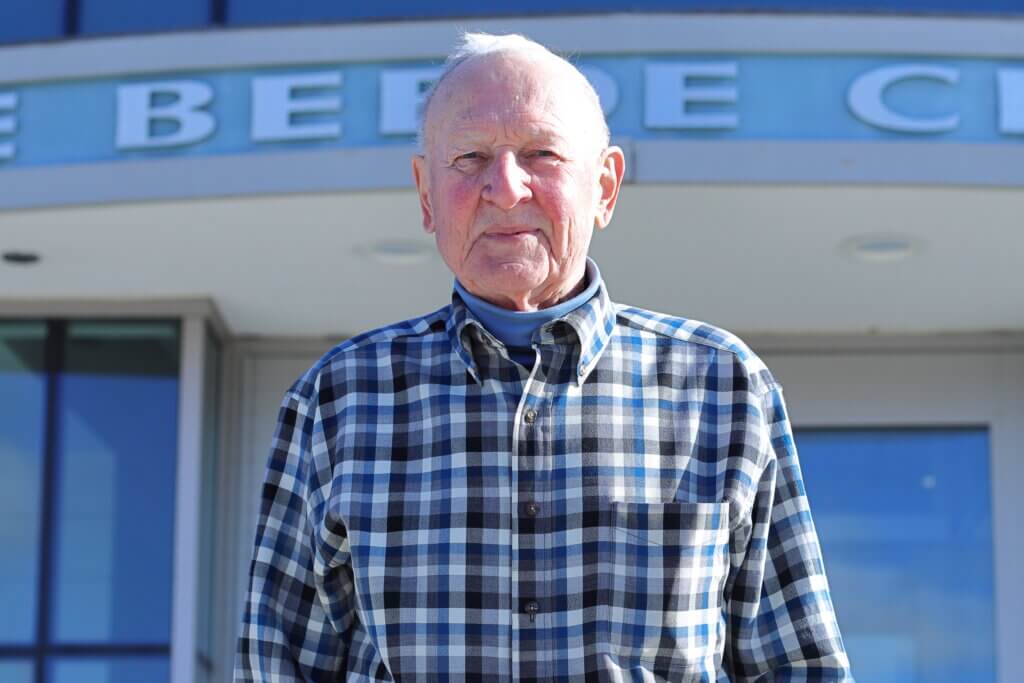
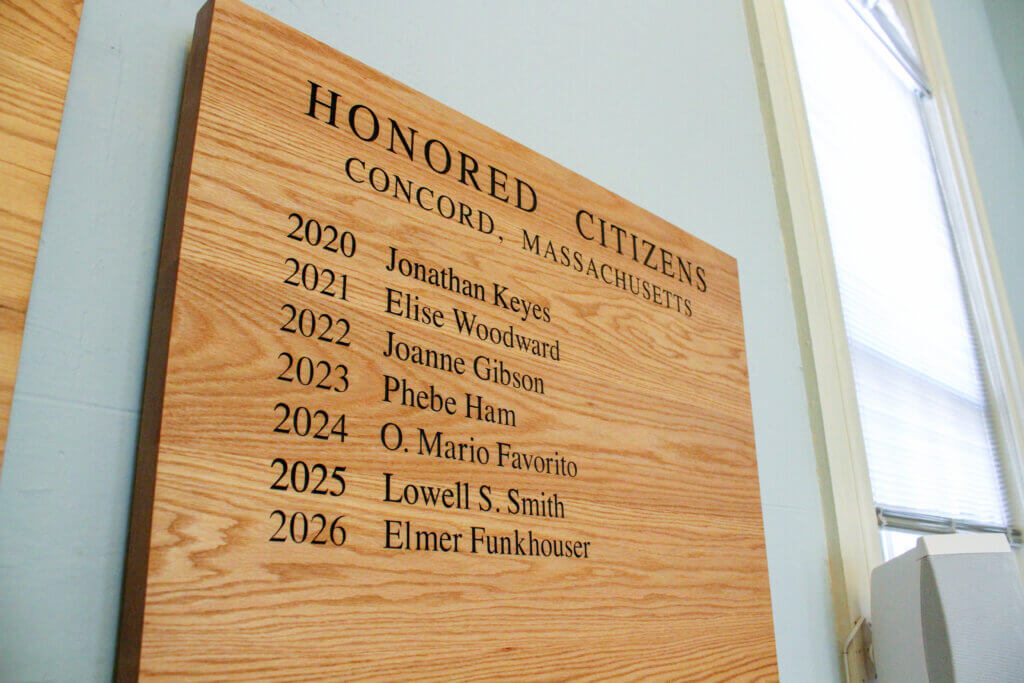
Elmer “Pete” Funkhouser has spent more than three decades shaping civic life in Concord with projects including a swim center and a restorative justice program. On March 29, the town will celebrate that work when it applauds him as Concord’s Honored Citizen, its townsperson of the year.
“Townsperson of the year is actually long overdue,” said Elizabeth Railsback, a former treasurer of Concord-Carlisle Pools who worked alongside Funkhouser to bring the Beede Swim and Fitness Center into being about 20 years ago.
Funkhouser, 84, returned to Concord in 1997 after a career in international business. He has since devoted himself to civic life in the town where he grew up.
“I wanted to use my time for something other than business,” Funkhouser said, “something for the obvious good of society.”
 Elmer “Pete” Funkhouser is taking his place among an elite cohort of Concordians. Photo: Dakota Antelman/The Concord Bridge
His work has included serving on the Concord Finance Committee, volunteering as a board member at Louisa May Alcott’s Orchard House, helping establish Communities for Restorative Justice (C4RJ), a non-profit offering alternatives to the traditional criminal justice system, and working on the advisory committee for Minute Man Arc, which supports people with learning disabilities.
Recently Funkhouser served on the Concord250 Trees Project board, an initiative to plant 250 trees in honor of the 250th anniversary of the Battles of Lexington and Concord, creating a living memorial rather than a traditional statue.
But the Beede Center remains his most visible contribution.
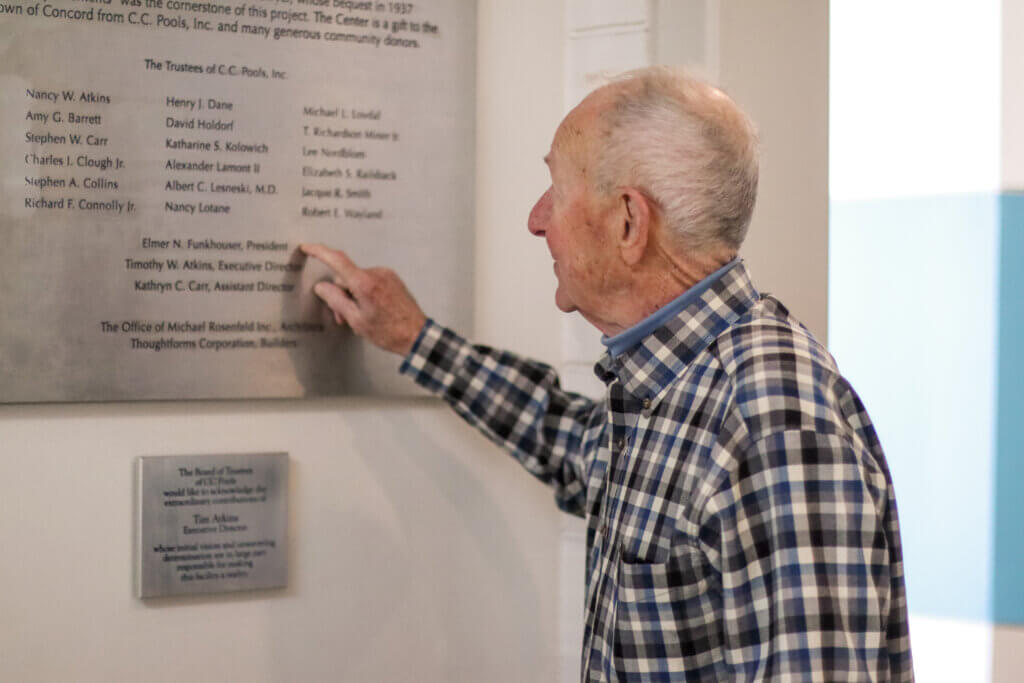 Funkhouser points out his name on a plaque in the Beede Swim and Fitness Center. Photo: Trace Salzbrenner/Concord Bridge
‘He was everywhere’
In 2000, community leaders established Concord-Carlisle Pools as a non-profit to raise money for the project. Funkhouser served as president, overseeing a volunteer board with committees dedicated to fundraising, finance, and planning.
“He was tireless; he was everywhere,” Railsback said, noting Funkhouser’s “remarkable leadership skills.”
The group met monthly for six years, ultimately raising more than $11 million through private donations, community events, and major gifts.
Once construction was completed in 2006, Concord-Carlisle Pools donated the building to the town of Concord, which operates the center through the Recreation Department.
Funkhouser said the project’s success is best measured in the everyday activity that fills the building. “The results are pretty evident here,” he said.
A typical day at the Beede, Funkhouser said, includes 6-month-olds in a pool for the first time and seniors doing physical therapy.
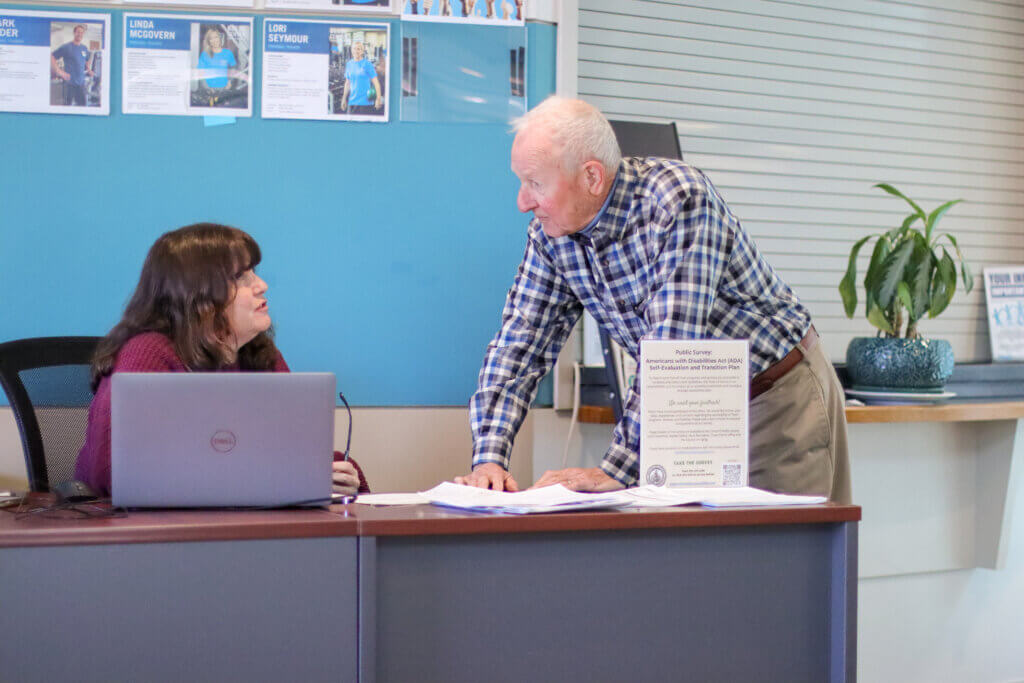 Funkhouser talks with Jodie Surprenant, a Beede customer support specialist. Photo: Trace Salzbrenner/Concord Bridge
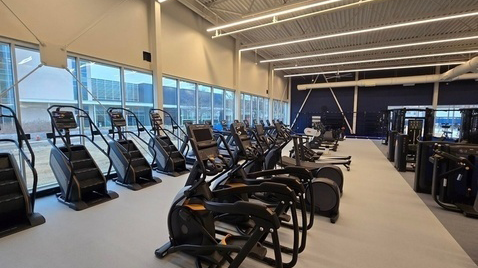
Now 20 years old, the center features a yoga studio, cardio and weight training rooms, and an eight-lane competition pool flanked by a diving well, therapy pool, and children’s splash area. It is also home to the Concord-Carlisle High School swim team, which recently won its third consecutive girls state championship.
“Even after 20 years, I’m still in awe of what that committee accomplished,” Railsback said.
Another of Funkhouser’s significant contributions is C4RJ, which he helped found in the early 2000s.
The initiative began when residents Jean Bell and Joan Turner raised concerns that criminal justice emphasized punishment over rehabilitation. They approached Concord Police Chief Len Wetherbee with a restorative program for young offenders. Funkhouser quickly became involved, bringing leadership experience and a commitment to the community.
‘Accountability and repair’
John Cratsley, a former judge who served alongside Funkhouser on the C4RJ board for nearly a decade, said the program offered a fundamentally different approach to justice.
“It’s a police referral program where young people go through a totally different process than court,” he said. “They meet face to face with their victim. It creates a huge amount of accountability and repair.”
The program provides alternatives to formal criminal prosecution, allowing people who have committed minor offenses to participate in restorative programs. Participants meet with police officers, counselors, and community members to discuss the impact of their actions and work toward repairing harm.
The approach emphasizes accountability, empathy, and reintegration into society.
Since its founding, C4RJ has expanded to more than 30 communities across Massachusetts.
Funkhouser has remained an active board member throughout, establishing performance metrics, advocating for funding, and guiding development.
“He was very good at fundraising,” Cratsley said, “but he also helped build the board, finding people who believed in the mission and wanted to be involved.”
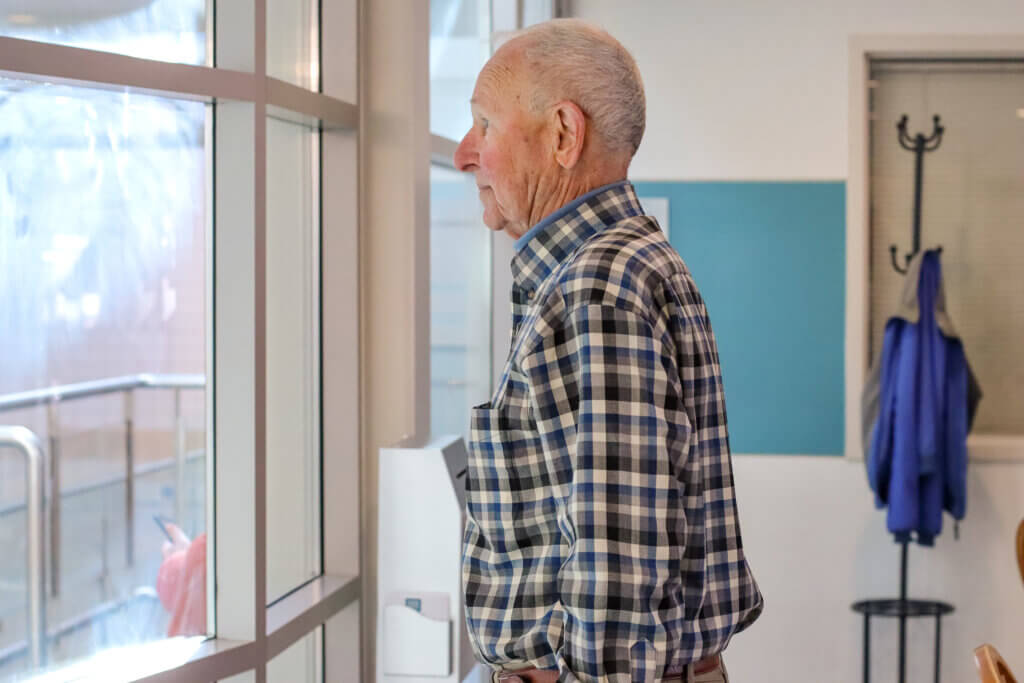 Funkhouser looks out at the pool in the Beede Swim and Fitness Center. Photo: Trace Salzbrenner/Concord Bridge
Funkhouser remains driven by a desire to give back and stay engaged.
“I don’t have any one mission,” he said. “There just has to be something about a project that captures my imagination.”
While some people dream of an idle retirement, Funkhouser leans a different way.
“You get bored stiff,” he said. “Being involved is a great way to stay active. You make a contribution to the community, and that’s important.”
This story was written by a journalism student in Boston University’s Newsroom program, a partnership comprising the university, The Concord Bridge, and other Boston-area news organizations.