On the surface, the shift seems obvious.
People are working from home more. Schedules are more flexible. Time feels fragmented. So naturally, fitness follows the same pattern.
But that explanation is incomplete.
The problem isn’t that people don’t want to work out. It’s that traditional fitness no longer fits how modern life is structured.
What’s happening in 2026 isn’t just a shift in location—it’s a shift in how Americans think about consistency, control, and long-term health. And once those priorities change, home fitness stops being an alternative and becomes the default.
The Real Trigger: Fitness Needs to Fit Into Unpredictable Days
For many Americans, the structure of a typical day has changed.
Meetings move. Deadlines shift. Personal time overlaps with work. In this environment, fixed workout schedules become harder to maintain.
Traditional gym routines depend on predictability:
a set time to leave
a dedicated block for training
a stable daily rhythm
But modern schedules rarely offer that.
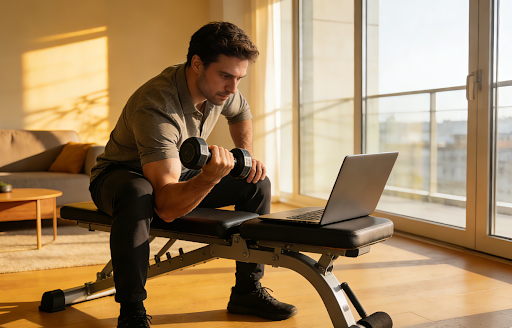
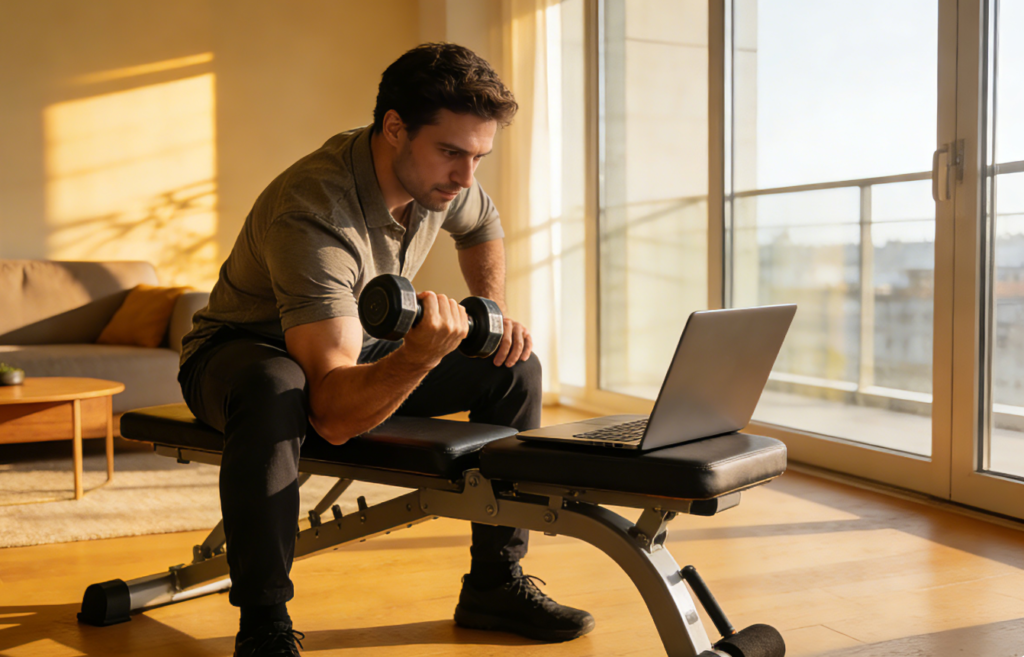
Home fitness solves this by adapting to the day instead of competing with it. Workouts no longer require perfect timing—they happen when time becomes available.
From Scheduled Sessions to Flexible Training Windows
One of the most noticeable changes is how people define a “workout.”
Instead of one long session, many are now using flexible training windows:
short sessions before work
quick movement between tasks
brief routines in the evening
This approach removes the pressure of committing to a full workout. It allows people to stay active even on busy days.
And over time, these smaller sessions add up—often leading to more consistent results than traditional routines.
Why Control Has Become More Valuable Than Convenience
Convenience was once the main selling point of home workouts.
Now, control is the bigger factor.
At home, people control:
when they train
how long they train
what kind of workout they do
There’s no waiting for equipment. No adjusting to crowded spaces. No dependency on external conditions.
This level of control reduces friction and makes it easier to stay consistent.
What Changed After People Experienced Both Options
Many Americans didn’t choose home fitness immediately—they experienced both gym-based and home-based routines over time.
That comparison led to a clear realization.
While gyms offer variety and atmosphere, they also introduce:
travel time
scheduling constraints
reliance on external environments
Home fitness, on the other hand, offers:
immediate access
flexibility
repeatability
For people focused on long-term consistency, those advantages are hard to ignore.
The Quiet Influence of Space and Environment
Another reason behind this shift is how people are rethinking their living space.
Homes are no longer just places to relax—they are multifunctional environments.
A small area for movement, a setup that doesn’t require preparation, or equipment that fits naturally into the space can change behavior significantly.
When exercise becomes visible and accessible, it becomes easier to start.
This is where the choice of home gym equipment becomes important—not as a status symbol, but as a practical tool that supports daily routines.
Why Versatility Is Driving Equipment Choices
As more people switch to home fitness, their expectations for equipment are changing.
They are no longer looking for single-purpose machines that take up space. Instead, they prioritize versatility.
Equipment needs to:
support multiple types of workouts
adapt to different fitness levels
fit into shared or limited spaces
This is why tools like adjustable weight benches are becoming more relevant.
They allow users to transition between exercises quickly, adjust positions based on preference, and maintain workout flow without needing multiple pieces of equipment.
In a home setting, this kind of flexibility directly supports consistency.
The Shift From Motivation to System-Based Fitness
Another major change is how people think about motivation.
Traditional fitness often depends on feeling motivated at the right time.
Home fitness encourages a different approach: building systems.
Instead of asking, “Do I feel like working out?”, people rely on:
fixed routines
simplified starting points
environments that reduce hesitation
This shift makes workouts less dependent on mood and more dependent on structure.
What This Means for Long-Term Fitness Habits
The move toward home fitness isn’t about short-term convenience—it’s about long-term sustainability.
When workouts are:
easy to start
flexible to adjust
integrated into daily life
…they become habits rather than tasks.
And habits are what drive lasting results.
A Practical Example of How This Looks in Real Life
Consider a typical weekday.
Instead of planning a one-hour gym session, someone might start the day with a short routine, add a few strength exercises later, and finish with light movement in the evening.
This approach doesn’t require perfect conditions. It adapts to whatever the day allows.
And because it’s repeatable, it becomes sustainable.
Conclusion: A Shift Driven by Real-Life Needs
The rise of home fitness in 2026 isn’t driven by trends—it’s driven by practicality.
Americans are choosing solutions that align with how they actually live: unpredictable schedules, shared spaces, and limited time.
Home fitness fits into that reality.
And when fitness fits into life instead of competing with it, consistency becomes easier—and results follow naturally.