Growing up, you probably heard it time and time again: Sit up straight. Don’t slouch. Fast forward to now, and most of us spend hours hunched over laptops, slouched over a steering wheel or glued to our phones.
The result? Tight shoulders, a stiff upper back and that all-too-familiar rounded posture that results in a dull ache by the end of the day. And the good news? It’s not permanent.
Article continues below
You may like
What are face pulls?
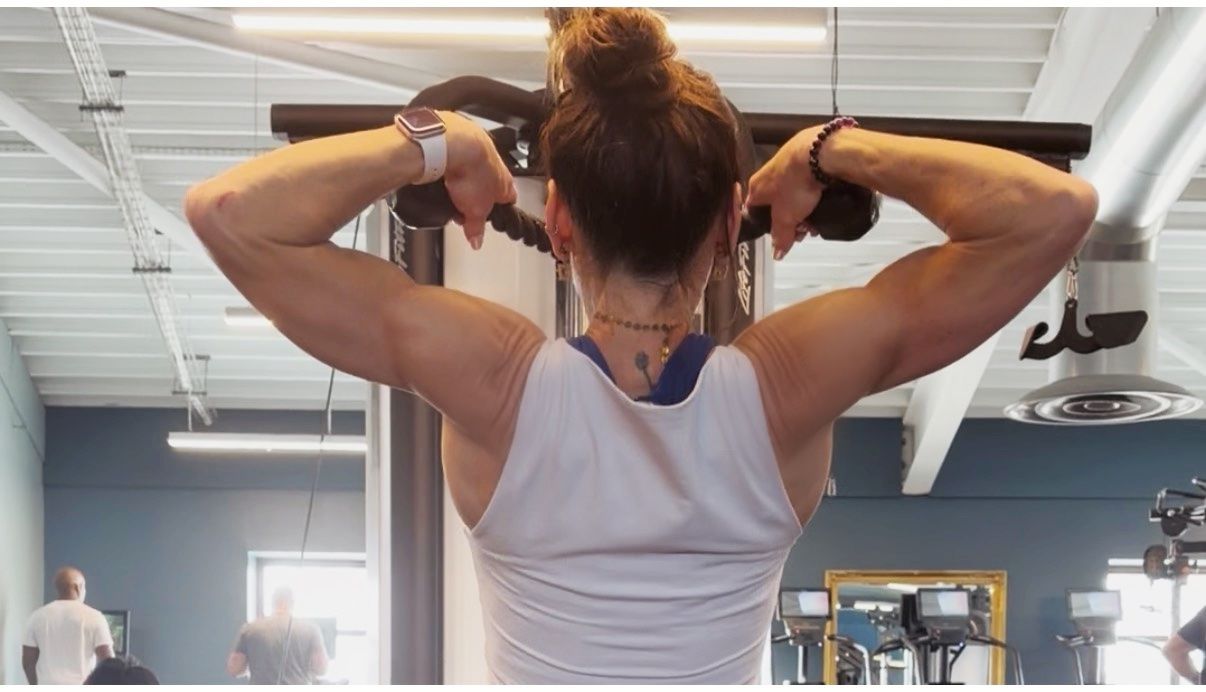
Like I say to my clients, don’t let the name ‘face pull’ put you off. You’re not pulling your face; you’re pulling a cable or resistance band towards it. Your forehead is the target.
“The face pull is easily one of the most underrated moves for building a strong, ‘bulletproof’ upper body,” says Maria Vazquez, NASM-certified personal trainer and Head of Training at MYWOWFIT.

(Image credit: Getty Images)
“It primarily targets your rear delts, rhomboids and external rotators – the muscles that pull your shoulders back and down. Think of it as the ultimate anti-slouch exercise.”
Performed using a cable machine or resistance band, it targets the muscles across your upper back and shoulders. Simple, effective – and often overlooked. But not anymore.
Benefits of face pulls
Face pulls might not look like much, but they quietly tick a lot of important boxes, especially if you spend most of your day sitting. Hours at a desk tend to pull your shoulders forward into that rounded position, and this is where face pulls come into their own.
By strengthening the muscles responsible for pulling your shoulders back, they make it easier to sit and stand taller without constantly reminding yourself to fix your posture.
Face pulls also train external rotation, which improves overall shoulder stability and helps reduce the risk of injury, particularly if you’re lifting weights regularly or doing overhead movements. Over time, this added stability makes your shoulders feel more controlled instead of overworked.
What to read next

(Image credit: Getty Images)
At the same time, you’re building strength where it really counts in the upper body. Your rear delts, traps and rhomboids all get involved, contributing to a stronger, more balanced upper back that not only looks better but supports your posture in everyday life.
Another benefit that often goes under the radar is improved mobility. Because the movement takes your shoulders through a controlled range of motion, it helps keep the joint moving freely and efficiently, which can make other exercises feel smoother and more natural.
How to do face pullsAttach a rope to a cable machine and set it just above head heightStand facing the machine with your arms extended in front of youStep back slightly to create tension in the cableRaise your arms slightly so they’re angled towards the anchor pointPull the rope towards your forehead, keeping your elbows high and flaredSqueeze your shoulder blades together at the topSlowly return to the starting position, maintaining control throughout
“When pulling the cable back, pull it towards your forehead, not your chin,” adds Vazquez. “As you pull, imagine peeling the rope apart and rotating your hands so your thumbs point behind you. That’s how you target your rotator cuff – not just turn it into an upright row.”
This is what happened when I did 100 face pulls every day for two weeks
My first session? I went too heavy. I ended up heaving the weight back, and when I couldn’t control the cable on the return, it yanked me forward. Not ideal.
Lesson one: face pulls aren’t about lifting heavy. If the weight is pulling you out of position, your rear delts and upper back won’t be doing the work properly.
“Use lighter to moderate loads and aim for higher reps,” says Vazquez. “If the weight is too heavy, larger muscles like the lats will take over, and you lose the benefit for the smaller shoulder muscles.”
Switching to a lighter weight made an immediate difference. I could feel the movement properly – that squeeze through my upper back at the end of each rep. Each rep felt smooth and controlled, and the next day (and the day after), I felt a deep ache across my upper back – especially through my shoulders and that spot between my shoulder blades.
As the days went on, I stuck to my reps – five sets of 20 face pulls at the start of every gym session, or at home if I couldn’t make it in. Yup, no gym? No problem. “You don’t necessarily need a cable machine,” says Vazquez. “You can perform face pulls with a resistance band looped around a sturdy door frame or bannister – just make sure the anchor point is at eye level or slightly above.”
By the end of the two weeks, I could clearly feel a difference. My posture was improving, my shoulders felt stronger, and I was starting to undo the effects of hours spent sitting with poor posture. I also improved my technique with each set – keeping my core tight, avoiding any swinging, and focusing on controlled reps.
Breathing helped too: exhaling as I pulled the rope towards my face, and inhaling as I returned to the start. I’ll be honest – I’m a sucker for anything that makes me stand taller (and look taller), so with every rep, I focused on driving my elbows out and squeezing my shoulder blades down and back. It felt good.
“This exercise is one of the fastest ways to open up your chest and make your posture look taller and more athletic instantly,” adds Vazquez – and I have to agree. A strong, athletic-looking back never goes unnoticed – especially as we head into the summer.