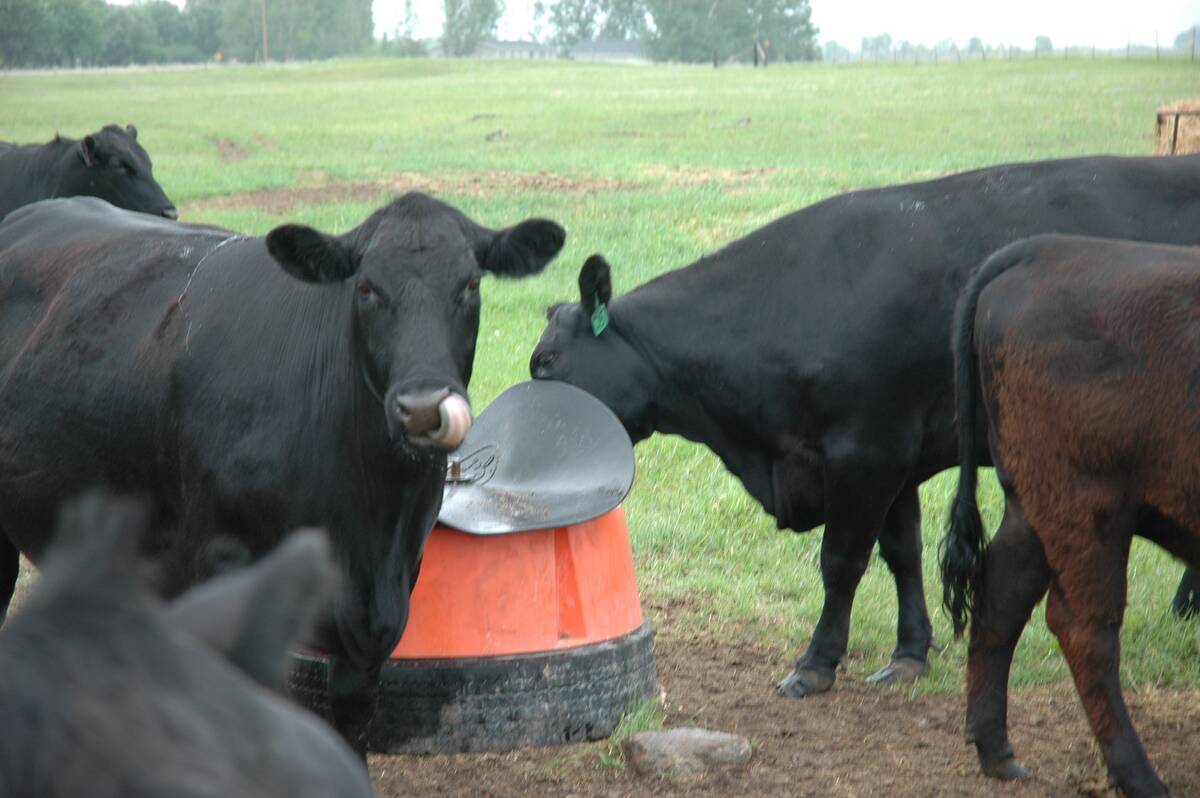
Spring is a good time for beef producers to choose a good post-calving trace mineral and vitamin (TMV) program.
In doing so, they should also avoid six common misconceptions and effectively meet their nursing cow herds’ mineral and vitamin requirements, which should easily prepare fertile cows for the upcoming breeding season.
Several years ago, I was driving down some back roads and saw a herd of Black Angus cattle with a few cows and calves with a rough red sheen to them.
Read Also

Caution keeps pastureland values in check
Pastureland values increased about five percent last year in Western Canada. Meanwhile, cropland jumped 10 per cent.
I was always taught in school that a red coat colour is a definite sign of copper deficiency in cattle. This might be true in some extreme cases, yet it has been my experience that it is likely overwintered beef cows shedding their winter-hair coats in the spring.
This completes my first urban legend, which is followed by five more misleading tales:
TMV deficiencies always cause specific deficiency symptoms
An iodine deficiency causes goiter in cattle. This seems to be the exception, not the rule.
Rather than causing cut and dried signs, individual trace mineral and vitamin deficiencies are seen as general ailments in cattle.
For example, one Midwest university study showed that an experimental group of cattle had a high rate of pneumonia within weeks of receiving their shots. It was traced back to poor vaccination-take caused by a zinc deficiency.
I have talked to producers who complained that their cows show no signs of heat before the breeding season. In many of these cases, I discovered these cow herds are provided with a poor TMV feeding program.
Exceeding TMV requirements promotes a breeding response
If a fertile beef cow doesn’t receive at least 100 milligrams of copper per day, which is stored in her liver and then metabolized for breeding purposes, she will not have strong estrus heats and conceive — period.
However, if she receives more than double or triple this requirement, research dictates that final conception rates are no higher (in most cases) than when her basic copper requirements are simply met.
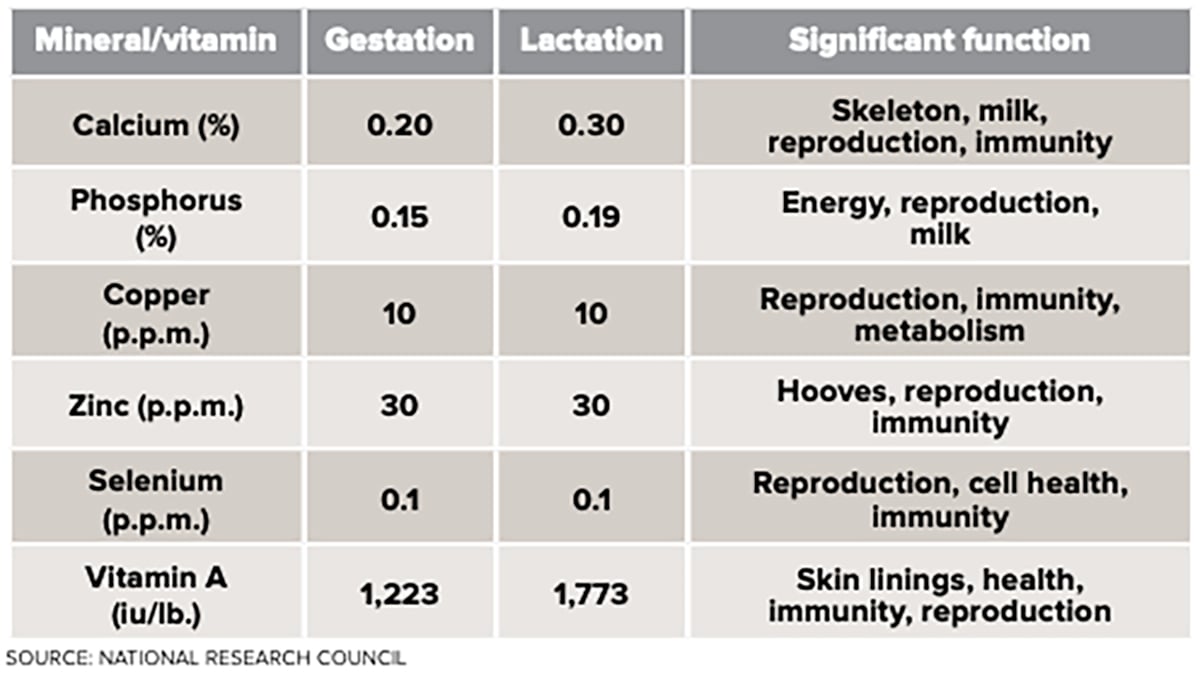
The accompanying table outlines some macro-mineral and TMV requirements of beef cows.
TMVs with the highest feed-label levels are the best value
I have reviewed many feed labels of commercial cattle minerals.
Mineral A has 3,000 p.p.m. copper and Mineral B has 4,000 p.p.m. copper, and both are fed at 50 grams per head, daily.
It doesn’t necessarily mean that Mineral B is the better choice. Sometimes, both are of equal value.
In another incident, I reviewed a cattle mineral that had very high levels of Vitamin A, which may have caused infertility in a set of first calf replacement heifers.
In still another situation, feeding high levels of zinc may have influenced a possible copper deficiency in the main cow herd.
Beef cows seek cattle mineral to satisfy specific or multiple TMV deficiencies
I have heard of this urban legend from many beef producers, and I don’t believe it, nor does science support it.
I do think cattle tend to exhibit abnormal behaviours, such as chewing on bones (phosphorus deficiency), which tends to stop when they start to eat phosphorus-containing mineral.
Yes, cattle also crave salt, but they often consume it way past any sodium requirement. In the end, well-balanced and palatable commercial cattle minerals meet their requirements.
Feeding trace-mineral salt blocks are good enough
A friend that operates a 400 cow-calf operation buys salt trace-mineral blocks in spring in order to save money. Plus, he believes the natural vitamins in pasture are “good enough” to meet his cow herds’ breeding requirements.
I don’t agree because vitamin A, D and E often degrade over time in all forages.
In addition, the high quality and level of vitamins in commercial mineral are literarily protected and guaranteed.
As a beef nutritionist, I can appreciate that some of these urban legends make perfect sense. However, a large body of scientific research has proven them to be works of pure fiction.
Therefore, I believe that immediately after calving, producers should choose a well-balanced TMV feeding program that prepares their fertile cows and heifers for the breeding season.
By late summer, they should be rewarded with lots of healthy and pregnant cows.