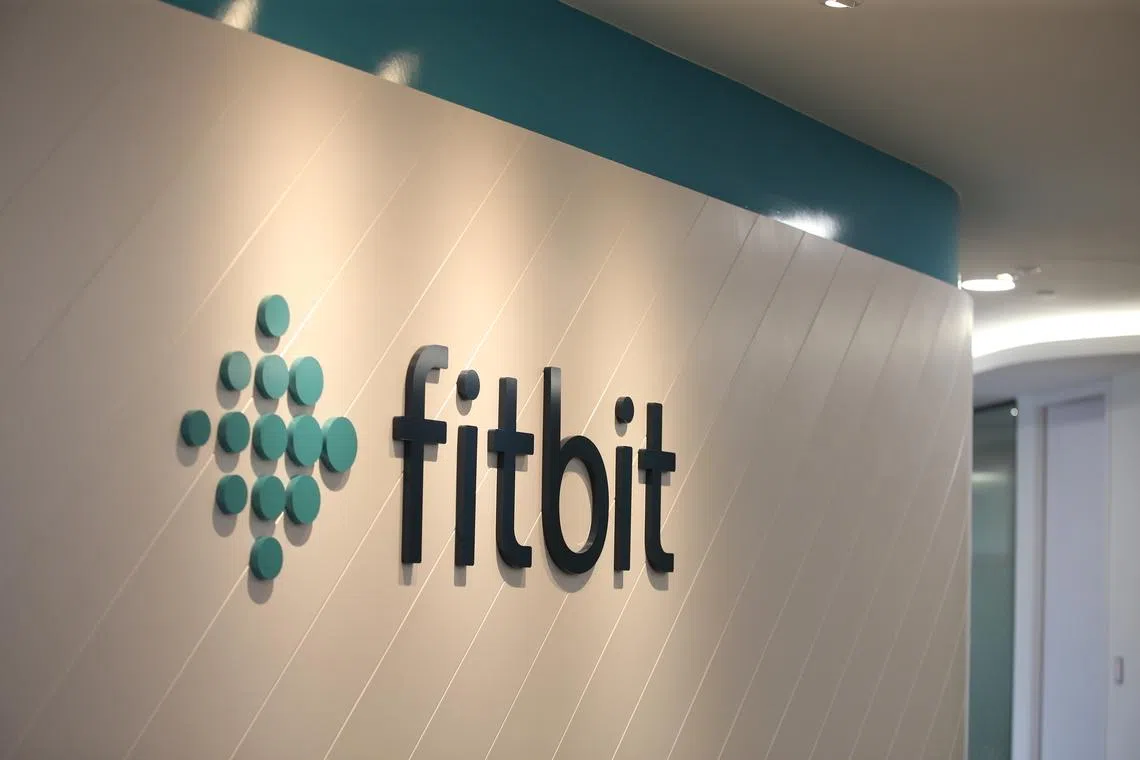
SINGAPORE – Fitness tracking pioneer Fitbit is set to vanish as a standalone entity in Singapore after its local unit was placed under voluntary liquidation, marking the end of its corporate presence here more than a decade after entering the market.
A notice published in the Government Gazette on March 13 confirmed that liquidators have been appointed to wind up Fitbit Singapore’s business.
Checks by The Straits Times on March 24 on the Accounting and Corporate Regulatory Authority’s BizFile portal confirmed that the company is in the process of being voluntarily wound up.
The move marks a curtain call for Fitbit Singapore about 11 years after it was registered here in February 2015.
The development comes years after US tech giant Google, under parent company Alphabet, acquired Fitbit in a US2.1 billion (S$2.7 billion) deal announced in November 2019 and completed in January 2021.
At the time, Google said the acquisition would bolster its push into wearable technology and allow it to introduce more “Made by Google” devices, as it sought to compete more directly with rivals such as Apple and Samsung in the fast-growing wearables market.
Fitbit’s integration into Google had since accelerated, with the brand increasingly folded into the Google ecosystem, including its Pixel Watch line-up. While Fitbit-branded devices continue to be sold, the company’s identity as a standalone business has gradually diminished.
While the liquidation of Fitbit Singapore marks the end of an era, Fitbit users can continue to use their devices.
In response to queries, a Google spokesperson said on March 19 that Fitbit devices will continue to be available through the Google Store and selected retail partners in Singapore.
Existing Fitbit users can still obtain support via Google’s support channels or through retailers where the devices were purchased, the spokesperson added, without providing further details.
Fitbit was founded in 2007 in San Francisco by Mr James Park and Mr Eric Friedman, who sought to harness advances in sensors and wireless technology to transform personal health tracking.
Fitbit products proved popular and helped kick-start the global fitness tracking industry at a time when smartphones and mobile apps were still in their infancy.
Over the years, Fitbit released more than 20 models of fitness trackers and smartwatches, evolving from simple step counters into more sophisticated health devices capable of monitoring heart rates, sleep and activity levels.
There are currently at least six active models of devices, according to the Fitbit website.
Fitbit’s devices also gained traction in Singapore, particularly through their compatibility with the National Steps Challenge, a nationwide programme launched in November 2015 by the Health Promotion Board to encourage physical activity.
The programme – which is popular in Singapore, with more than 860,000 sign-ups as at August 2023 – allows participants to track their daily steps and active minutes using fitness trackers and the Healthy 365 app, earning rewards for staying active.
Trekking enthusiast Nelson Teo told ST that he had used a Fitbit Charge 3 from 2019 to 2023, before it stopped working. The private tutor, who is in his 50s, switched to another brand, Garmin, as he was unsure where to get support or buy a newer Fitbit device.
“At that time, I went to several stores and was not able to find a Fitbit… I did not know that Google had bought over the brand,” he said.
In a September 2025 Reddit thread on budget fitness trackers compatible with Healthy 365, some users said they remained satisfied with their Fitbit devices, even as they expressed uncertainty about the brand’s future under Google. A user said: “I’ve been using a Fitbit Versa 4 for about two years. So far so good… but now with Google as the owner of Fitbit, I’m not sure if I’ll stick to Fitbit if my current one dies.”
Another user said: “My Versa 2 has been with me for about four years and still is working well… but Fitbit’s app features have been lacking since Google took over; doubt I will stick with it once my Versa gives way.”
Others pointed to pricing as a continued draw, with one noting that some Fitbit devices, such as the Charge 6, could be found below full retail price.
The brand’s future appears increasingly tied to Google’s broader hardware ecosystem rather than as a standalone fitness tracking player.
For consumers, the key question is no longer availability but longevity – whether Fitbit, once a pioneer of the category, will continue to hold its place in a market now dominated by tightly integrated ecosystems.
“I was very happy with my Charge 3 because it could monitor my sleep patterns, how many floors I climbed, distance covered and active minutes,” Mr Teo said. “Will they make a better device than the Fitbit? Definitely. But to me, it was one of the best I had.”