PITKISSER
Gallery / 14 images
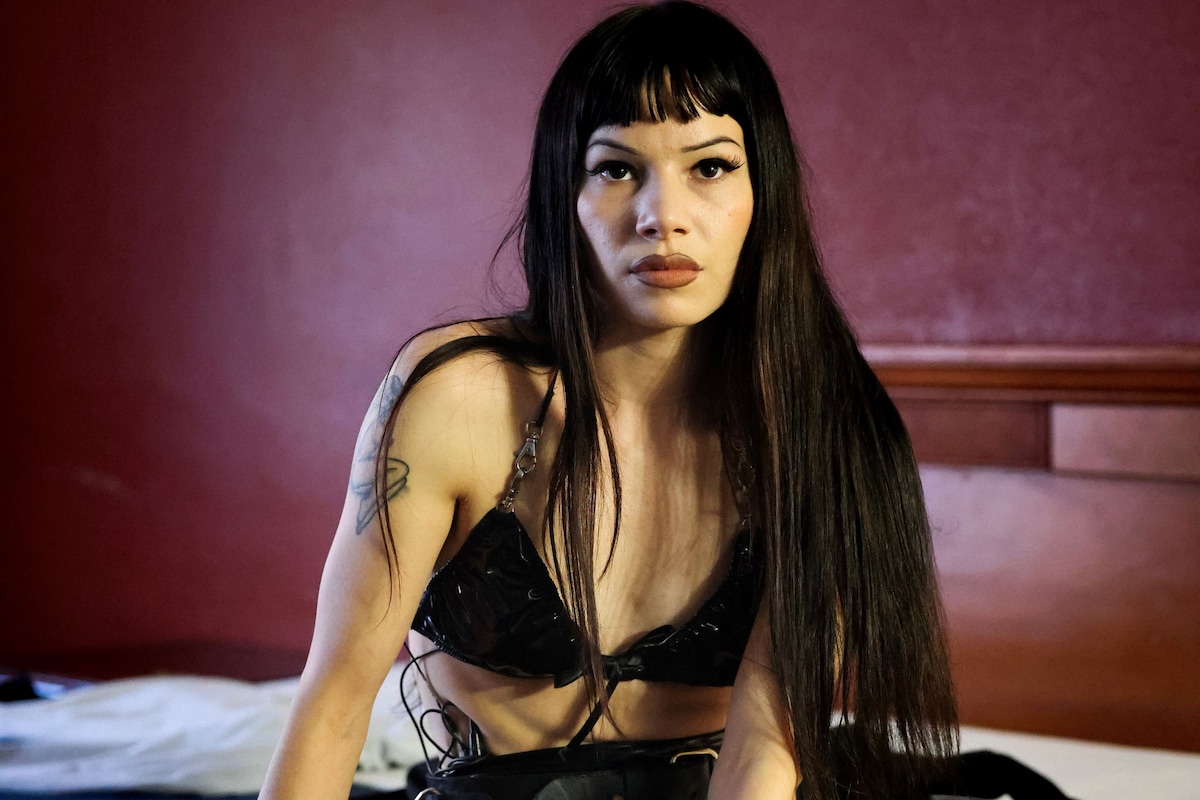
In 2017, filmmaker and photographer Mollie Mills encountered Syerrah Escobedo, a cashier in a pet store clad in latex and liberty spikes. Struck by her defiant, self-fashioned beauty, Mills found the seed for PITKISSER – a two-channel film installation and photobook tracing Los Angeles’ ‘girl mosh’ subculture.
While the project itself was shot over just two days by cinematographer Daisy Zhou, it took years to fully take shape. “My understanding of what we were making at the time feels completely different to what it is now,” says Mills. Built over time, the work became tied to a wider dialogue around how girls reframe violence. “When we began making this, we were just kids fucking around and shooting stuff about mosh pits as somatically beautiful spaces – by the time we decided to put it together into an installation, it was about why we all needed to thrash so badly; why we all needed a consensual space to rage, to fight back; why we all wore this armour every day.”
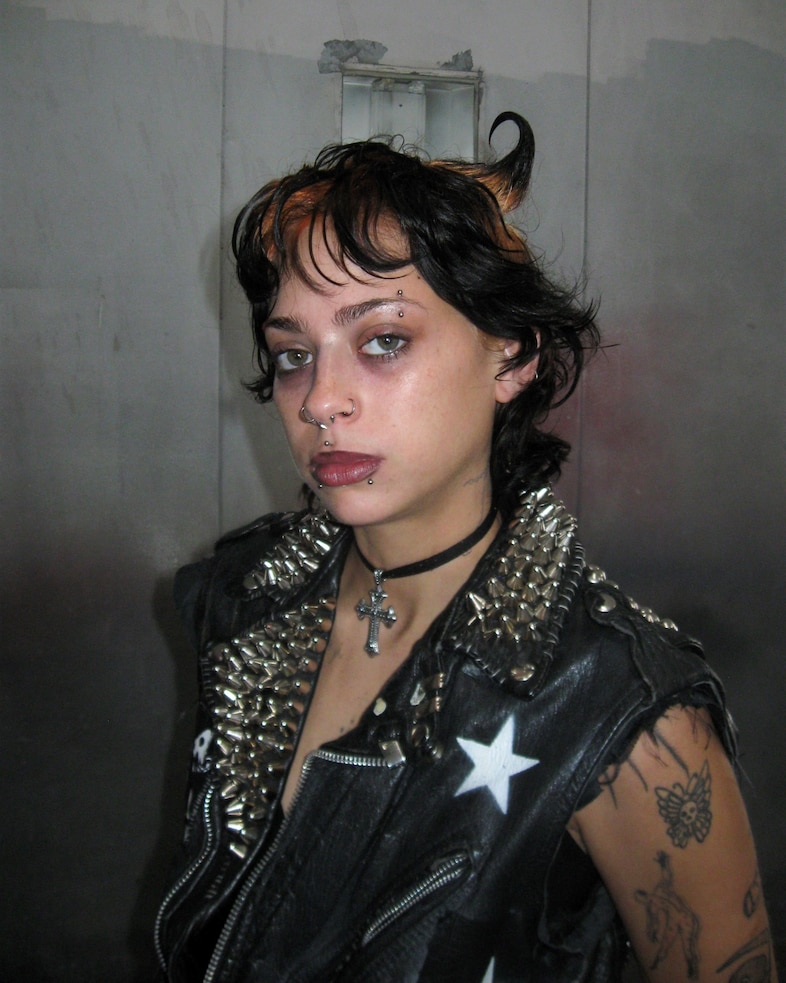
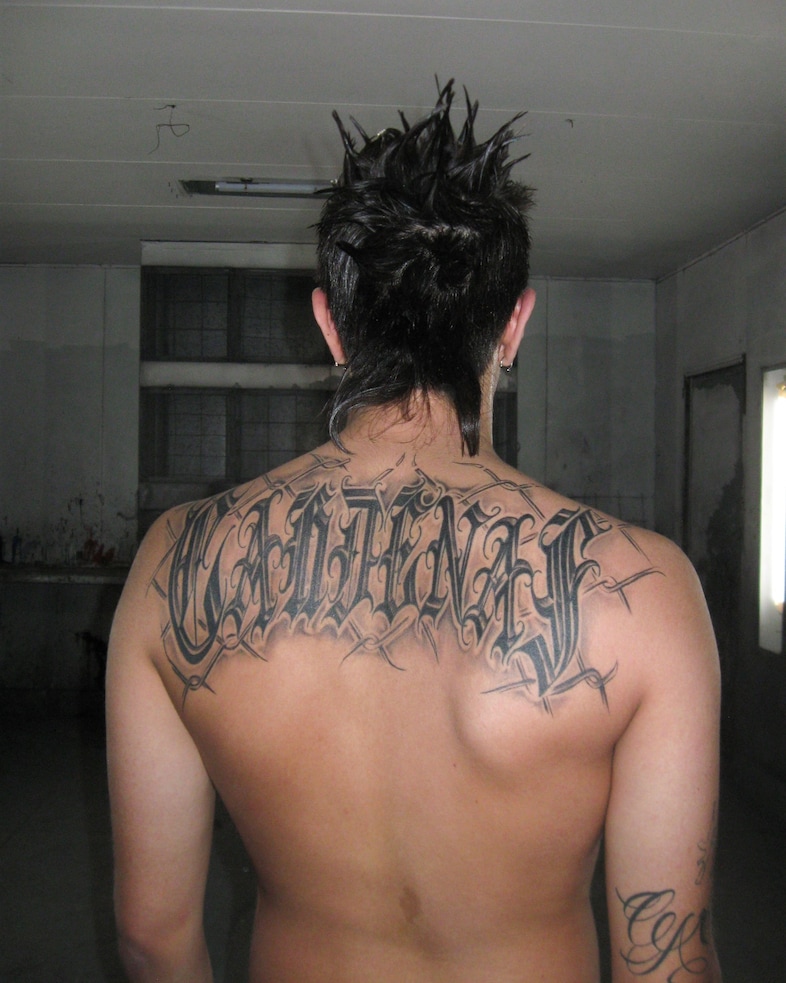
PITKISSER follows Syerrah and Kris, two girls in search of redemption from violence as they find their place in the “hot lick of the pit”. Moving between moody pool sides, basements and garages, the film is packed with subcultural beauty fixtures: back tattoos, baby bangs, box dyes. It’s a presentation of beauty that Escobedo likens to armour: “It’s war paint. It feels like armour to me. Personally, it comes from Chicana make-up from my mom, my tias. But my sharp liner, heavy lip, there’s no softness about it. It’s important that it’s feminine, but it’s not fragile.”
Now, as PITKISSER is released into the world, it carries a hope of lasting beyond its moment. “I want some kid, somewhere, to find PITKISSER in a bookstore years from now and read it in their bedroom and think ‘I’m going to spike my hair’,” says Mills.
Below, we speak to Mills about the project’s creation.

 Photography Daisy Zhou
How did the idea for PITKISSER come about?
Mollie Mills: PITKISSER was an amalgamation of time, practice, curiosity and eventually, the willingness or bravery to release a body of work that is pan-genre. And by that, I mean it took the wonder of seeing Syerrah Escobedo. But that curiosity started long before this specific serendipitous encounter – because ultimately what we’re touching upon with PITKISSER is the dialogue around how girls reframe violence, which is one I’ve had to have because of my own experience with violence and my own relationship to being a girl.
How does the LA girl mosh aesthetic sit alongside mainstream beauty aesthetics?
Mollie Mills: Beauty homogeneity is all around us; wanting to look familial, an era of facsimile, how to replicate one another, illuminate, snatch or enlarge chosen attributes that have become the infinite and never-ending pop paradox of beauty. And those can be wonderful. But the standard is complex; it, of course, never accounts for us all. In a sea of pastel, it’s just so regenerative to see this consideration of punk again.
You could argue that all corners of beauty could be considered armour in some sense, but this corner, that we’ve landed in, just feels so particularly antithetical to the mainstream because its priority is not being pretty: it’s being tenacious, rigorous, tough.
Where did you find influences for the project’s visual direction?
Mollie Mills: It was incredibly instinctive. I love, and have always loved, static compositional frames in contrast with quite high-octane close movement. That’s actually something I really learned from skate films in my teenage years; the idea of following an action candid and then breaking the wall with a to-camera gesture. Some of the scenes, in the motel, for example, are long static compositional portraits. You have to just sit with the girls. Let them exist with you for a minute. But then it’ll break into an intentionally impulsive, long-lens follow of one of the girls talking. This creates, for me, an intriguing and slightly off-the-wall surreality.
Splitting the project into two channels also gives you the chance to redirect the eye constantly, turning off one channel just to amplify the other image. Most importantly, I wanted this project to feel timeless, because I felt the girls were timeless. They could have existed in any and every era. Daisy Zhou and I agreed to shoot the entire thing on one 16mm lens. That, and this aforementioned approach, gives it this very particular feeling that you can’t quite place when it was shot.
Do you have a particular favourite look from PITKISSER?
Mollie Mills: Syerrah designed all the costumes – she’s a power-house, and everyone should hire her. Also, the liberty spikes are so special, so true to the girls, and what PITKISSER embodies – a kind of ‘don’t touch me’, quite literally.

 Photography Daisy Zhou
What can you tell us about the audio-visual component?
Mollie Mills: I want to give a particular shout-out to Deaton Chris Anthony who did composition and sound design on the project. The licensed music (Miss Kittin & The Hacker, Peggy Lee) is all intentionally left of field, gentler adjacent works that were playing as we were shooting together. The audio is a necessary slant of softness and euphoria against some of the harder visual language. But the techno element is an important and beautiful addition, because the techno-industrial scene attracts the same kids that go to punk shows. Same body, different muscle, familiar physio-release.
How does the book extend the project?
Mollie Mills: I wrote a short story on our relationship to one another and to violence. One should never underestimate how hard it is to just say, ‘this happened to me and I want to fight back.’ The film is an installation; it poses more questions than perhaps answers them. So the book was a chance to put some of those quite definitives in writing.
The PITKISSER book is available to purchase here

 Photography Daisy Zhou