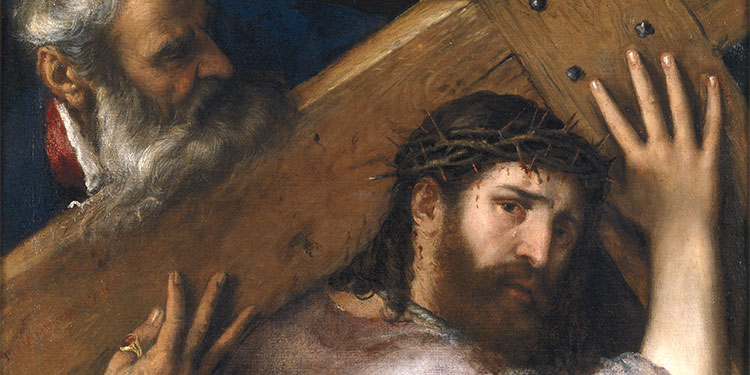
WHEN preparing our school’s recent Lenten liturgy, I was conscious that for many young people, this moment might be the only time they encounter the Easter story during the season.
We know that long explanations and passive listening aren’t always the pathways that speak most deeply to young hearts.
Yet when our Year 12 music class offered a moving musical interpretation of the Passion through Palestrina’s, Adoramus Te, the story resonated differently. Beauty has a way of opening doors.
Kate Simpson, dean of Faith and Mission at Mt St Michael’s College, said, “Young people are stirred by storytelling, by music and by beauty. Creative expression draws them towards what is sacred. It is a vehicle for the profound.”
Liturgy forms us, especially when it speaks to our experience.
When I think back to my own childhood, I remember sitting in Mass without really understanding why we stood, sat, knelt and responded the way we do.
I knew I was praying with Jesus, but I didn’t yet understand the meaning behind the movements.
I would quietly count letters in the parish newsletter until it was taken from me at the moment of kneeling.
As I grew older and began to understand the ritual, I discovered a deeper sense of belonging.
This awakening, the shift from simply doing to truly understanding, is at the heart of prayer.
Kate says that, “at its most fundamental level, prayer is a stirring of the heart so that yours beats in time with Christ’s. If we want the heart to stir, eyes and ears must be open.”
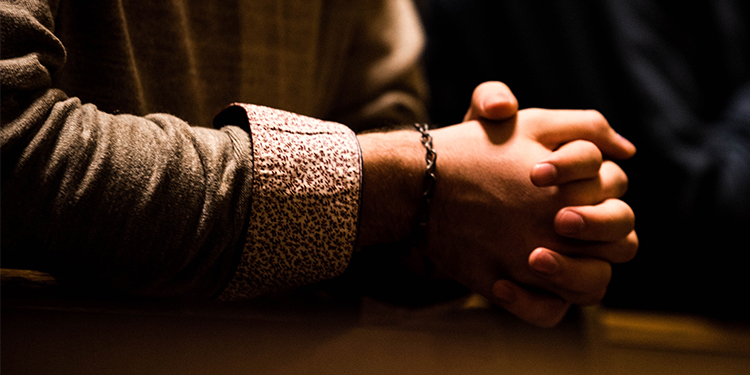 Changing Church: “This awakening, the shift from simply doing to truly understanding, is at the heart of prayer.”
This speaks directly to the experience of our young people, unless their hearts are awakened to meaning, their participation remains surface level.
As Kate puts it, “If we want young people to enter into the mystery of the Church, we need to build a door that they are compelled to open. Art, movement and creative language speak the truth of the Gospels in ways that are accessible.”
At Little Flower Parish in Kedron, our monthly Children’s Mass has been a beautiful example of this. The children lead the readings, and our parish priest, Franciscan Father Joseph Nguyen , often reminds us that the language used needs to be accessible to them.
He has shared that he hopes children “not just read the words, but understand what they are reading”.
He also speaks powerfully about the place of children in our Church community. “Children are our Church’s future. We need to be patient with our ‘noisy Mass’, because as long as we hear the noise of our children in the church, we can be confident that our Church still has its future.”
Their presence is a sign of life and hope.
He also reflects on how liturgical language can be complex for both adults and children.
“Children are simple, sincere and very honest,” he says, “so the language we use must be simple, short, and easy to understand”.
His conviction echoes the Gospel itself, where Jesus teaches, “If you don’t become like little children, you can’t enter the Kingdom of God”.
The simplicity and directness of children reveal something of the posture Jesus invites us into.
When we meet children and young people where they are, through music, movement, story and accessible language, we help them discover that liturgy is not something happening in front of them, but something they belong to.
Their engagement today is the soil from which deeper faith can grow.
 Mercy in action: Ashley Prisk is head of mercy charism at All Hallows’ School.