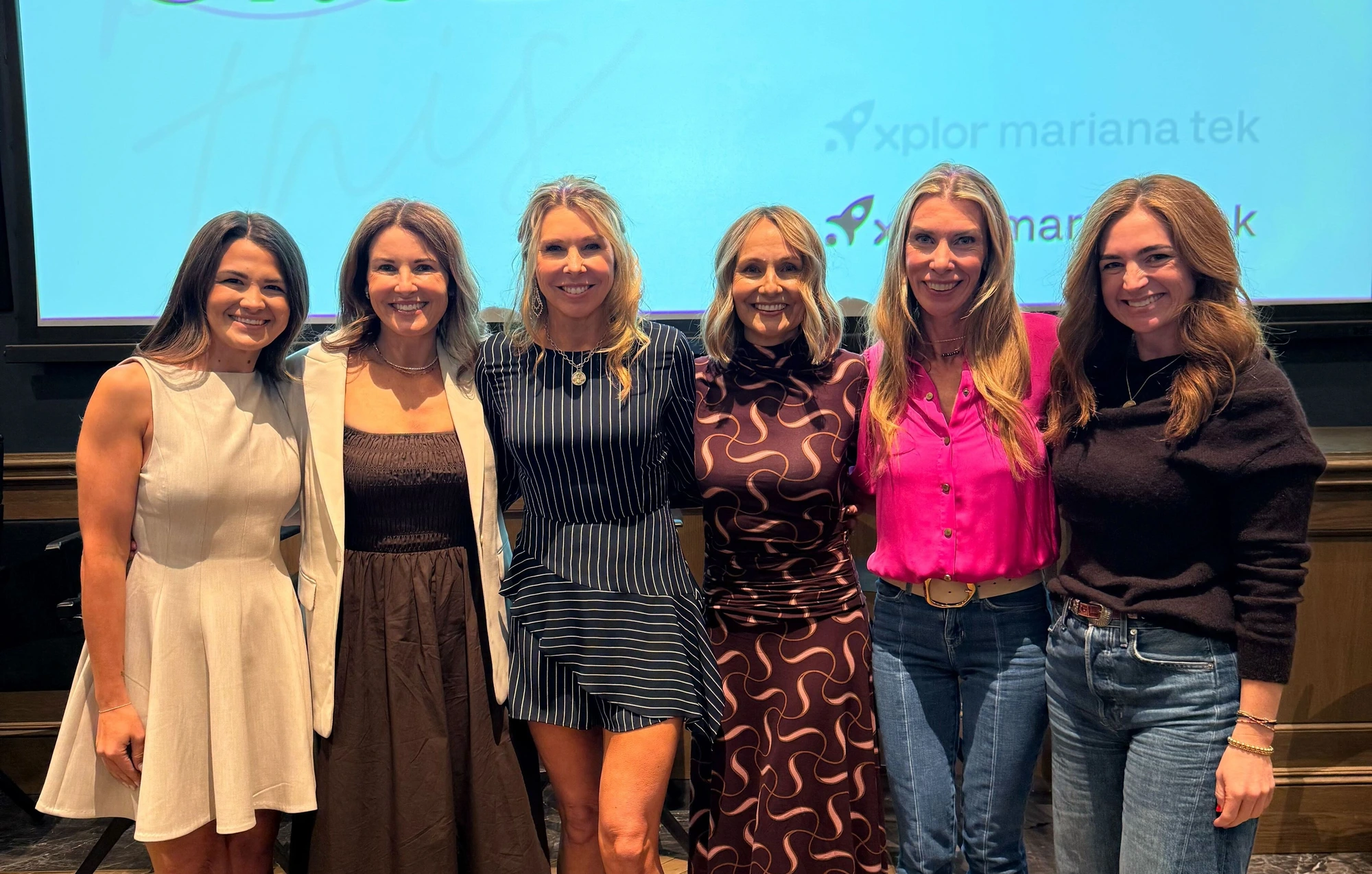
From franchise strategy to leadership mindset, founders from four top boutique fitness brands unpacked what it takes to win in today’s competitive landscape while staying true to brand values during an Xplor Mariana Tek panel
As brands lean into the growing interest in female-specific fitness and wellness, some of the leading women in the space are making waves in the market to meet demand and uplift a historically left-behind demographic.
To amplify those narratives, Xplor Mariana Tek, a leading fitness software platform for boutique fitness franchises, hosted a panel of female founders and executives who spoke to their successes, key strategies and where they think the future of women’s fitness and wellness is headed.
Panelists included Felicia Alexander, co-founder of BoxUnion; Kamille McCollum, president, chief brand officer and co-founder at Bodybar Pilates; Sadie Lincoln, co-founder and CEO of barre3; and Debra Strougo, founder of Row House.
How Experience Identified Voids in the Fitness Market
A common thread leading to the creation of these women-founded brands was their ability to use their experiences in the fitness industry to spark ideas and identify gaps they were passionate about filling.
The moment Lincoln knew she had an exciting idea was during her pregnancy. The barre3 founder was doing at-home workouts, feeling uneasy about going to the gym while pregnant, when she hit a blissful moment of appreciation for her body, finally seeing fitness as a way to celebrate it, not shrink it, change it or punish it as women are often conditioned to feel.
“Maybe fitness has been failing me,” she recalled thinking back then.
Lincoln wanted to shift the narrative and framing of fitness, especially for women, to being present in bodies rather than feeling like failing or not doing enough
“I knew the problem I wanted to solve and that would guide me,” she said during the panel.
 barre3, a fast-growing boutique fitness franchise, has over 200 locations open or in development (credit: barre3)
Strougo also drew upon her background when coming up with the idea for Row House, coming from a family of rowers and seeing not only a gap in the market, but also misjudgments about the powerful, total-body workout.
She realized Row House, which was acquired by Xponential Fitness and later sold, needed to strike the right balance between entertainment and education, to guide people on how to properly use the machines and dissuade assumptions that the workout was purely upper-body.
“You have to listen to your consumer and figure out what their misconceptions are,” Strougo said.
Alexander, co-founder of BoxUnion, had a similar experience when the idea for the boxing boutique was first emerging.
She found boxing to be a great workout, but the space was often male-dominated, presenting an opportunity to grow the market and bring people into the modality who traditionally wouldn’t try it by reducing the intimidation factor and making it more approachable and accessible.
What it Takes to Be a Leader
Among the panelists, there was a common thread of what it means to be a successful and trustworthy leader: humility and having a reliable team to lean on.
Bodybar Pilates‘ McCollum admits she’s the first to acknowledge she’s made a mistake or when there’s something she doesn’t know, owing that to surrounding herself with the right people.
That comes in handy when rolling out a new system, she explained. At those key points, McCollum said she leans on her team to hold her accountable, be transparent and validate her concerns.
“I don’t really struggle with imposter syndrome because I have such a badass team around me,” she said at the panel. “I really try to be someone who is always learning.”
Alexander underscored that point, saying a good leader needs to know when to step away, as she often practices “firing yourself” from day-to-day tasks and delegating to trusted team members to be able to lead more effectively at an enterprise level.
“If we think that we have to be the one doing everything, then that’s hard to scale,” she said.
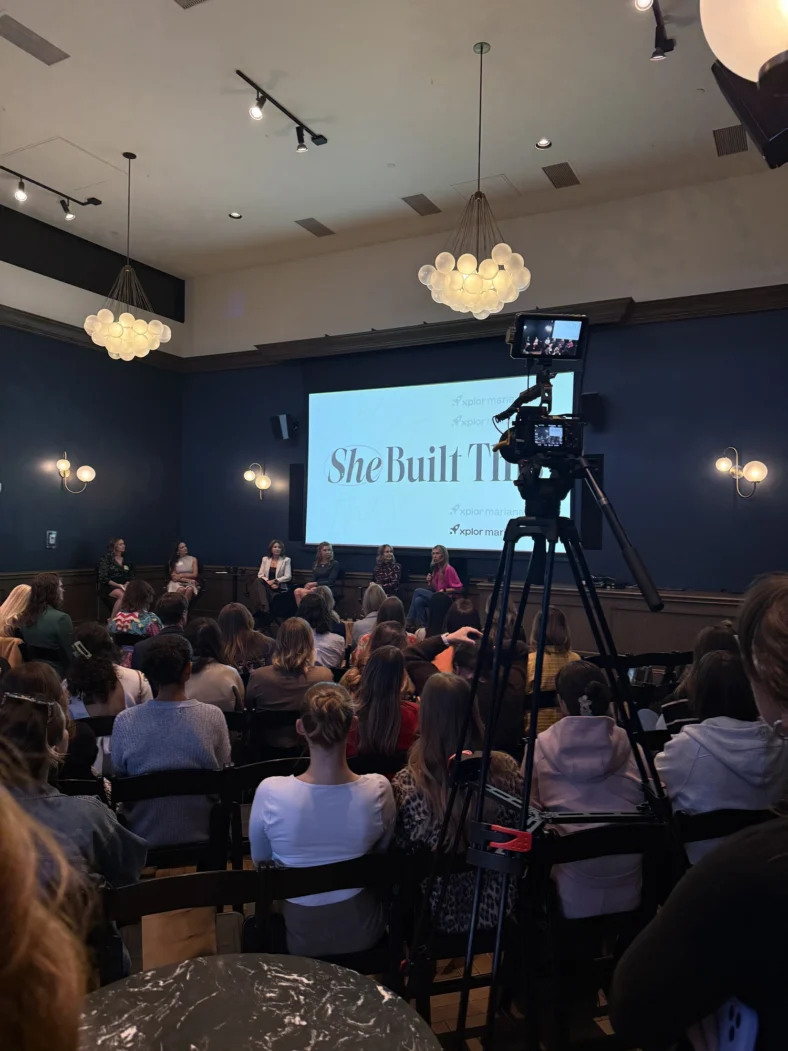 Panelists on stage (credit: Xplor Mariana Tek)
Unfortunately, the panelists pointed out, it’s not uncommon for women to feel competitive and threatened by other women — but being aware of it, and unlearning that impulse, is another key quality in a strong leader.
For Lincoln at barre3, competition only makes her better. “It puts me on my A-game,” she said, referring to the fact that seeing other successful women — like Strougo, who consults for major brands like Hydrate IV Bar and Your Reformer — inspires her and invigorates her to work harder.
Strougo said using that competitive or envious instinct to your advantage is key, actually.
“It makes you a better entrepreneur if you stop and think what is causing you to feel competitive or envious of someone else, what’s preventing you from uplifting someone else — what do you want that they have?” she said.
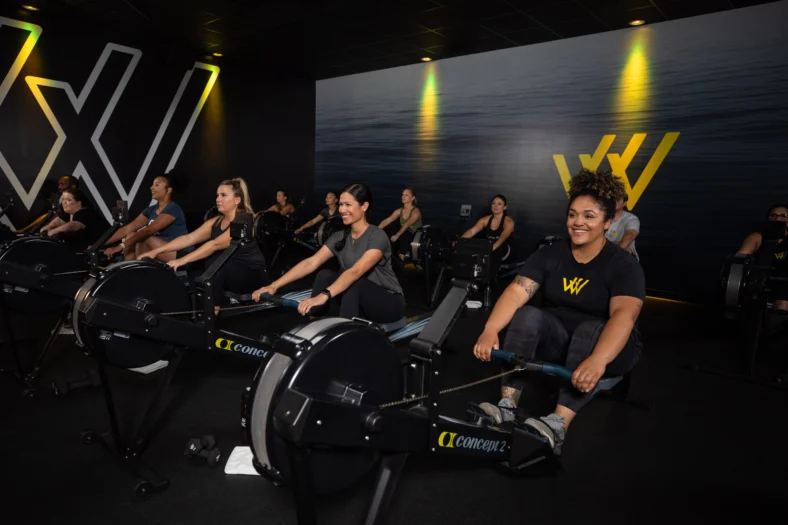 Row House helped pioneer rowing as a boutique fitness modality (credit: Xponential Fitness)
What Leads to Sustainable Growth
Across the board, the panelists agreed that successful scaling comes from two key factors: having a solid brand infrastructure in place, and ensuring any acquisitions or new franchisees are a good match for the brand.
McCollum saw success in growing Bodybar once she helped the brand implement system standards, ensuring national campaigns and methods were consistent across locations.
A vital part of that process was talking directly to franchisees who want to learn why they’re implementing changes. McCollum would get on the phone with them and make sure they were on board and understood the systems in place.
“As we continue to scale and we make systemwide changes, we always try to have that big communication out to everyone,” she said.
But as a brand grows, it’s essential not to lose sight of its values, the panelists pointed out.
For Lincoln, evaluating if new owners are values-fits is a non-negotiable — she looks to see prospective owners are already displaying barre3’s core values, have good studio culture and are excited to further its mission of science-backed and supportive female fitness.
“barre3 is not the hero, our client is. What is best for her?” Lincoln said.
At the same time, she wants to ensure she’s positively impacting and uplifting those female owners, such that barre3 can support them long-term and ensure their success.
Moving forward, Lincoln envisions the boutique fitness industry will only continue leading with women’s physiology in mind when creating workouts.
“The science is now catching up, and the narrative that we have to shift and focus on women’s health and physiology and design for her and fund more research around her, that is a great tailwind for us because that’s what we’ve been doing,” she said.
She also sees the industry embracing two very different dynamics. One leans into tech like AI and software systems that reduce friction, as well as hybrid fitness in and out of the studio.
On the other side of things, she can see more high-touch tactics working well, with brands that focus on in-person engagement, community and connection.
“Trust is going to be harder earned in the next five years,” Lincoln said.