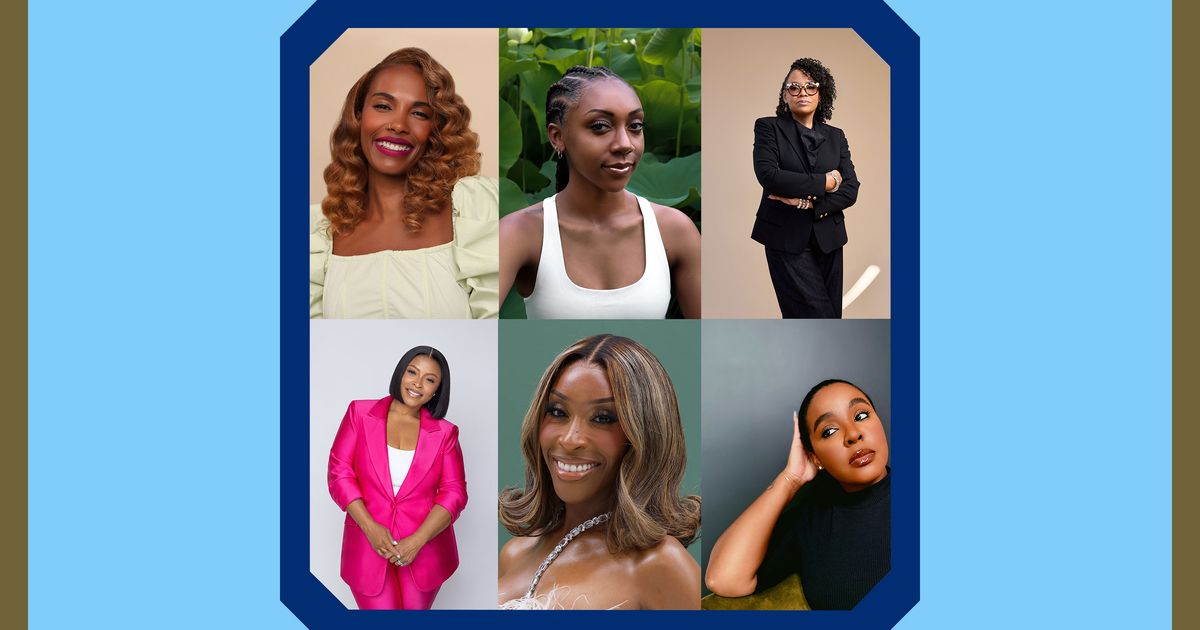
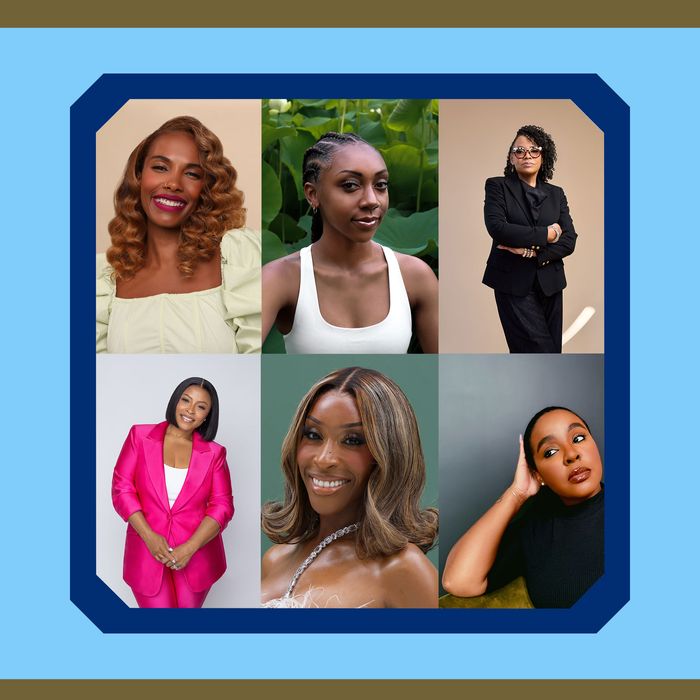
Photo-Illustration: Photo-Illustration: by The Cut / Photos: Courtesy of Talent / Getty Images
For some, beauty is a place for play, but for Black women, that experience isn’t always that simple. Unless they were standing at a counter for Fashion Fair, the OG Black beauty brand that centered brown and dark-skinned women, or are part of the generations able to shop at Fenty Beauty, finding shades that match our skin tones or highlight our tones has often been a difficult and frustrating experience.
If you ask Lisa Price, 63, the founder of Carol’s Daughter, a Brooklyn-born hair- and body-care brand created in 1993, Black beauty is still a fairly new category. When she thinks back to her mom, she remembers a beauty counter that didn’t look nearly as full as Black women’s vanities do today. She had one coral lipstick, one mascara, blush in a peachy-coral shade, and some Oil of Olay, a pink serum lotion. “For her, putting on foundation was like she was trying to look like a corpse,” says Price. “So she refused to even bother.” She recalls when M.A.C Cosmetics launched its popular Oh Baby lipstick shade in the ’90s: She was at the M.A.C store in Brooklyn Heights when Black women flooded the counter because it was marketed as the neutral shade that goes with all skin tones. “That’s not really representative of what Black beauty is and can be when we’re all clamoring for one shade that somebody finally made. That was 40 years ago, but many brands that exist today were around. There were so many other options on the other side of the aisle that we tried to fit ourselves into,” Price says.
In the past decade, inclusivity has grown in the industry — and Black founders have been at the forefront. Black-owned brands have evolved tremendously, and they’re not just creating shades for our skin tones; they’re creating products for everyone, but they’re still experiencing more barriers than their white counterparts. In the past year, we’ve seen brands like Ami Colé shutter and Pat McGrath file for bankruptcy. (And although it’s a fashion brand, Hanifa is paused indefinitely.)
There’s a pattern among these brands, from investments to barriers they face to the communities they’ve built. Some parts of the business are really challenging, but not all of it. Seven founders told us about their journeys, from the start to now.
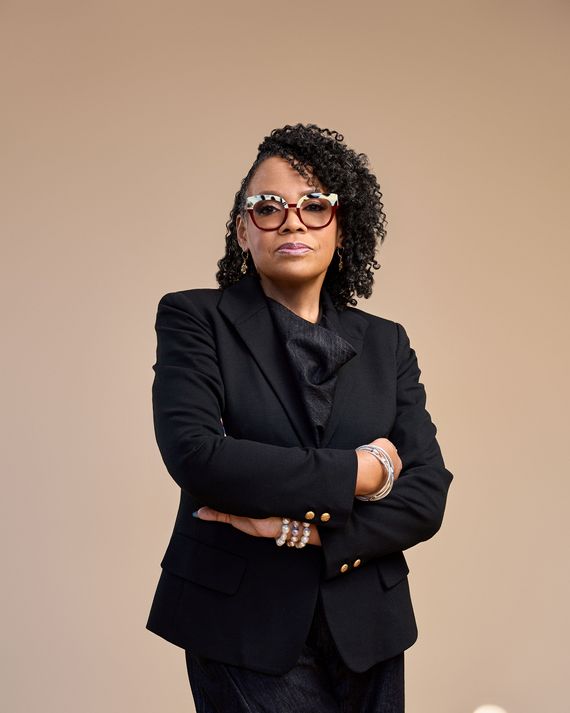
Photo: Joe Chea
Since Price launched Carol’s Daughter in her Brooklyn kitchen, all of the products were sold through its website, its Brooklyn boutiques in the late ’90s, and local flea markets until the brand entered Sephora in 2006, a time when there were rarely any Black-owned brands dominating the shelves. “When I got on Sephora’s shelves, the only Black-affiliated brand that had been in there was Baby Phat,” Price says. In 2014, L’Oréal acquired Carol’s Daughter, and after a decade of ownership, it sold the brand back to Price in March 2025.
Starting capital: $100, from money she made at church flea markets in Brooklyn: “I reinvested and I grew organically from there. Reinvesting and micro short-term loans from a couple of family members was how I operated from 1993 to 2002. In 2002, I got my first loan.”
On where the brand is today: The brand has relaunched its direct-to-consumer website, home to its cult-classic formulas, and it’s also available across retailers, including Ulta Beauty, Target, Amazon, and Walmart.
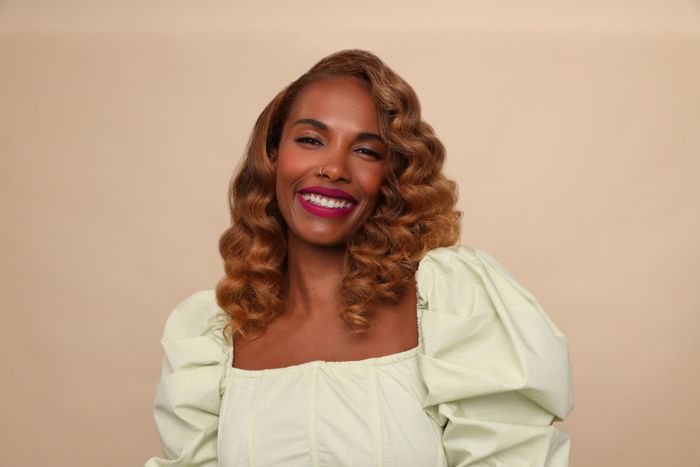
Photo: Bre’Ann White
The Lip Bar was founded in 2012, right in Butler’s Brooklyn kitchen, where she started creating statement-making lipstick shades with a vegan formula. The brand has built a loyal community over the past 14 years.
Starting capital: $30,000. “I started the Lip Bar with my own money that I saved from working on Wall Street,” she says. “I don’t have the money to do this thing, unlike my white counterparts. I don’t have friends and family I can raise around from. I didn’t have a bank to lend me money, so I saved money. I sacrificed in such a major way.”
On where the brand is today: The Lip Bar is available direct to consumer in select Walmart locations and in over 1,000 Target stores nationwide. There was a time when the company was Target’s top-selling Black-owned brand. The retailer was a pivotal part of its success. “I don’t think the Lip Bar made $1 million until we were probably six or seven years old. When we launched in retail, that’s when we hit the threshold, the year after we launched in Target.” Boycotts hurt the retailer’s sales, but the brand is still available there. It has also entered Ulta online as of a few weeks ago, its first new retailer since its CVS expansion in 2023.
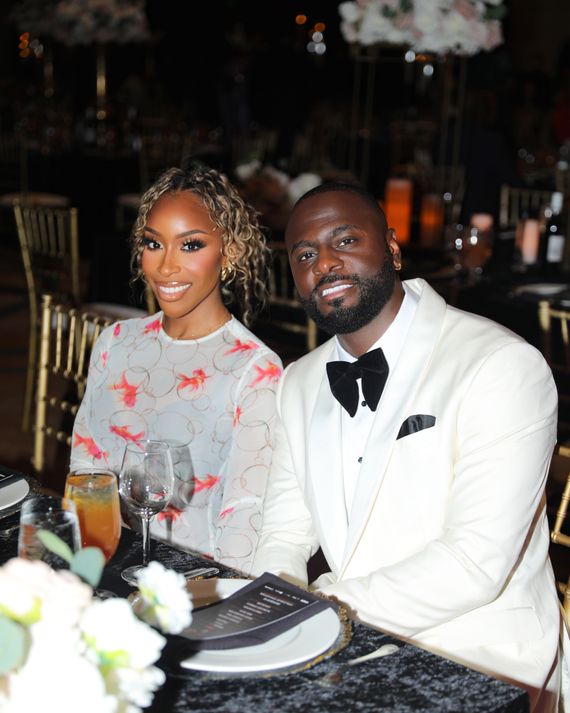
Photo: Drew Visions
Forvr Mood was co-founded by the Asamoahs in 2020, and it had an abundant following before it even launched owing to Jackie’s longtime career as a beauty creator. “I just felt like fragrance was so serious, and I wanted to utilize the same playful language I would use in my videos talking about makeup and translate that back into how fragrance makes me feel,” she says.
Starting capital: Between $250,000 to $300,000. “Seventy percent of that went into inventory, easily. We went with 20,000 candles with the idea that it would last us for three to six months and we wouldn’t have to worry,” says Denis. “That strategy was very intentional. We started off self-funded; Jackie and I put up the capital. I would say we’ve had a substantial amount that we started with — I wouldn’t recommend it. One piece of advice is to start smaller.”
On where the brand is today: Forvr Mood is available on its own website, where it exclusively sells its candles, fragrances, and merch. Its fragrances are also available on sephora.com and across all stores nationwide.
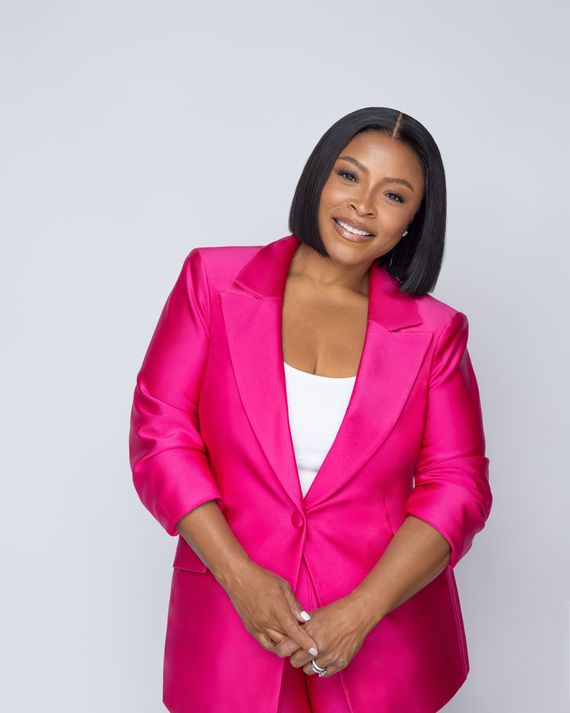
Photo: Jay Leonard
LYS beauty launched in February 2021 as the first Black-owned clean-beauty brand to be sold at Sephora. “I’m either wearing almost nothing or I’m wearing a full beat. There’s no in between for me, and I want to be able to use the same brand in both scenarios, so that’s how I approached creating my brand. I came in asking, How can I be that glam clean-girl makeup?” Thompson says. The brand is known for its inclusive shade ranges and skin-first makeup formulas that go viral often.
Starting capital: Under $400,000, an inheritance after her father died. “I don’t share the full number,” she says. “I always tell people, ‘You can start a beauty brand with $1,000, realistically.’ You can buy from a private-label lipstick-maker and get 100 pieces and start a beauty brand. You can make it in your kitchen, too — but to really, truly scale, it’s different.”
On where the brand is today: In all Sephoras nationwide and direct to consumer. “You can’t launch a brand at Sephora, realistically, with less than, like, a quarter of a million dollars, so I knew I needed somewhere under $500,000, and that was kind of the range I was seeking to raise or to have in my pocket to go all in. I came in with a good portion of it and then I filled the gap with some angel investors,” Thompson says.
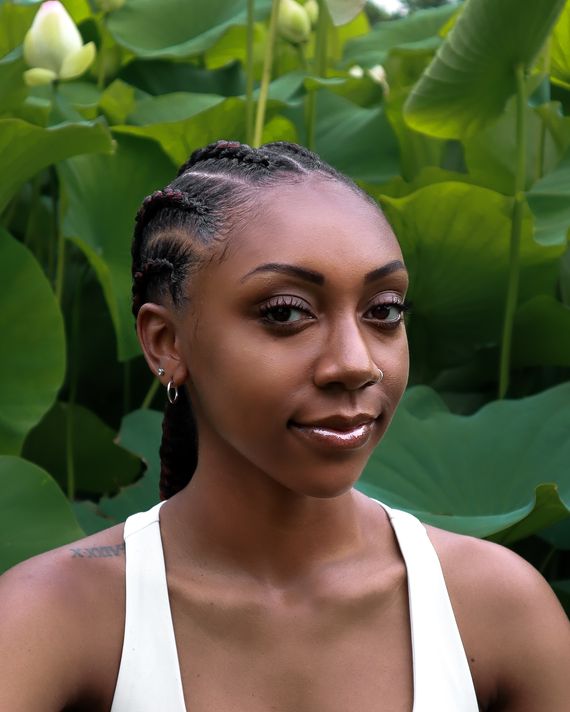
Photo: Willow Pastard
Rebundle was launched in 2021. The company was a first of its kind, braiding hair made from banana fibers instead of plastic, an innovative design to solve issues like irritated scalps caused by synthetic hair and limiting exposure to chemicals and toxins that are in synthetic hair. “We have helped cultivate a segment of the market that didn’t exist,” says Imani May.
Starting capital: $10,000. “I started with grants,” she says. “By the time we launched in 2021, I had been awarded around $80,000. I did have one stakeholder; that one was around $3,000. I didn’t have any formal venture-capital relationships, so it was all grants and money that I had won through competitions, but under $100,000.”
On where the brand is today: Rebundle braiding hair is available on its website. As we spoke, Imani May was flying around Africa, working on new textures after onboarding her newest supplier.
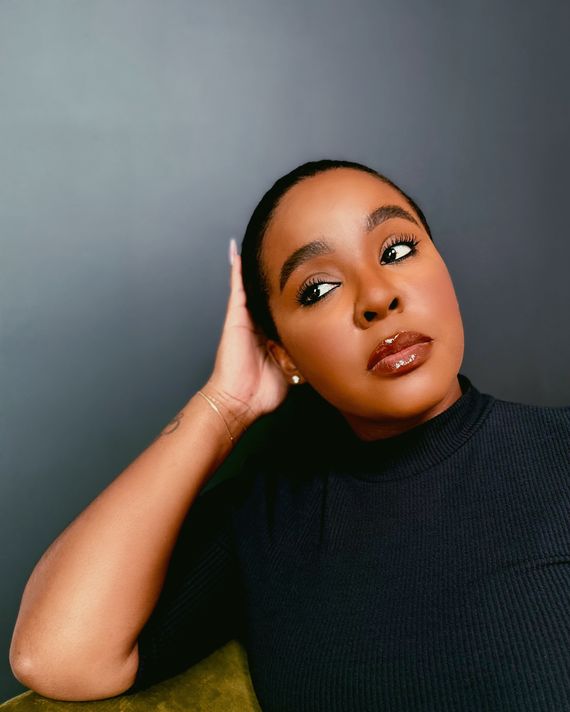
Photo: Brit Kirkland
Deon Libra officially launched in 2022 after years of raising money. Co-founders Devin and Brit Kirkland wanted to create a brand to address how chronic stress affects Black communities after McGhee Kirkland lost her father owing to a stress-induced heart attack. “Instead of overcomplicating being well, we make it beautiful, we make it fun, and we make it accessible.”
Starting capital: $10,000 from a Glossier grant and $109,000, raised from family and friends. “During the pandemic, I made an Instagram post about wanting to build something rooted in community care, but I didn’t fully know what it was yet. That same day, the former Glossier president and current CEO of Sakara Life, Henry Davis, texted me and said, ‘I’ll write your first check.’ And he did … I had no idea $100,000 was really, like, only $10,000 when it came to building a business.”
On where the brand is today: Deon Libra remains a direct-to-consumer model, though McGhee Kirkland admits they’re raising capital — a key inflection point that will shape the company’s growth trajectory over the next year: “Our biggest debt is back pay. We haven’t paid ourselves in two years, going into the third. People tell us, ‘Oh, just get a loan.’ But it’s not that easy when you’re a Black brand … Before we even needed the money in the way that we need the money now, we went to our banking partner and we applied for a small loan, like $100,000 to $200,000, and we weren’t approved, and we had money in the bank and the credit was there. Why were we not approved? Then you hear white founders saying, ‘I had this idea — I went to the bank and I got a loan for $500,000.’”
From the seven beauty founders I spoke with, a common theme was perception and the marketing of who the products are made for — and that possibly leading to scaling issues. If a non-Black consumer thinks a product is made only for Black women, they are less likely to purchase it.
“It’s like because you’re a Black founder, you should sell products to only Black people, or you need to be in the Black aisle or the Black section of the store,” says Butler of the Lip Bar. “We also have a really tough time selling to non-Black people. If consumers see an ad and it’s Black people, as a white person or just a non-Black person, more often than not, they’re going to assume it’s not for them. This makes it much harder to scale.”
“You need to get to a place where it’s not so much that the person is talking about the color of the skin of the founder but they’re talking about the product,” says Price.
“There’s been this discourse about people saying, ‘You shouldn’t say that your brand is ‘Black-owned’ for potential further scrutiny,’ and I come from the era where you’re supposed to be the loudest about the fact that you’re Black-owned,” says Jackie Asamoah. “What I think is so fascinating is that this barrier doesn’t exist for other brands, like Korean-owned brands. Everyone loves K-beauty; everyone loves J-beauty. There’s Indian beauty secrets and rituals too. But for some reason, when people find out that it’s Black-founded, there’s all of these questions like, ‘Can I use it?’ Why wouldn’t you?” If a Black person makes it, it doesn’t mean it’s only for Black people, and it also doesn’t mean you should steal it and say it’s your own.”
Another topic that came up repeatedly was that after nationwide Black Lives Matter protests in 2020, many investors and brands wanted to align with Black founders. But as the years went on, and the Trump administration rolled back DEI efforts, that money dried up. “Five years ago, it was cool to be Black and people were writing checks to Black founders left and right, and now it’s kind of like, ‘Well, we’re off of Black,’” says Butler. “Those are some of the systemic challenges that haven’t gone away. It’s hard to get fair valuations. It’s hard to get fair multiples. It’s much harder to have that access to capital, whether that’s through traditional means with loans or even venture capital.”
“We’ve gotten into a space where you get to launch with Sephora or Amazon or you get into Target,” says Price. “You got it and then you have to feed that machine and feed that beast and maybe you didn’t get to build yours yet. You need your DTC because when everything goes left and people don’t want to shop in those places for whatever reason, a pandemic or a boycott, you still got your spot.”
With social-media platforms like TikTok, it’s not abnormal for products to go megaviral these days, but going viral doesn’t always equal longevity or sales. Sometimes it means more chaos and stress on a brand. Building great products that don’t just have a quick moment is where real success lies.
“In the early days, you could benefit from the platform and post something that just resonates with a large group of people,” says Price. “Now people are trying to go viral when the cards are really stacked against them. Going viral was already a chance thing before, but now you have to pay to play and maybe something will happen and you will go viral, but then you can’t repeat it. If you’re a company that has investors, they’re looking at you like, ‘Well, last April, when you went viral, we had that big spike and this happened, and that happened, and the other thing happened — just do it again. Just go viral again.’ I can’t do that. It doesn’t work like that.”
“I would always think to myself, How are we going to survive if I’m not viral, or if I’m not well known, and I think visibility is important but it doesn’t always only equal success?” says Thompson. “Now when people move on, they move on quickly. So if your product goes viral and your back end is not solid and you don’t have it together, from an inventory-planning and operation perspective, you don’t have healthy margins.”
“We’ve gone viral so many times in life — you do get a slight boost,” says Butler. “That boost might even last you three months and then it dies. But what happens is founders will go and buy a lot more inventory during that boost, and now you’re sitting on it. The reality is you can’t control virality; sometimes it just happens. It’s hard to build your business off of virality, but it’s much easier to build it off of community. It’s even easier to build it off of margins. Know your numbers, and make sure your margins are there to support all the things you want: your marketing activities, the salary you want to pay yourself — all of it.”
When I spoke to the seven founders, many of them underscored that raising money and having investors can help a business grow, but that isn’t always the answer to scaling a business. There are brands that have success stories from having investors, and there are some that find it comes with pressure they are not ready for. It’s still possible to start and run a business without them, despite what it may seem like.
“My initial advice is if your thought is raising investment when you want to start a brand, that’s not the approach. Yes, funding does help, but I want to change your thought process. Firstly, you don’t need to have an investment to have a successful business. Secondly, you’ll be surprised: A lot of people who have investment are not happy and they want to get out of their investment. I think that that needs to be remembered; don’t assume getting investment is going to solve all your problems,” says Denis Asamoah. “So when things get tough, or whenever we are having challenging times — there’s times we’ve had to reinvest back in the business just to keep the lights on, just to make sure our employees are good. We don’t take a salary most of the time if it means just making sure things are all good. So these are the things that you have to just expect in your entrepreneur journey.”
“People are taking investor dollars, then it doesn’t work out the way they planned, which — nothing is perfect, but they get upset when the investor then has a perspective,” says Butler. “As Black founders, we don’t get to make mistakes. Yes, we’re getting fewer dollars, but also, when those dollars come in, if we don’t deploy it in the right way, we don’t get a second chance. That’s not true for white founders. Just look at the founder of WeWork. Like, WeWork has gone through so many iterations and bankruptcies, and all the people still keep giving him dollars. We don’t get that benefit of the doubt.”
“As Black founders, many of us can be lumped into one category. If our story is not right, if our decks are not right, or if our connections aren’t right, then we’re automatically swept into a category of non-investable, even if we don’t deserve to be there,” says Imani May. “There are brands that are not right for venture capital, and I am glad that that narrative is being pushed more. Venture capital is not the end-all, be-all how you get your investment. They’re not all equal, but I believe that sometimes we’re all lumped into one bucket and believed to not have the right business model to receive investment.”
“An investor introduced us to another investor who put a lot of money in beauty brands. He told us he loved the brand and that he thought it was dope. ‘I can’t believe you both have done all this on your own, just the two of you’ was the feedback we received. He told us he would write a check, but he needed to own 51 percent and that was it for me,” says McGhee Kirkland. “It was the audacity of him to think that I built something for Black people on the back of my dad’s death with his name on it to just go get his check. I’d shut this brand down before that.”
“The system is designed for Black founders to suffer, so, yeah, I am angry,” McGhee Kirkland says. “I used to not want to be the angry Black founder or the one who always sounds like she’s bitching, but then I had to check myself: Is it bitching, or is this fact? Saying ‘I’m tired’ is bitching, but saying ‘I’m tired because I don’t have money and you expect me to jump through these invisible hoops and reach billions of dollars in revenue before you write me a check and try to take a third of my company’ — that’s not bitching. That is fact.”