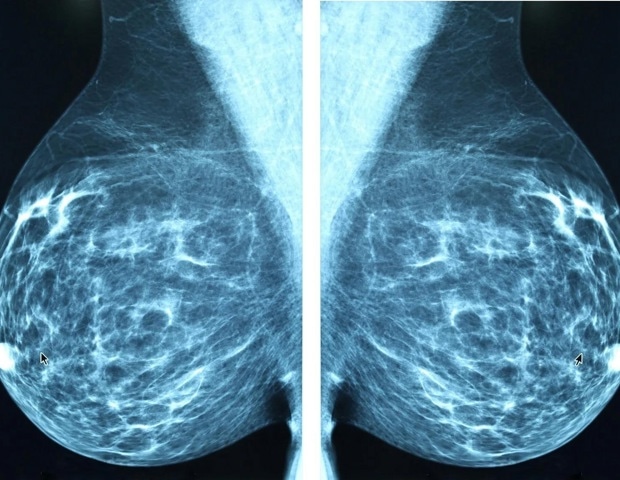
Genetic mutations found in the body’s immune response are “significantly associated” with earlier breast cancer onset among carriers of a particular gene, a new study has found.
Women carrying the BRCA1 genetic mutation have an estimated 60 to 80 per cent risk of developing breast cancer in their lifetime.
However, the age at which breast cancer is diagnosed among carriers “varies considerably”, researchers at Tel Aviv University in Israel noted, suggesting the involvement of other factors, including impaired immunity.
To explore this, researchers studied the exome sequencing information of 321 Ashkenazi Jewish women, among whom the prevalence of BRCA1 mutations is around five to six times higher than in other ethnic groups worldwide.
All of the women were carrying the BRCA1 mutation, and 98 of them had been diagnosed with breast cancer. The age of diagnosis ranged from 26 to 75, at an average of 41.5.
Researchers found that harbouring additional and likely damaging mutations, known as missense variants, in genes involved in the rapid immune response was “significantly associated” with earlier breast cancer onset.
However, mutations in the genes involved in the activation of natural killer cells in particular – immune cells that can kill tumour cells or cells infected with viruses – were most strongly associated with earlier disease onset.
Researchers noted that carrying such mutations brought a risk of earlier breast cancer onset more than 3.5 times higher than those without, according to the study, published in the Journal of Medical Genetics.
Although it remains to be seen whether the preliminary findings can be replicated in other ethnically diverse cohorts of carriers of BRCA1, the findings “highlight a potential role” for refined, personalised risk prediction models.
Meanwhile, in a separate study, doubt has been cast on the effectiveness of Kinesio tape, widely used for joint and muscle pain, after a review of hundreds of clinical trials found “highly uncertain” evidence.
Researchers at several medical universities in China analysed 128 systematic reviews carried out to date on the tape, including those yet to be published.
These reviews included 310 clinical trials on clinical effectiveness, involving more than 15,800 participants living with musculoskeletal conditions.
Alongside being widely used to ease pain, Kinesio tape, created in the 1970s, is commonly believed to help increase mobility.
It is thought the cotton-based adhesive tape provides benefits by lifting the skin and stimulating sensory receptors and enhancing local blood circulation.
However, the new study published in BMJ Evidence Based Medicine rated the methodological quality of most of the published reviews (78 per cent) as “critically low”.
Most of the reviews looked at conditions affecting the legs and feet (45 per cent) and pain intensity (89 per cent).
The analysis of available research indicated Kinesio tape may reduce pain intensity in the short term and improve function or disability in the immediate term, though the evidence is “highly uncertain”, researchers said.
This includes its use in a range of common conditions, such as after knee surgery, for chronic knee or back pain, and knee osteoarthritis.
“Highly inconclusive” evidence suggests the tape may have “trivial or negligible” effects on pain intensity in the medium term and function in the short and medium term, researchers found.
The analysis also found that just 19 of the trials reported on side-effects, the most common being skin irritation and itching.
Although these reactions typically resolve on their own, they “remain concerns”, researchers said.
Researchers said the findings, alongside potential adverse effects, may limit the tape’s application in clinical practice, and called for further high-quality trials and systematic reviews to address the uncertainty.