What would it look like if healing extended beyond the doctor’s office? For the African American Leadership Forum, that is not a rhetorical question. It is a design brief.
ALF is building what it calls Black Wellness Pathways — a community-rooted framework for health equity that refuses to center the story of Black illness, and instead draws on the knowledge, wisdom, and talent already present in Minnesota’s Black communities.
At the heart of that work sits a new kind of leadership role — and the woman filling it has spent more than two decades making the case that medicine’s deepest problems are not clinical. They are ethical, structural, and historical.
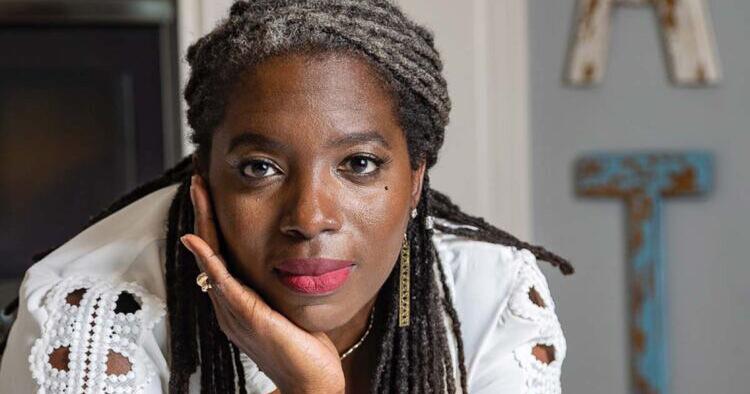
An ethicist, sociologist, institutional leader, entrepreneur, and scholar, Dr. Nneka Sederstrom steps into her role as AALF’s Afrofuturist-in-Residence.
Afrofuturism, as a cultural and intellectual tradition, holds that Black communities are not merely inheritors of systemic inequity but active architects of the futures they deserve. Applied to public health, it asks: what does care look like when it is designed by and for Black people, in full, drawing on the full depth of what Black communities know and hold?
For Dr. Sederstrom, this is not an abstract provocation. It is the logical extension of a career spent refusing to accept that the problems of medicine are too embedded to change. Her future ambitions include developing a scalable healthcare model that rebuilds trust between patients and providers nationwide — a blueprint for restoring faith in medical institutions while ensuring equitable access to care.
Her talks challenge the status quo and leave listeners with one clear call to action: “Know a little better, so you can do a little better.”
At AALF, that call is becoming a framework — and the framework is becoming infrastructure.
Nneka Sederstrom thought of becoming a doctor at a young age, but she ultimately took a different path and shifted her focus after being introduced to clinical ethics, a field that more closely aligned with how she wanted to help others. Treating symptoms was not enough. She sought to address the human questions underpinning medical decisions.
That pivot set the course for one of the most distinctive careers in American healthcare ethics.
Originally from Florence, Alabama, Dr. Sederstrom received her BA in Philosophy from George Washington University in 2001, began her career as a volunteer at the Center for Ethics at MedStar Washington Hospital Center that same summer, and went on to earn her MA in Philosophy in 2003. Her doctoral studies at Howard University focused on Medical Sociology and Race, Class, and Gender Inequalities — a grounding that fused the rigors of clinical ethics with the analytical tools of social science. She also holds a Master of Public Health in Global Health Management from George Washington University.
She is a history maker: earlier in her career, she became the youngest director and the only Black person to lead a clinical ethics department. That department was the Center for Ethics at MedStar Washington Hospital Center in Washington, D.C., where she also led the Spiritual Care Department and founded and served as Executive Director of the Journal of Hospital Ethics.
The arc of Dr. Sederstrom’s career traces a deliberate movement outward — from individual patient cases, to department leadership, to institutional transformation, to community-scale redesign.
She left MedStar in 2016 to join Children’s Minnesota as Director of the Clinical Ethics Department, a role she held for nearly five years before joining the executive leadership team at Hennepin Healthcare System as Chief Health Equity Officer.
At Hennepin Healthcare — Minnesota’s only safety-net hospital — she transformed her department into a dynamic team of over 150 professionals. She spearheaded programs building career pathways for children of color, and launched initiatives to improve clinical outcomes through advanced screening protocols.
She also created the Talent Garden, a program that introduces youth from underrepresented populations to healthcare careers, and co-created Hennepin Healthcare’s Compass program, which educates employees on systemic racism in medicine.
A central theme across every role has been dignity as infrastructure — not aspiration. Every initiative she leads ties to the goal of ensuring patients and their families feel respected, valued, and understood. It is a mission rooted in her belief that dignity should never be optional.
Dr. Sederstrom’s intellectual output matches the scale of her institutional work. She has delivered more than 75 national and international presentations and authored over 40 peer-reviewed articles on clinical ethics, end-of-life care, and racial disparities in health. Her scholarly work has been cited more than a thousand times across the academic literature on health equity and clinical ethics.
Her published scholarship takes on questions that the medical establishment has historically avoided. In peer-reviewed work co-authored with bioethicist Jada Wiggleton-Little, she argued that the crisis standards of care adopted by states during the COVID-19 pandemic were structurally racist — that a colorblind approach to “most lives saved” rendered whiteness invisible as a norm while compounding the documented burdens of Blackness in a medical system built around that norm.
That argument — that neutrality in medicine is not neutral — runs through everything Dr. Sederstrom does. It is the thread connecting the philosopher who started her career asking human questions about medical decisions to the executive who now reshapes institutions from the inside.
She holds fellowships in the American College of Chest Physicians and the American College of Critical Care Medicine, and has been honored as a Distinguished Educator and a Richard S. Irwin Master Lecturer. She is also an affiliate faculty member at the University of Minnesota Center for Bioethics.
Beyond her institutional roles, Dr. Sederstrom co-founded UzObi, Inc., a health technology company built around a conviction that patients’ voices and values should be the axis around which all medical decision-making turns. UzObi provides ethically guided, values-based healthcare decision-making tools to patients through their providers, insurers, and hospital systems. Its Medical Blueprint framework ensures that a patient’s voice remains at the forefront — particularly at the end of life, where decisions are most consequential and patient agency most easily overridden.
Her participation in the Northwestern Mutual Black Founder Accelerator reflects the scope of her ambition: she is not only working within systems but building new ones alongside them.
The Black Wellness Pathways concept, as articulated by AALF CEO Dara Beevas, rests on a deliberate inversion of conventional public health framing. Rather than mapping Black health through the lens of what is missing — the access gaps, the outcome differentials, the structural deficits — the framework asks what Black Minnesotans already possess and how those assets can be amplified, formalized, and made sustainable.
Three pillars drive that work.
Community knowledge and wisdom. AALF’s Design Sessions bring together community members and design specialists to co-create the policies and programs that a new health system would require. Participants shape outcomes rather than ratify them. The organization’s Action Center extends that participation, giving Minnesotans a channel to share their own wellness stories, endorse the Black Agenda for Change, and advocate for policy transformation across the state.
Afrofuturist leadership. Dr. Sederstrom’s residency is the connective tissue between the organization’s vision and its capacity to operationalize that vision — to move from aspiration toward systems that function differently at scale.
Invested Black talent. AALF is directing resources toward ensuring that Minnesota’s wellness assets are accessible to all while simultaneously building a pipeline of innovative community health practices developed by Black practitioners and community members. The Healers’ Circle, a tiered community of supporters, formalizes that community of care and creates accountability through annual recognition and regular program updates.
For a community that has long been the subject of health equity reports rather than their authors, AALF’s framework represents a meaningful shift in posture. North Minneapolis carries a disproportionate share of Minnesota’s documented health inequities. It also carries generations of knowledge, networks of mutual care, and a cultural vitality that formal health systems rarely know how to count.
The Black Wellness Pathways approach treats those intangible assets as infrastructure. Dr. Sederstrom’s appointment as Afrofuturist-in-Residence — grounded in decades of scholarship, institutional leadership, and community-centered innovation — is a signal that AALF intends to meet that challenge with full intellectual and strategic force.
The future of wellness in North Minneapolis is being designed, right now, by the people who live here. And for the first time, the organization anchoring that work has someone in residence whose entire career has been preparation for exactly this moment.
The African American Leadership Forum publishes policy briefs, community research, and the Black Agenda for Change through its Insights Center. AALF is headquartered at 1625 Hennepin Ave, Suite 200B, Minneapolis, MN 55403.