Says success depends on what is actually taught
Medical schools should be teaching nutrition education and Secretary of Health and Human Services Robert Kennedy is correct to push for curriculum changes, according to a preventative medicine expert.
HHS recently announced that 53 medical schools have taken up the challenge of providing more education on nutrition and diet as part of their curriculum. The medical schools will begin offering at least 40 hours of nutritional education in this upcoming school year.
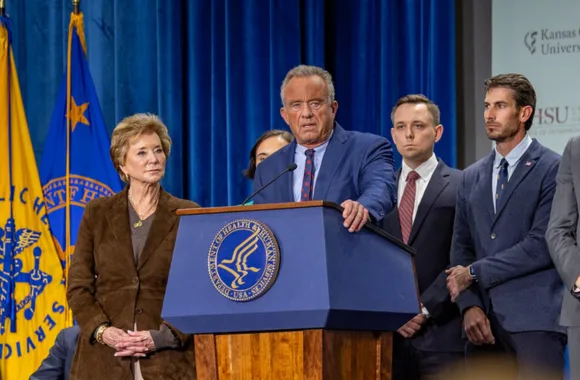
Secretary Kennedy said the effort is intended to address the connection between diet and long-term illness. He said medical school leaders are the “solution” to “reversing chronic disease.”
“Chronic disease is bankrupting our health system, and poor nutrition sits at the center of that crisis,” Kennedy added in a news release.
Dr. Michael Greger affirmed Kennedy’s analysis of the problem in original comments to The College Fix.
“[E]very single one of the fifteen leading causes of death in the United States has a diet and lifestyle component,” Greger told The Fix via email.
He is the founder of the American College of Lifestyle Medicine and runs a health information website called Nutrition Facts. He has written books about aging and diet.
The whole-food, plant-based diet advocate said “[d]octors have a severe nutrition deficiency–in education.”
“Most doctors were just never taught the impact healthy nutrition can have on the course of illness and so they graduate without this powerful tool in their medical toolbox,” Greger told The Fix.
“There are also institutional barriers, such as time constraints and lack of reimbursement,” he said. “In general, doctors simply aren’t paid for counseling people on how to take care of themselves.”
He says students need “clinical nutrition” training to learn how to treat and reverse illnesses, which the new HHS initiative seeks to implement.
A spokesman for the health department provided further information on what schools can teach to satisfy the requirement.
The Dept. of Health designated 71 competencies from the JAMA Network students can use as an alternative to fulfill the nutritional training requirement.
When asked why 40 hours of nutrition education was chosen as the benchmark, how adherence will be evaluated, and whether more schools will be joining, a public relations staffer referred The Fix to a fact sheet explaining the changes.
The fact sheet lists “identifying nutrient-deficient states, interpreting metabolic biomarkers, the micronutrient contents of foods, pathological states affecting nutrient absorption, forming healthy lifelong dietary patterns for chronic disease patients” as competency requirements.
The policy arises from the limited amount of nutrition education in medical training. According to the release, less than one percent of lecture hours in U.S. medical schools have focused on nutrition. A 2022 survey found medical students received around 1.2 hours of nutrition-based education per year.
On top of that, about three-quarters of medical schools lack a clinical nutrition course in their curriculums, and only 14 percent of residency programs currently include a formal nutrition curriculum.
Even while spending more than $4 billion to combat chronic disease annually, one million Americans pass due to food-related conditions.
The federal government plans to provide financial support to institutions working to develop new training materials. The National Institutes of Health will run a $5 million challenge program to help various medicine programs integrate nutrition science into their curriculums.
Nutrition is not a ‘standalone topic,’ medical school says
The Fix reached out to the listed 53 schools to ask for reactions to the 40-hour nutrition program, motivations for adopting it, how it will be integrated into the curriculum, and what students will learn.
“Both University of Arizona medical schools, the College of Medicine – Tucson and the College of Medicine – Phoenix, have been offering at least 40 hours of nutrition education to students, predating the recent announcement,” spokesman Mitch Zak told The Fix.
Louisiana University Health New Orleans said the effort aims to better prepare future doctors to prevent and treat chronic diseases, especially in Louisiana, where obesity and food insecurity rates are high.
Dr. Brian Kessler, dean of the Meritus School of Osteopathic Medicine, is also supportive of the initiative. In partnership with Meritus Health, the medical school also connects nutrition education to community programs to train practical, patient-focused approaches.
“This has been part of our approach from the beginning,” Kessler wrote to The Fix in an email. “We have mapped nutrition across the curriculum and continue to identify where it can be integrated more effectively. Rather than treating nutrition as a standalone topic, we incorporate it into clinical cases, decision-making, and patient care discussions.”
The University of Florida also sees the initiative as a way to improve collaboration and better prepare students for residency. A UF spokesperson told The Fix the school “has always been a leader in medical education and offers a robust nutrition curriculum.”
Other schools did not respond for comment.
Officers in the U.S. Public Health Service will also have to complete nutrition-centered courses as part of their professional training.
The American Medical Association did respond to multiple requests for information. The Fix asked the AMA’s response to the 40-hour nutrition program and its impact on chronic disease prevention.
During the press event unveiling the new commitments, Secretary Kennedy cited the medical group’s support for nutritional education.
MORE: RFK Jr. wants gov’t scientists to publish in-house, not in ‘corrupt’ journals