“If you’re going to inadvertently inhale chalk, you might as well hit your macros,” says the 26-year-old cofounder of NutriHacks.
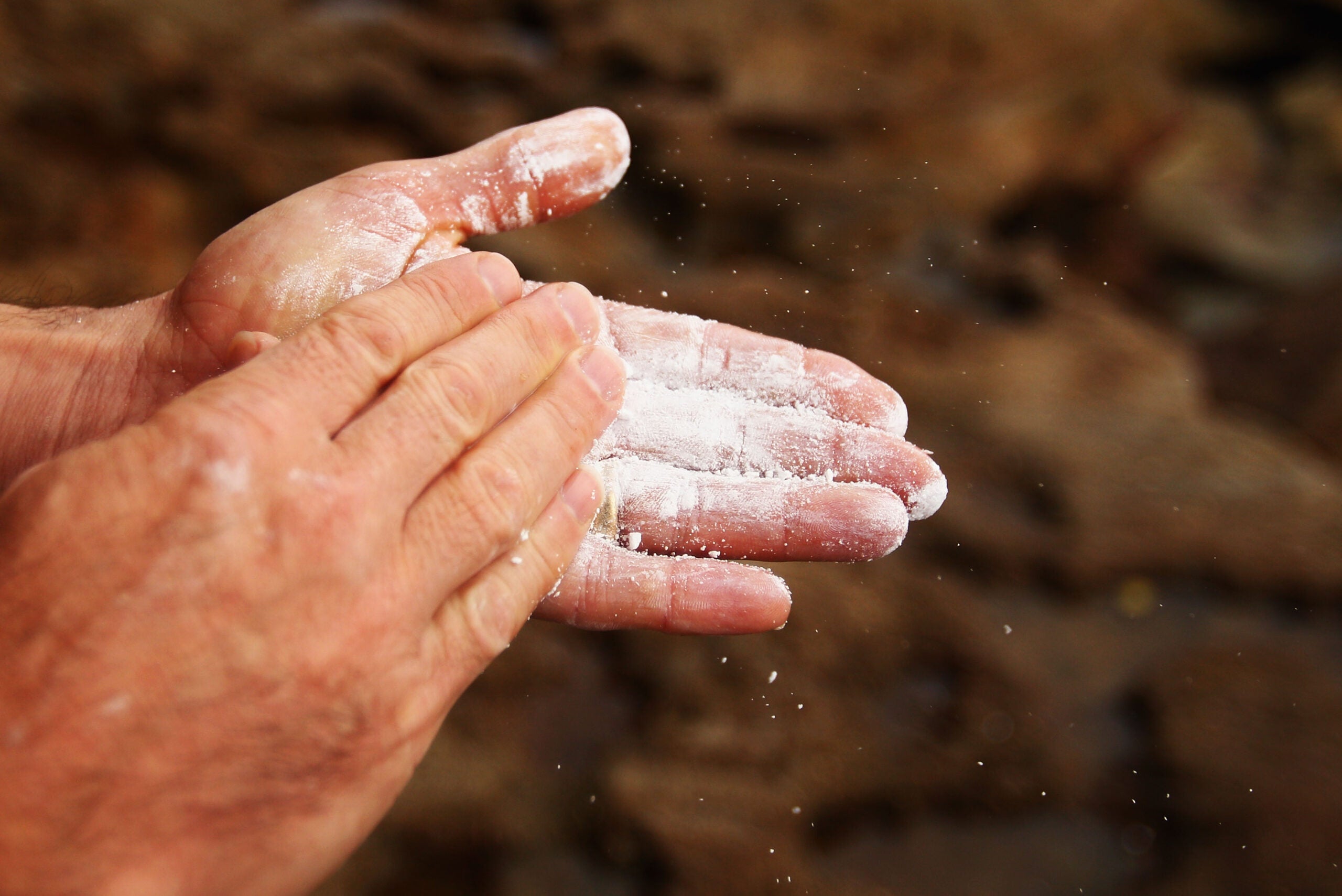
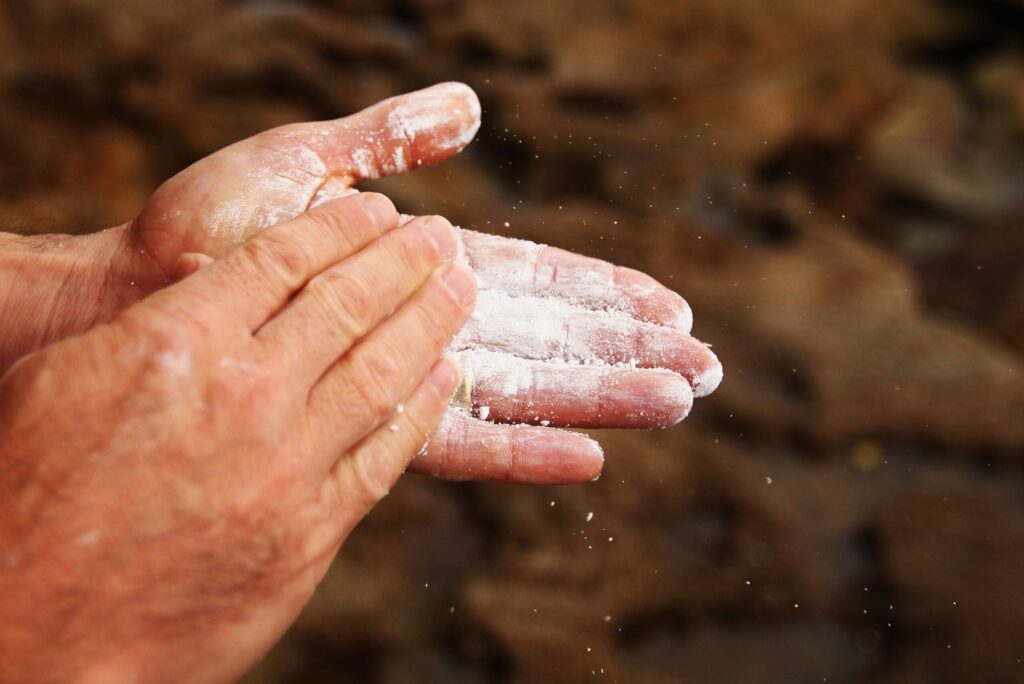
(Photo: Ryan Pierse / Getty Images)
Published April 1, 2026 03:16AM
Three months ago, a Los Angeles-based startup called NutriHacks launched its first product: Protein Chalk, a half-kilogram bag of protein-based, white chalk for climbers to use instead of traditional magnesium carbonate.
“When you’re at the gym, you’re obviously inhaling chalk all the time,” says Lucy Deril, the 26-year-old climber and food science graduate who founded NutriHacks with her older sister, Ella Deril, in Los Angeles in May 2025. Both sisters are active in the fitness communities, and started climbing about six years ago at Cliffs of Id in Culver City. “If you’re going to inadvertently inhale chalk, you might as well hit your macros,” Ella adds.
Impressively, Protein Chalk is 83% plant-based protein with zero added sugars. It’s biodegradable, non-GMO, gluten free, dairy free, USDA-certified organic, shelf-stable for three years when stored in plastic, and most importantly, 100% edible.
According to the founders, Protein Chalk isn’t intended for use as a snack. “It actually doesn’t even really taste good,” says Lucy. “It really just tastes like chalk.” But according to the Deril sisters, it’s designed to both maximize muscle growth, while minimizing harm to the lungs of climbers. The founders also say that their product is, at its core, designed to address an unavoidable side effect of climbing: the accidental inhalation of chalk.
For many climbers, especially those who suffer from asthma or other breathing issues, the impacts of breathing in magnesium carbonate have been a growing concern. Last year, the Czech Academy of Sciences came out with the most comprehensive study on chalk inhalation by climbers. Over a six-month period, researchers monitored the lungs of climbers who bouldered at the gym, without a mask on, for at least two hours per day once a week. They found that the average climber inhales close to one milligram per cubic meter per hour of magnesium carbonate particulate matter. That’s nearly twice the U.S. Workplace Exposure Limit of half a milligram per cubic meter per hour. When the climbing gym session lasted four hours, that went up to two milligrams per cubic meter.
By contrast, the NutriHacks founders claim that Protein Chalk does not irritate the lungs because its molecular structure limits how small the particulates can become, especially compared to magnesium carbonate. “Protein Chalk won’t stay floating in the air forever like regular chalk does,” says Lucy Deril. “And if it does, it won’t get stuck in your lungs. A heavier particle means that you still get the friction you need, but instead of hurting you, it will actually assist in the stimulation of muscle mass over time.”
The sisters say they were inspired to create a protein-based chalk, and not just a non-toxic one, from the very beginning. “As athletes, it’s important to us to optimize everything that goes into our body for performance,” Lucy explained. “We have protein shakes, protein pizza, and protein ice cream, but it’s still extremely difficult to hit the recommended protein amounts each day, especially as a woman. So why not support your nutrition goals with every opportunity you have?”
With Protein Chalk, the food scientist says that belayers won’t have to worry about dodging falling chalk particles from their climbers above: If they swallow any protein chalk, it’ll just come back as gains. “Eventually, once everybody is using protein chalk, gyms won’t have to worry about ventilation or aggressive vacuuming,” says Ella. “The potential savings for gym owners will be quite literally life-changing.”
But does NutriHacks chalk actually work? Like, for climbing? Last month, when I received a sample of NutriHacks’ Protein Chalk to test out at the gym, I was surprised at the softness of the product. With the fine grains, I could get a lot more coverage on my hands with every re-application than with regular chalk. Overall, it worked great on all types of indoor holds. Unfortunately, I did notice a distinct clumping effect in my hands, especially after I started to sweat, as well as a persistent smell of vanilla.
I gave my feedback to Ella Deril over the phone the next day. “It’s not like this is just protein powder marketed as chalk, right?” I joked.
Before she could respond, the call dropped. Since then, Climbing has not been able to get in touch with the Deril sisters over email, phone, or text.
Happy April 1!