From Philly and the Pa. suburbs to South Jersey and Delaware, what would you like WHYY News to cover? Let us know!
An herbal supplement found in smoke shops and gas stations could soon be outlawed in Delaware. But many users say its medicinal qualities help them.
It’s called kratom. Legislation sponsored by state Sen. Kyra Hoffner, D-Leipsic, would ban it.
“They’re sold right next to the 5-hour Energy drinks with no physician involved and no safeguards beyond whatever the retailer decides to put in place,” Hoffner said. “It should not be on in every gas station.”
Separate legislation in the state House would regulate but not outlaw it.
What is kratom?
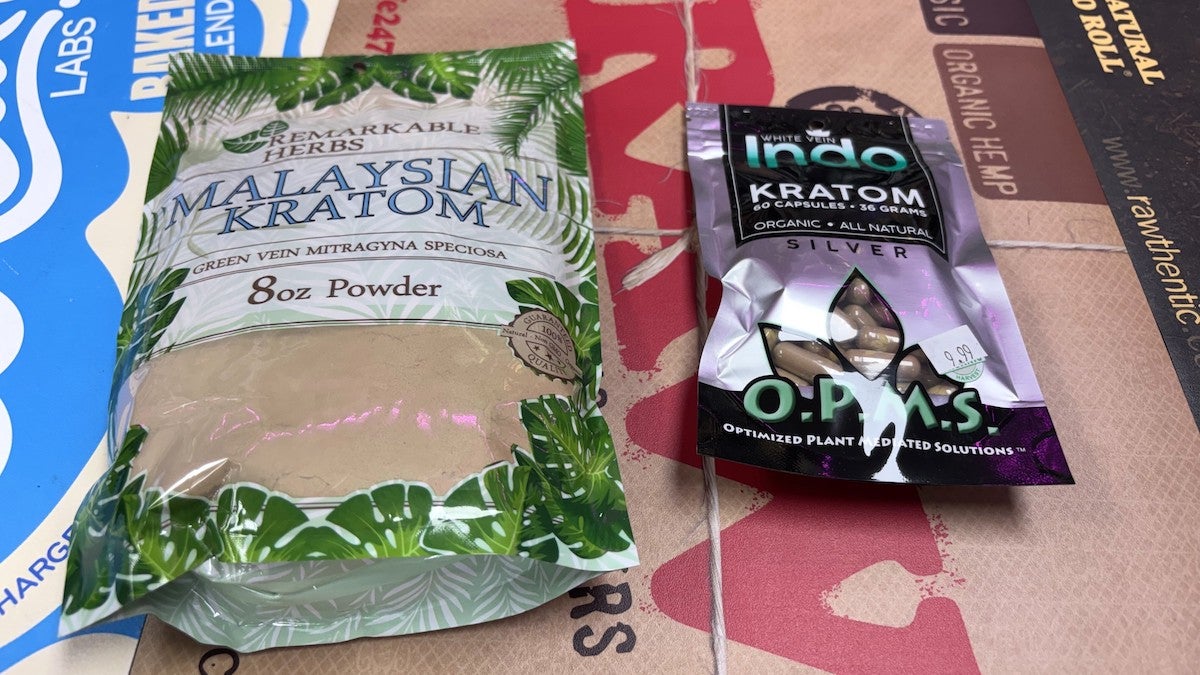
According to the National Institute on Drug Abuse, kratom is an herbal product derived from the dried leaves of a tree found in Southeast Asia in the coffee family. It’s been used for centuries as folk medicine for complaints such as hypertension, diarrhea, cough and fever.
Kratom has spread in popularity across the U.S. A 2021 national survey of people ages 12 and older found 1.7 million people had used it in the prior year, though a report published in Frontiers in Pharmacology estimates between 10 million and 16 million people use kratom products. Consumers say it can act like a stimulant, giving them more energy and alertness, or produce an opioid-like effect, relieving pain and causing relaxation.
Testifying during a March committee hearing on Hoffner’s bill, Misty Brown told state lawmakers that kratom helped her recover from an addiction to pain medication and street drugs by helping with opioid withdrawal symptoms.
“Kratom quieted my cravings and gave me the space to heal,” Brown said. “I haven’t returned back to pain management [for] over six-and-a-half years. Today, I’m a thriving mother and a proud grandmother.”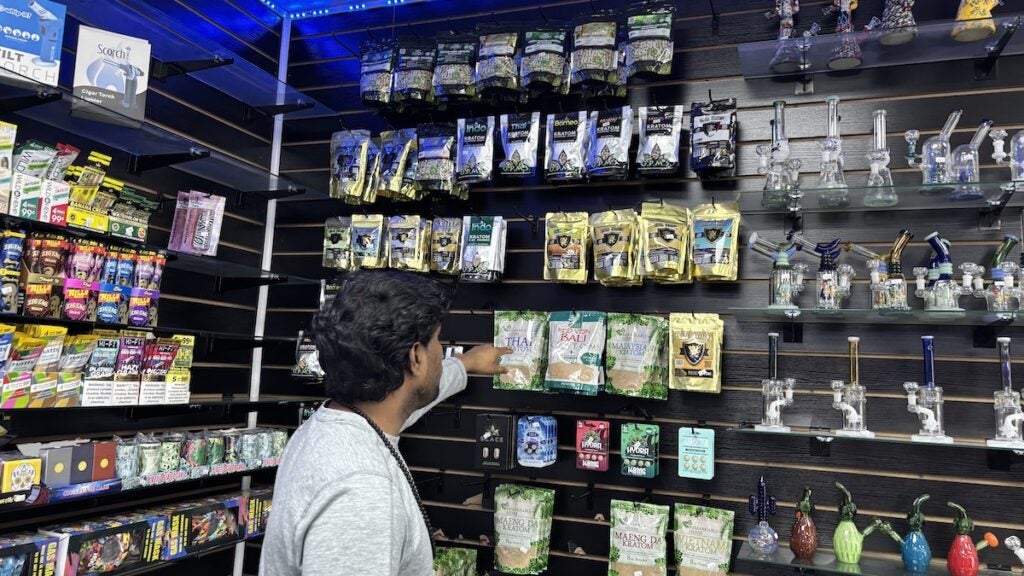 A salesperson at Murphy Smoke Shop in Wilmington points out the various types of Kratom the store sells. (Sarah Mueller/WHYY)
Critics of kratom call it dangerous, even deadly. The synthetic variants have a concentrated amount of 7-hydroxymitragynine, also known as 7-OH, a byproduct of the kratom plant that acts on opioid receptors in the brain. The Food and Drug Administration has received reports of harmful effects of 7-OH products, including addiction, anxiety, depression, gastrointestinal distress, insomnia, seizures and withdrawal symptoms.
Kratom products have also been linked to a small number of deaths, according to the National Institute on Drug Abuse, though it said nearly all cases involved other drugs or contaminants.