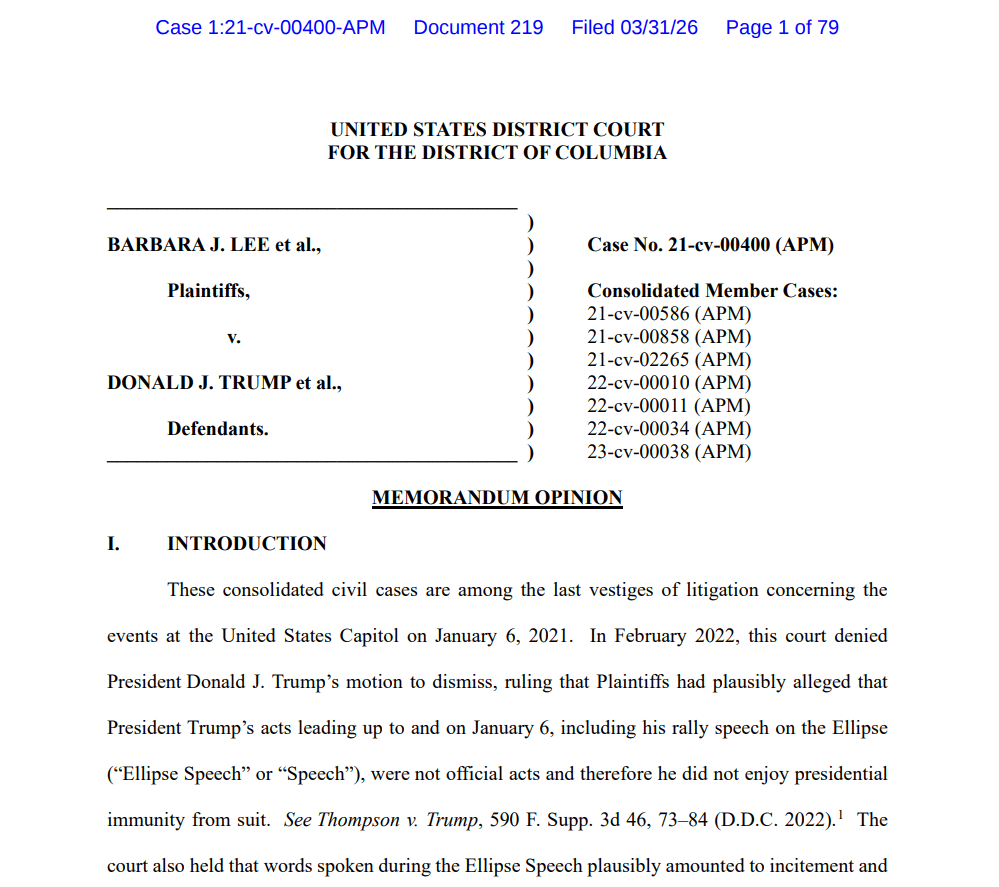
A federal judge in Washington has mostly rejected former President Donald Trump’s claim of civil immunity in lawsuits accusing him of inciting the Jan. 6, 2021, attack on the U.S. Capitol.
U.S. District Judge Amit P. Mehta denied Trump’s motion for summary judgment, finding that most of his actions surrounding the 2020 election and the events of Jan. 6 fell outside his official duties as president. Mehta found a November 2020 Oval Office meeting with Michigan lawmakers, Jan. 6 tweets, the Rose Garden statement, and DOJ‑related interactions were within the “outer perimeter” of his presidential responsibilities.
The ruling leaves intact a group of consolidated civil suits that seek to hold Trump personally liable for the violence and disruption that accompanied Congress’s certification of the 2020 election.
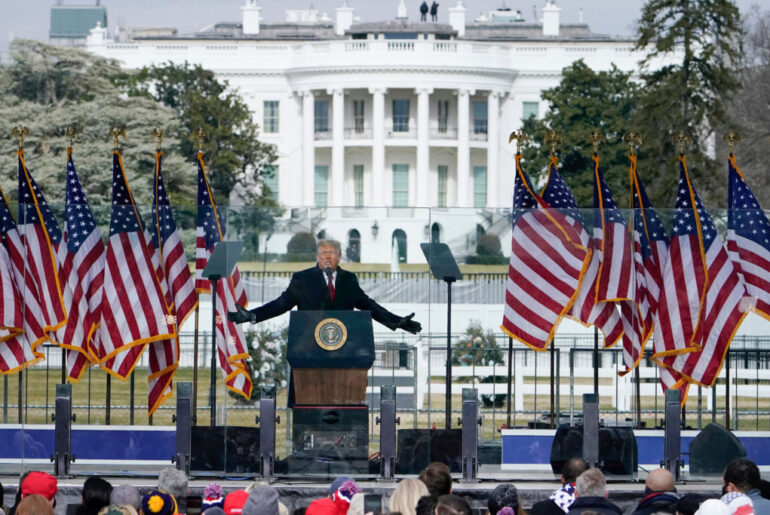
Mehta previously ruled in 2022 that Trump was not shielded by presidential immunity at the motion-to-dismiss stage and that portions of his remarks at the Ellipse could be considered unprotected incitement under the First Amendment. The D.C. Circuit Court of Appeals later affirmed that view in Blassingame v. Trump, and Trump declined to seek review by the Supreme Court.
In Trump’s new motion, he argued that more recent appellate and Supreme Court rulings strengthened his claim to absolute immunity for conduct undertaken while in office. Mehta disagreed, writing that Trump’s post-election outreach to state officials to “find” more votes was that of a political candidate rather than an officeholder.
The judge singled out Trump’s Jan. 2, 2021, call pressing Georgia Secretary of State Brad Raffensperger to “find” votes as an example of behavior “that could only reasonably be viewed as the act of an office-seeker.”
Mehta also declined to change his ruling that certain aspects of the Ellipse speech were not protected by the First Amendment. He certified the constitutional question for interlocutory appeal, allowing higher courts to review it before trial.
The judge said that his decision addresses immunity only at the summary‑judgment stage on the current record and left open the possibility that Trump could renew his immunity arguments at trial under a higher evidentiary standard.
The ruling does not decide the merits of the plaintiffs’ claims but clears the way for the lawsuits to proceed. With limited exceptions, Mehta’s decision means Trump can be sued as a private citizen for actions tied to his efforts to overturn the 2020 election.