Regular movement is key to staying fit and strong as we age, with guidelines recommending at least 150 minutes of moderate-intensity activity each week. Swimming, running, strength training, and cycling are all good options – but they aren’t the only ingredients for healthy ageing. Sometimes, you need to hold still.
Isometric exercise – working the muscles by holding a static pose for a period of time – is a great low-impact way to build fitness. A review of 270 trials published in the British Journal of Sports Medicine concluded that isometric exercises, such as a plank and wall sits, are more effective at lowering blood pressure than other forms of exercise. But that’s not the only benefit of a bodyweight Pilates workout. As anyone who has found themselves shaking throughout a squat hold in an at-home Pilates workout will tell you, they are crucial for building strength.
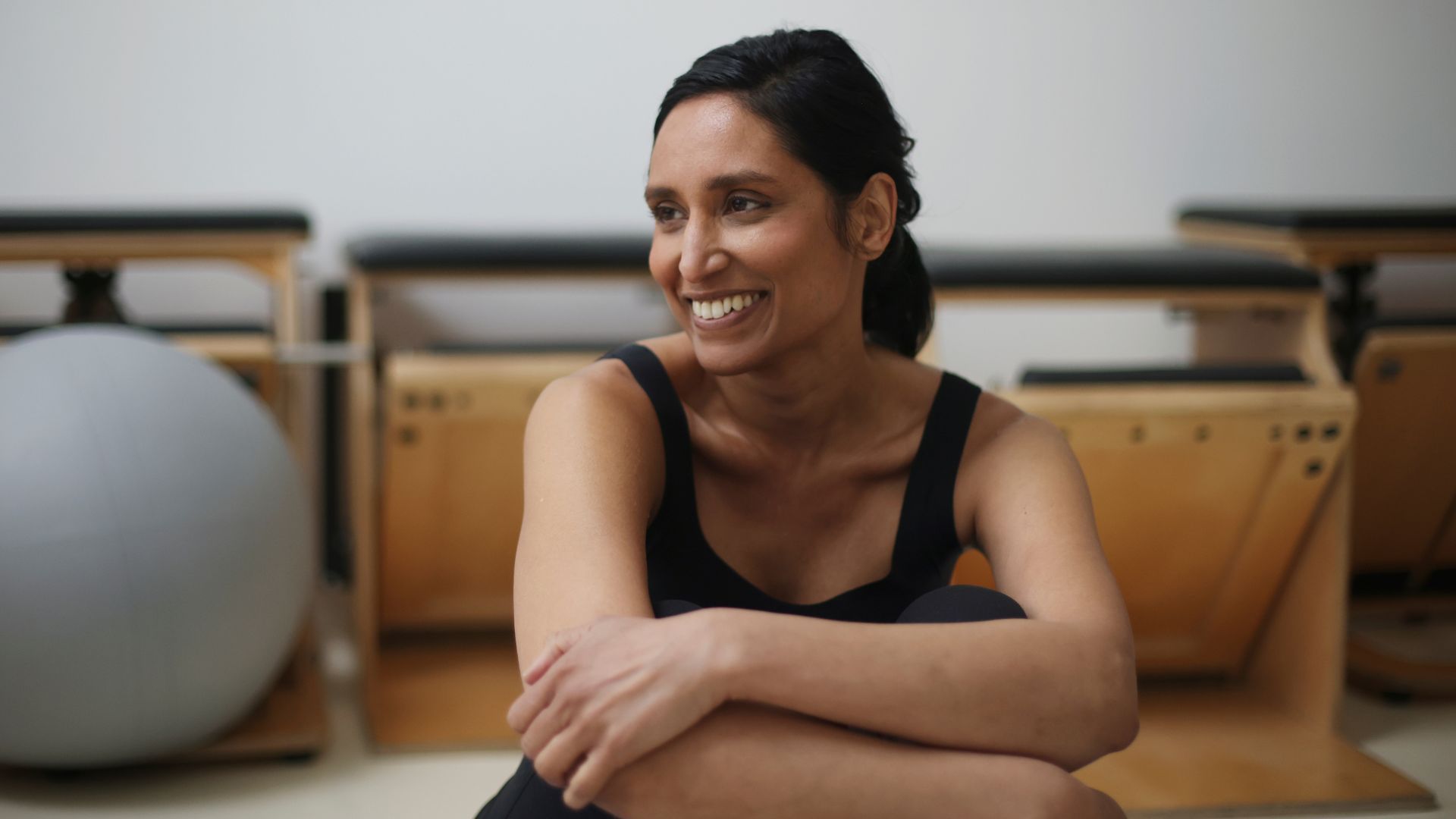
It’s a form of exercise that 50-year-old Pilates and Barre expert Tara Riley prioritises, even alongside her strength training sessions. “Some of the most powerful strength work doesn’t require equipment. It requires control. Years of bodyweight training taught me that true strength isn’t just about how much you can lift, but how well you can stabilise, balance and support your own body through space. That belief has only deepened as I’ve moved through midlife,” she tells woman&home.
Article continues below
You may like
“While dynamic, flowing movement still brings me joy, I’ve become increasingly intentional about building static strength and control. A bodyweight Pilates workout, when done well, strengthens the deep core, supports joint stability and sharpens neuromuscular awareness in an incredibly supportive way as we age. That carries into real life: lifting, balancing, decelerating and moving with confidence.”
Try these 5 bodyweight holds in Pilates1. Plank
Widely regarded as one of the best full-body exercises you can do (even Oprah Winfrey thinks so!), the plank is key to building stability and strength. Tara says, “Deep core strength and support are essential for spinal stability, posture and protecting the lower back. Planks are a good exercise for strengthening the deep core, particularly the transverse abdominis, shoulders, and glutes.
Here’s a reminder of how to do a plank:
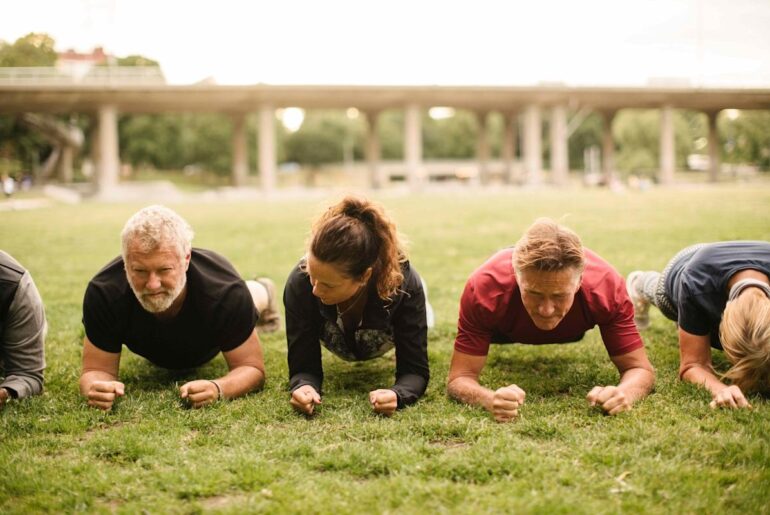
Start in a forearm plank with elbows under shoulders and legs long behind you.Press the floor away as you draw your ribs in and lengthen through your heels.Hold without letting the hips sag or pike.Start with a 20 to 30 second hold, building up to a minute or more.
Expert tip: “Press firmly through the forearms to avoid collapsing into the shoulders. Keep the back of the neck long and gaze slightly ahead of your hands,” says Tara. Holding the breath is common in this challenging pose, so remember to keep breathing!
2. Hollow hold
“This hold builds deep abdominal strength and teaches pelvic control. It’s brilliant for maintaining core integration and supporting the lumbar spine,” says Tara.
Here’s how to do it:
Lie on your back with arms long against your sides.Curl from the spine lifting the head and shoulders, then float legs slightly off the floor, pressing the lower back gently into the mat and squeezing the glutes to connect into the pelvis.Hold the shape for 20 to 30 seconds (if starting with one leg down). In full pose with both feet up, try 20 seconds to start with, and progress in increments of 10 seconds.
Expert tip: “If needed, keep one leg bent with your foot on the floor to start. Try not to arch the lower back or strain the neck, and avoid crunching or pulling the shoulders forward,” she adds.
What to read next
3. Wide sumo squat
A wide squat variation supports bone health and is great for strengthening your inner thighs, glutes and quads while supporting hip mobility, which is essential for balance and fall prevention, notes Tara.
Here’s how to do a wide squat:
Stand with feet wider than hips, toes slightly turned out.Keeping a straight back, lower into a squat with knees tracking over toes.Hold at your lowest strong position. Start with 30 seconds, and progress in increments of 15 seconds if you can.
Expert tip: “Keep chest lifted, press evenly through both feet and keep knees in line with your second and third toes. Avoid letting your knees roll inward and tipping the pelvis forward excessively,” warns Tara. She adds that maintaining good form is more important than going lower.
4. Single leg balance
This hold can be done in two ways: leg out in front to work the hip flexor, or leg behind to work the glutes. Tara says, “Balance declines naturally over time [therefore], practising single leg work strengthens the stabilising muscles around the ankle, knee and hip, improving proprioception and reducing fall risk. I see enormous improvements in clients in their 50s and 60s when we consistently include this work.”
Here’s how to do it:
Stand tall and lift one foot off the floorEither bend your knee in front of you or extend your leg behind.Hold steadily for 30 seconds. Progress by closing the eyes or moving the arms for an additional balance challenge.
Expert tip: “Remember to stand tall, keep your hips level and lightly engage the glutes of your standing side. Avoid locking the standing knee or gripping your toes. And wobbling is okay, it’s how the body adapts and learns.”
5. Glute bridge
“Strong glutes protect the lower back and support pelvic stability. This becomes increasingly important in perimenopause and beyond, where pelvic floor and hip strength can shift,” explains Tara.
Here’s how to do it:
Lie on your back with knees bent and feet hip-width apart.Press through the heels and lift the hips until you form a straight line from shoulders to knees.Hold for one minute before lowering with control.
Expert tip: “Maintain neutral neck alignment and avoid flaring the ribs in this glute exercise,” she says, adding that common mistakes include arching the lower back, pushing up through the toes and allowing the knees to either splay out or collapse in.
Why is a bodyweight Pilates workout so good for longevity?
This kind of bodyweight Pilates workout delivers vital benefits when it comes to future-proofing your body: namely, an increase in overall strength and improved balance.
The benefits of strength training for women, particularly in midlife, are well-known. Not only does it help improve bone density, boost cardiovascular health, ease menopausal symptoms and lift mood, but it could even take years off your biological age, as a recent study discovered.
Balance is a key indicator of longevity. A study published by the British Journal of Sports Medicine found that people who are unable to stand on one leg for 10 seconds in middle and later life have almost double the usual risk of premature death.
This is why static bodyweight holds have become increasingly important for Tara and her clients in their 50s and 60s. “[In midlife] I’ve become much more intentional about pairing movement with static control. Real life requires both. We need to be able to move freely, but we also need the strength and neuromuscular control to decelerate, stabilise and hold.”
Don’t shy away from the more challenging aspects of bodyweight holds and balances, as this helps develop something else entirely, says Tara. “For clients in their 50s, 60s and beyond, confidence is often just as important as strength. What’s encouraging is how quickly the body can adapt when given the right stimulus. With the intentional balance, mobility and controlled movements you’ll find in Pilates and Barre, improvements can and will happen relatively quickly. That confidence builds momentum to keep going.”