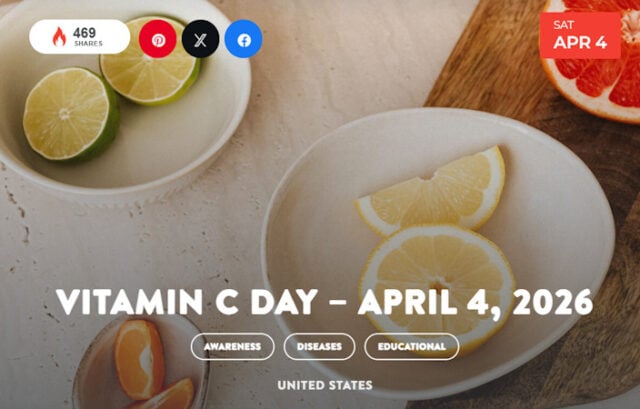
National Vitamin C Day on April 4th each year shares all the ways vitamin C nurtures and benefits our health, inside and out!
1747 – Scottish naval surgeon James Lind ran one of the earliest controlled clinical trials and found that sailors given citrus fruits recovered, laying the groundwork for recognizing vitamin C’s role long before the vitamin itself was identified.
1795 – Following successful shipboard trials and advocacy by physician Gilbert Blane, the British Admiralty orders daily citrus juice rations for sailors, effectively eliminating scurvy from the fleet and establishing vitamin C–rich juice as a life-saving naval staple.
1880 – British sailors stock up on lime supplies from the Caribbean, leading to the nickname ‘limeys’.
1897 – During the Alaskan Klondike Gold Rush, miners traded gold for potatoes. Potatoes, rich in vitamin C, helped prevent scurvy, making them as precious as gold.
1907 – Norwegian researchers Axel Holst and Alfred Fröhlich induce and then cure scurvy in guinea pigs using controlled diets, proving scurvy is caused by a missing dietary factor that would later be identified as vitamin C.
1912 – Vitamin C was discovered. Sixteen years later, it was isolated.
1928 – Hungarian biochemist Albert Szent-Györgyi isolates a component called ‘hexuronic acid’ from plant juices, which is later called ‘vitamin C.’
When Albert Szent-Gyorgyi first isolated vitamin C, he called it “ignose,” or “I don’t know what” sugar. The vitamin then came to be known as Ascorbic Acid.
1933 – it became the first vitamin to be produced chemically.
1940s – Dr. Frederick Klenner cured chickenpox, tetanus, mumps, measles, and polio–all with the use of vitamin C therapy.
1970 – Linus Pauling publishes “Vitamin C and The Common Cold,” a book recommending mega doses of vitamin C to prevent colds.
2019 – SkinCeuticals created Vitamin C Day.
Vitamin C is clinically proven to be a powerhouse in other areas of health. Vitamin C may reduce blood pressure and potentially lower the risk of heart disease. Those at risk of gout can lower that risk by increasing their intake of Vitamin C.
Vitamin C keeps skin healthy by protecting it from oxidative damage caused by daily exposure to light, heat, and pollution.
Vitamin C is great for collagen regeneration. Aside from smoothing out a few wrinkles, it may also help with arthritis.
With the right product, adding Vitamin C to your beauty regimen can brighten your skin, reduce inflammation, and promote healthy collagen production. Vitamin C brightens just about any health routine.
Vitamin C intake is 70 to 80 milligrams; however, the Nobel Prize-winning scientist Albert Szent Gyorgyi, the discoverer of the vitamin, took 1000 milligrams daily when healthy and 8000 to 9000 milligrams when he was sick.
Some of the fruits with the highest vitamin C content include cantaloupe, citrus juices and fruits, kiwi, pineapple, papaya, mango, and various berries, such as cranberries, blueberries, raspberries, and strawberries.
A number of vegetables rich in vitamin C, including cauliflower and broccoli.
Vitamin C is consistently among the most searched-for and popular vitamins worldwide due to its critical roles in immunity, collagen synthesis, and antioxidant protection.
Vitamin C, instant coffee, and sodium carbonate can be used together to develop black-and-white film.
Oranges contain 50mg per 100g. Other fruits like blackcurrants (177mg), raw red bell pepper (139 mg), kiwi (92.7mg), and strawberries (58.8mg) contain vitamin C.
Sea Buckthorn Berry contains at least eight times more vitamin C than oranges.
The berry is called ‘Hippophae rhamnoides’ or ‘shiny horse,’ since Ancient Greeks fed their horses sea buckthorn leaves to make their coats shinier.
Sea buckthorn oil is one of the only plant foods with all four omega fatty acids — omega-3, omega-6, omega-7, and omega-9.
Sources:

Disclaimer
Artificial Intelligence Disclosure & Legal Disclaimer
AI Content Policy.
To provide our readers with timely and comprehensive coverage, South Florida Reporter uses artificial intelligence (AI) to assist in producing certain articles and visual content.
Articles: AI may be used to assist in research, structural drafting, or data analysis. All AI-assisted text is reviewed and edited by our team to ensure accuracy and adherence to our editorial standards.
Images: Any imagery generated or significantly altered by AI is clearly marked with a disclaimer or watermark to distinguish it from traditional photography or editorial illustrations.
General Disclaimer
The information contained in South Florida Reporter is for general information purposes only.
South Florida Reporter assumes no responsibility for errors or omissions in the contents of the Service. In no event shall South Florida Reporter be liable for any special, direct, indirect, consequential, or incidental damages or any damages whatsoever, whether in an action of contract, negligence or other tort, arising out of or in connection with the use of the Service or the contents of the Service.
The Company reserves the right to make additions, deletions, or modifications to the contents of the Service at any time without prior notice. The Company does not warrant that the Service is free of viruses or other harmful components.