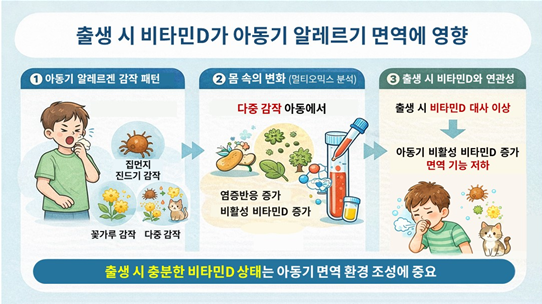
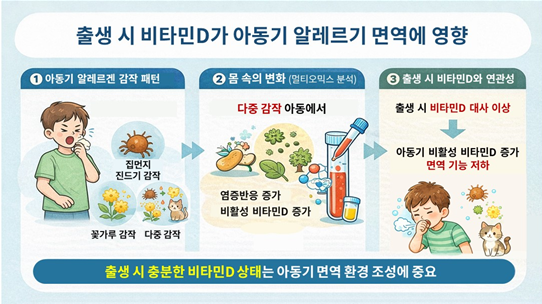
Schematic diagram of the effect of vitamin D at birth on the immune environment in childhood. Provided by the Korea Disease Control and Prevention Agency
A new study has found that a mother’s vitamin D levels during pregnancy may determine her child’s allergic immune health.
The National Institute of Health under the Korea Disease Control and Prevention Agency (KDCA) announced on the 5th that children born with vitamin D deficiency are more likely to have impaired allergic immune function as they grow. Vitamin D in childhood is not only essential for bone formation and growth but also plays a crucial role in maintaining a balanced immune response. The study’s findings were published online in the international journal ‘Allergy’ on January 19.
Professor Hong Soo-jong of the National Medical Center and Research Professor Oh Hye-young of Ulsan University Medical School conducted a cohort study, observing 322 children from birth to childhood.
The results categorized pediatric allergic reactions into three types: house dust mite, pollen, and polysensitized. The polysensitized type refers to a state of hypersensitivity to multiple allergens simultaneously.
The research team selected 57 seven-year-old children from the 322 participants and compared the blood of the three groups using multiomics technology, which simultaneously analyzes biological information such as proteins and metabolites.
The results showed that polysensitized children had higher levels of immune substances that cause allergic reactions and oxidative stress-related proteins that induce cell damage compared to the other groups. Levels of inactive vitamin D were also elevated.
Inactive vitamin D, obtained from sunlight or food, must be converted into its active form by the liver and kidneys to be involved in immune regulation and bone formation. The study confirmed a trend where higher levels of inactive vitamin D were associated with increased inflammatory responses in the body. It was also found that lower vitamin D concentrations in umbilical cord blood at birth led to a greater accumulation of inactive vitamin D during childhood.
Professor Hong Soo-jong stated, “We have confirmed that immune-inflammatory responses, oxidative stress, and abnormal vitamin D metabolism can occur together in polysensitized children. This is significant as it suggests that vitamin D status at birth can affect immune homeostasis in childhood.”
Kim Won-ho, Director of the Department of Chronic Disease Convergence Research at the National Institute of Health, emphasized, “A child’s immune system begins to form during pregnancy, so maintaining adequate vitamin D levels in the mother is a critical foundation for the child’s balanced immune development. Balanced nutritional management, including sun exposure for 5-30 minutes a day at least twice a week and taking vitamin D supplements, is necessary.”
KDCA Commissioner Lim Seung-gwan said, “It is important to look after a child’s immune health from pregnancy and infancy, not after symptoms appear. We will work to raise awareness about the importance of nutrition and immune management during pregnancy and to establish practical prevention and management strategies.”
<참고자료>
doi: 10.1111/all.70230
Copyright ⓒ DongA Science. All rights reserved.