
A new study has found that vitamin D deficiency in pregnant women and fetuses may impair children’s immune function after birth and increase their vulnerability to allergies.
The National Institute of Health (NIH) under the Korea Disease Control and Prevention Agency (KDCA) announced Thursday that a research team led by Professor Hong Soo-jong at the National Medical Center reached this conclusion after conducting a follow-up study on allergic responses among children in a respiratory and allergic disease birth cohort supported by the institute.
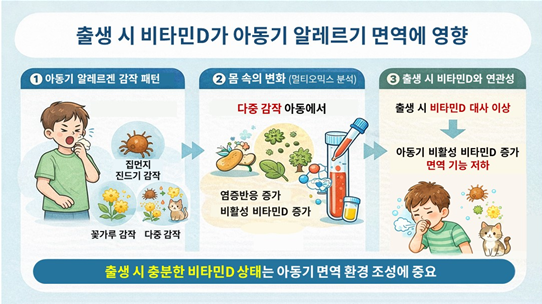
The researchers surveyed 322 child patients aged 3 to 9 participating in the cohort for reactions to major inhaled allergens including house dust mites, pollen, and pet dander. Through blood tests and integrated analysis of the children’s proteomes and metabolites, the team found that blood samples from “multi-sensitized children” — those who reacted to multiple allergens simultaneously — showed elevated levels of inactive vitamin D that the body cannot readily utilize.
Blood samples from multi-sensitized children also showed increased concentrations of allergy-related immune response substances and oxidative stress-related proteins. As inactive vitamin D levels rose, immune inflammation markers increased as well.
The researchers then analyzed vitamin D concentrations in the children’s umbilical cord blood at birth alongside their subsequent inactive vitamin D metabolite levels. The analysis revealed that the lower the blood vitamin D concentration at birth, the higher the levels of inactive vitamin D metabolites during childhood.
“In multi-sensitized children, immune inflammatory responses, oxidative stress, and abnormal vitamin D metabolism can occur together. In particular, this study suggests that vitamin D status at birth may affect childhood immunity,” Professor Hong said, explaining the significance of the research.
Kim Won-ho, head of the Chronic Disease Convergence Research Division at the National Institute of Health, advised, “Maintaining adequate vitamin D levels during pregnancy is a crucial foundation for forming immune balance in children. Nutritional management is necessary, including getting appropriate sunlight for 5 to 30 minutes a day at least twice a week and taking vitamin D supplements.”