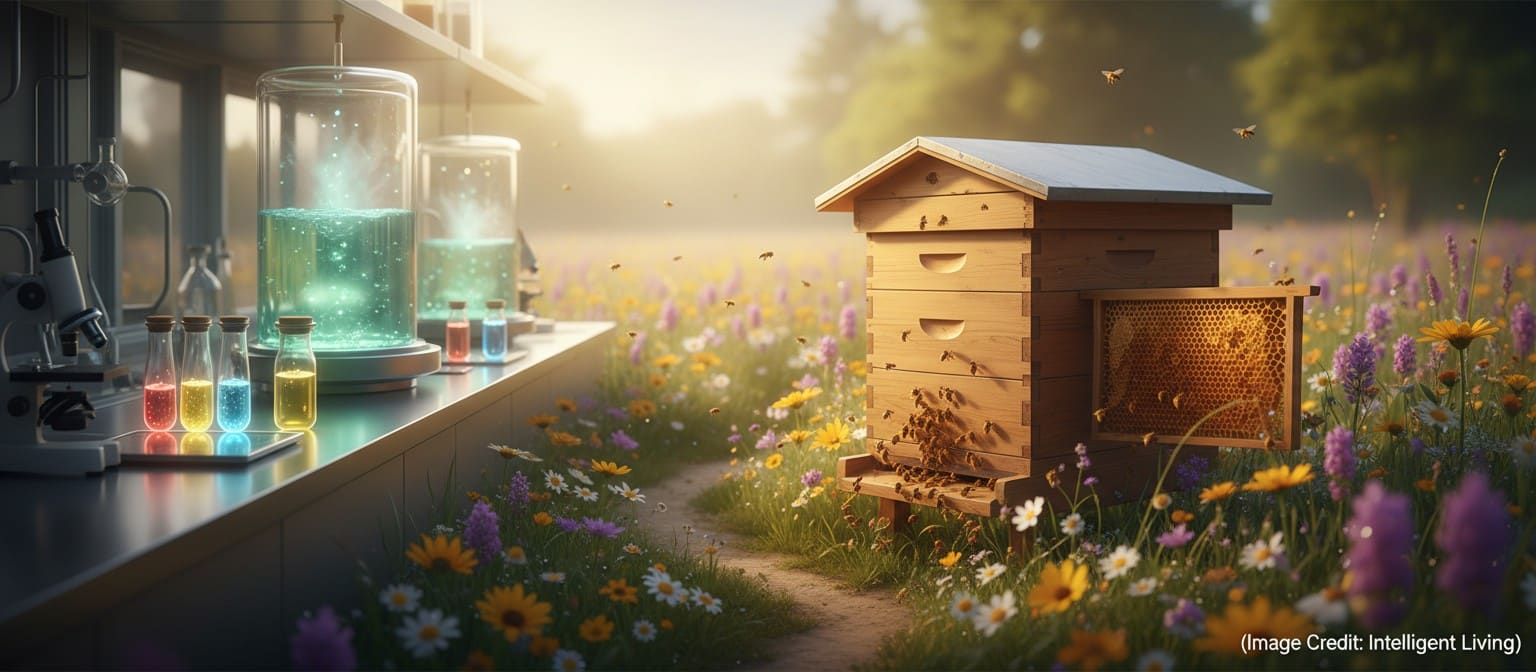
Recent evidence indicates that neither sugar nor protein deficiencies were the primary obstacles for struggling hives. Instead, researchers identified a group of overlooked pollen molecules—sterols—that act as critical micronutrients for honeybee growth. By reconstructing this nutrient profile within an engineered yeast sterol blend, researchers fueled a massive brood surge in controlled trials, while unsupplemented colonies failed to thrive.
Inadequate sterol profiles often trigger sudden brood failure in otherwise calorie-dense hives, especially when limited floral diversity creates seasonal forage gaps. These fat-like molecules drive the physiological signals required for larvae to successfully reach the pupation stage.
Adopting precision fermentation and microbial manufacturing techniques effectively resolves this biochemical bottleneck for beekeepers worldwide. Modern biotech implementations provide a critical buffer for colonies navigating habitat loss and volatile climate patterns. Scientists now produce targeted sterol blends that mimic the richest natural pollen sources, directly supporting pollinator health.
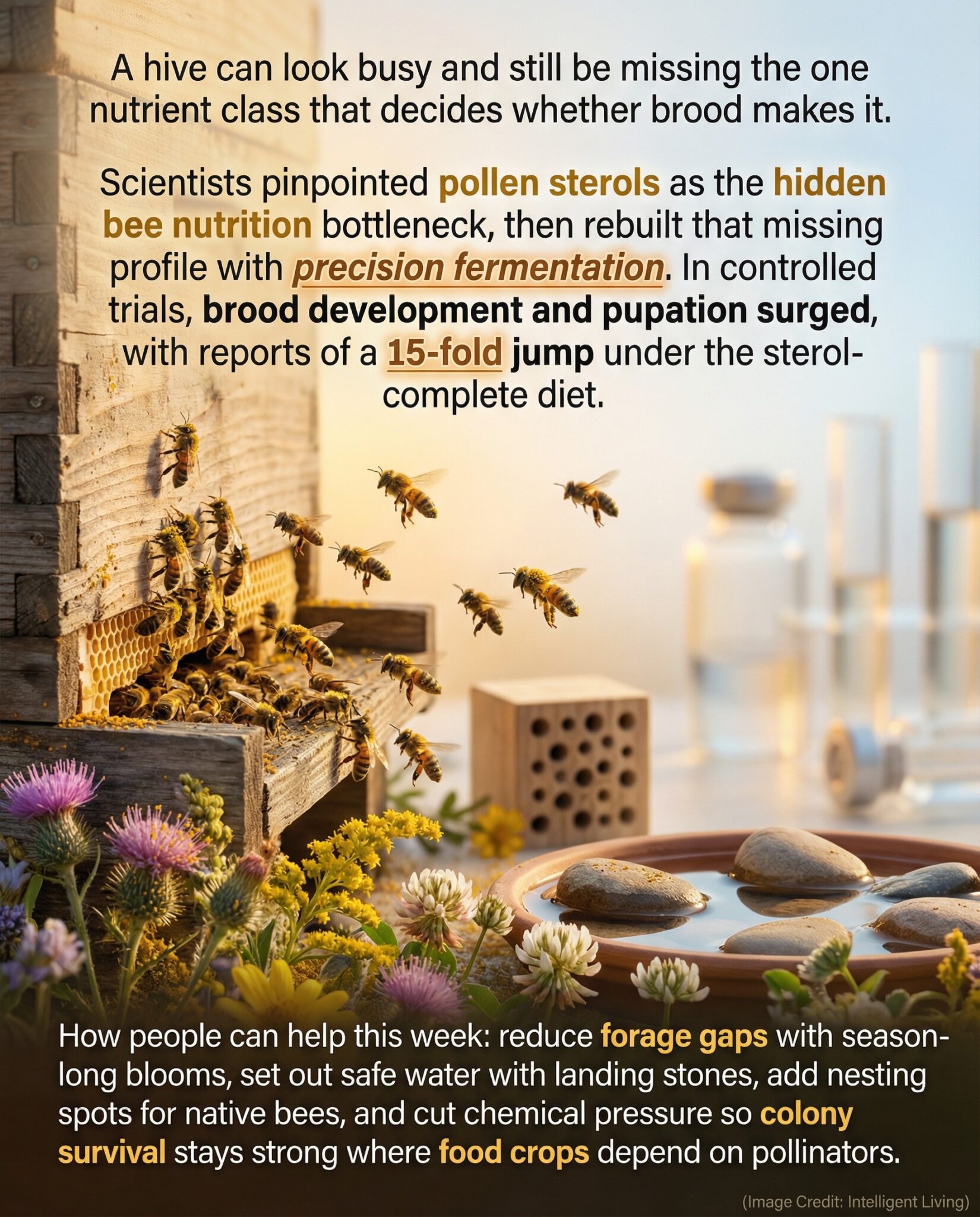 This meme connects the lab breakthrough in pollen sterols to real-life forage gaps and shows fast, practical ways to protect colony survival at home. (Credit: Intelligent Living)
Bee Nutrition Breakthroughs and the Essential Pollen Sterol Gap
Key Facts Regarding Bee Nutrition and Pollen Sterol Requirements
The discovery centers on pollen sterols, a nutrient class that can be overlooked when the focus stays on calories and protein alone.
The outcome that grabbed attention was a large jump in larvae reaching the pupal stage under controlled feeding conditions.
About 35 percent of global food crops depend on animal pollinators, causing bee health to quietly influence consumer food costs and availability.
Compounding stressors such as parasites, weather, and poor nutrition frequently converge on hives, complicating the drivers of colony collapse.
The practical takeaway remains unchanged: better bee nutrition and better habitat work best as a pair, not as rivals.
Addressing the Invisible Nutrient Gap in Commercial Pollen Substitutes
What Sterols Are and Why they Matter
Larvae require specific biochemical foundations that calories alone cannot provide. Sterols are fat-like micronutrients found in pollen that bees cannot reliably manufacture in the amounts their developing offspring require. Unlike other food sources, sterols perform unique functions:
Sterols do not provide raw energy like nectar sugars.
Sterols do not serve as primary building blocks like pollen amino acids.
Sterols act as structural components for cell membranes and hormonal signaling.
These distinct properties explain why even a small nutrient gap can lead to measurable differences in colony physiology and long-term survival.
Backyard gardeners frequently observe workers streaming through hive entrances in spring, unaware that internal brood counts might plummet even while colonies appear active.
During these critical shifts, the missing component is rarely food volume. Instead, the primary driver is nutrient completeness, specifically the availability of essential sterols.
Why “Complete” Feed Can Still Miss Micronutrients
Colonies frequently struggle despite receiving abundant calories and protein if they lack the essential sterols required for larval development. This nutritional mismatch drives significant hive frustration, especially as natural forage becomes increasingly unreliable across shifting landscapes.
How Forage Gaps Shrink the Pollen Menu
Sterol access depends heavily on local landscapes, where compressed bloom seasons or ornamental monocultures can dangerously narrow the available pollen menu. Diverse physiological resilience factors help ensure that colonies maintain the physiological resilience needed to withstand environmental pressure.
A second line of evidence comes from controlled diet work, where the nutrient profile is tightly managed. A nutritionally complete pollen-replacing diet study adds a sharper detail, showing how omitting a critical sterol can sharply reduce brood performance under nutritional pressure.
Nutrient availability in industrial farming regions often creates feast-and-famine patterns that are difficult for colonies to navigate. Increasing floral biodiversity remains the most reliable lever for supporting pollinators in home gardens.
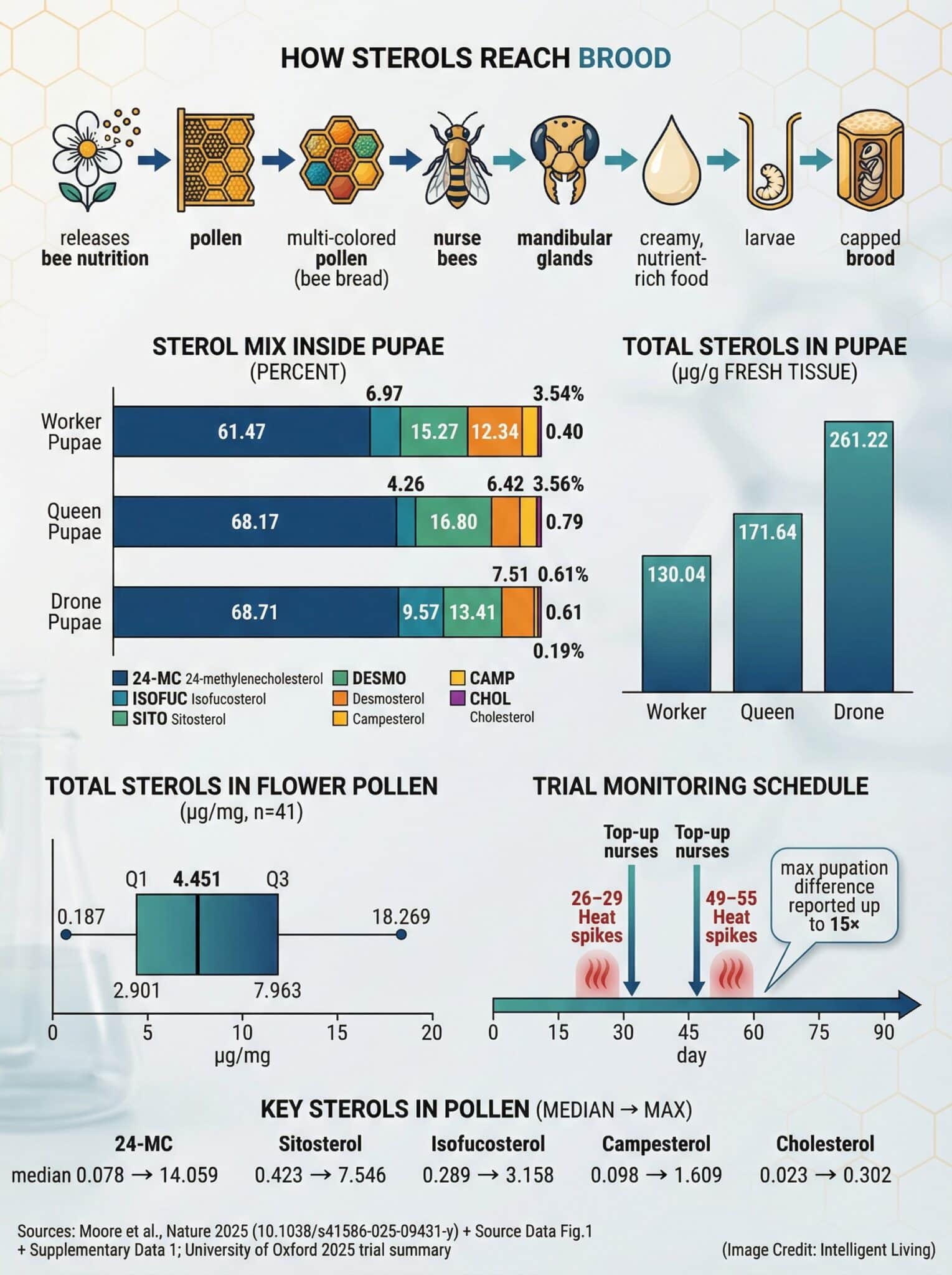 This visual translates the research into measurable charts: which sterols matter, how they move through colonies, and what the feeding trials tracked over time. (Credit: Intelligent Living)
Inside the Research: Engineering Bee Sterols and Testing the Brood Surge
Scientific Discoveries in Precision Fermentation and Nutrient Blending
The Six Sterols at the Core of Healthy Brood
Recent molecular biology findings identify a small set of pollen-derived sterols essential for brood development. These molecules consistently appear in honeybee biology and remain necessary for healthy reproduction. Targeted conservation efforts succeed more often when they address the specific molecular needs of a hive. The researchers highlighted six primary sterols that appear vital for healthy colony reproduction:
24-methylenecholesterol
Campesterol
Isofucosterol
Beta-sitosterol
Cholesterol
Desmosterol
The presence of these compounds ensures that larvae can complete the physiological transitions necessary to reach adulthood.
How Scientists Rebuilt the Missing Mix
Because some of these sterols are scarce and not easy to harvest at scale, the researchers turned to precision fermentation. They used an engineered strain of Yarrowia lipolytica, an oil-producing yeast, as a biological factory to produce a targeted sterol blend, then incorporated that yeast into a nutritionally complete feed for trials.
Researchers treated the sterol gap like a high-stakes recipe deficit, measuring developmental requirements before building a method to supply the exact mix consistently.
A Short, Practical Note About Precision Fermentation
Precision fermentation is controlled microbial manufacturing. When microbes are given a genetic blueprint and the right conditions, they can produce specific compounds repeatedly, which is useful when those compounds are difficult to source from plants or ecosystems without creating new environmental pressure. It is still a supply-chain tool, so real-world impacts depend on careful testing and responsible adoption.
Documented Trial Results and Significant Increases in Pupation Rates
Dramatic Gains in Brood Completion
Documented pupation surge data indicates that colonies receiving the sterol-enriched diet raised far more larvae through the pupal stage than colonies on sterol-deficient feed, with the largest difference described as up to a fifteen-fold increase in pupation under trial conditions.
The results mirror a treadmill test: they demonstrate capacity under ideal conditions rather than predicting performance in an environmental storm.
What the Trials Did Not Test
These trials did not replicate multi-season field realities where Varroa mites, viruses, pesticides, and forage gaps can stack into one long stress spiral. Emerging miticide-resistant virus transmissions demonstrate how parasite management determines colony outcomes even when nutrition improves.
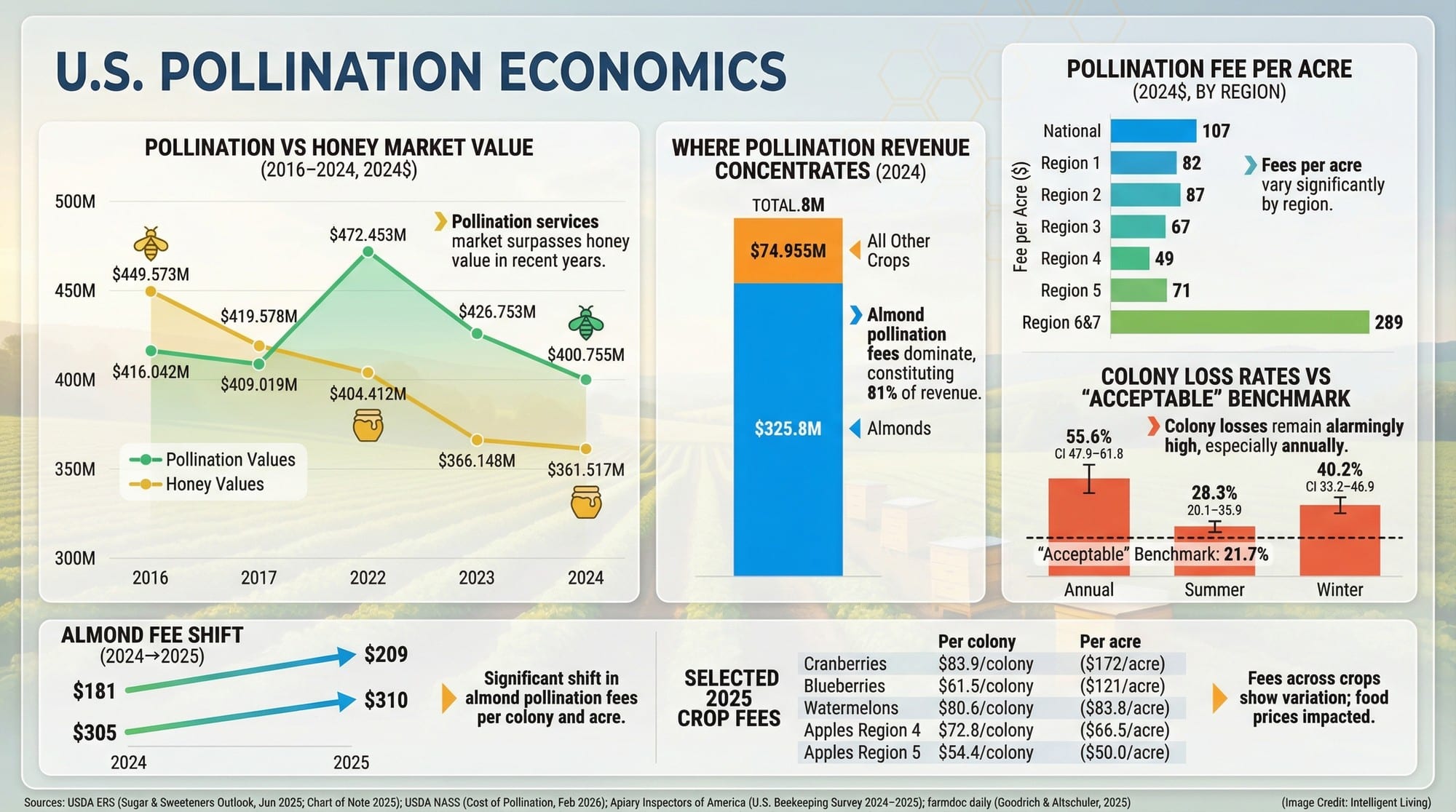 This visual shows why bee nutrition is also an economic story: colony losses and pollination costs link directly to agricultural infrastructure and consumer food stability. (Credit: Intelligent Living)
Economic Impact of Honeybee Nutrition and Agricultural Infrastructure
Why this Matters Beyond the Hive: Food and Farm Economics
Pollination as an Agricultural Infrastructure Cost
Honeybee health functions as both an ecological narrative and a critical pillar of global food-system infrastructure. Rising agricultural infrastructure costs show that U.S. producers invested over $400 million in pollination in 2024. Such significant expenditures underscore why tools that stabilize colony reproduction hold substantial economic value.
Colony Losses and the Stakes for Farmers
The pressure is not theoretical. Unsustainable colony mortality rates indicate an estimated 55.6 percent managed colony loss between April 2024 and April 2025, forcing many operations to rebuild constantly.
For growers who rely on timed pollination windows, market service pricing volatility shows up fast. At the global scale, the economic contributions of natural ecosystems are often cited to show how much food production value is directly affected by pollination services.
Ecological Limitations and the Need for Diverse Flowering Landscapes
Supplements Are a Bridge, Not a Replacement
A sterol-complete feed could help colonies maintain brood during forage gaps, but it cannot replace the wider ecological value of diverse flowering landscapes. Habitat diversity supports native bees, butterflies, and other beneficial insects, reducing the risk that one failed bloom season leaves everything hungry at once.
Unknowns and Important Questions
Field performance is the real test. Researchers still need to know how sterol supplementation behaves when weather swings, pesticide drift, and parasite cycles collide. Integrated colony collapse mitigation strategies illustrate why beekeepers must manage multiple hive stressors simultaneously. Optimal nutrition serves as a powerful lever, yet integrated management of parasites, habitat, and farming practices determines the final outcome.
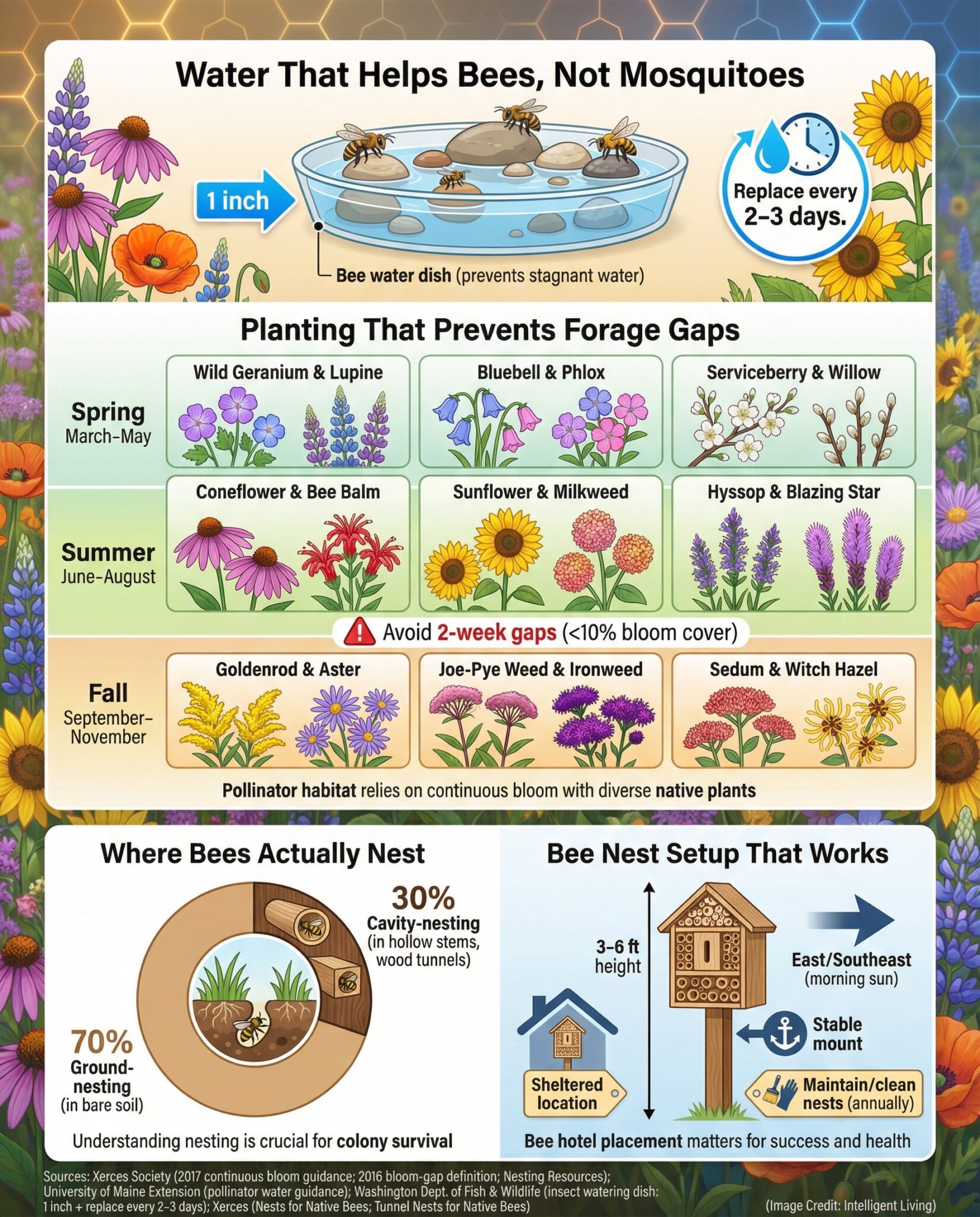 This visual turns “help bees” into measurable steps that reduce forage gaps, support native plants, and improve pollinator habitat week by week. (Credit: Intelligent Living)
Practical Strategies to Support Local Pollinator Health and Ecosystems
What You Can Do this Week to Help Bees Where You Live
Provide Reliable Bee Hydration with a Bee Water Dish
A shallow tray providing reliable bee hydration gives pollinators a safer place to drink without the risk of drowning. Keep it shallow, add pebbles or cork as stepping spots, and refresh water frequently so mosquitoes do not treat it like a nursery.
Plant Flowers that Keep Pollinators Fed Across Seasons
A yard that blooms for one weekend can still leave pollinators stranded the rest of the season. Incorporating biodiversity-rich plantings ensures that a yard remains productive throughout the entire foraging season.
Developing native plant ecosystems provides a strong foundation using local species adapted to regional conditions. In tight urban blocks, urban pollinator corridors maintain the food calendar. Small-scale efforts prevent nutritional gaps when a single bloom window closes.
On small balconies, staggered container bloomers attract daily pollinator visitations even when nearby yards remain dormant. These consistent patterns effectively mitigate the dangers of local forage gaps.
Add Nesting Options for Native Bees in Small Spaces
Supporting local biodiversity requires a variety of nesting opportunities tailored to different environments:
General Support: Methods for supporting native pollinators include providing sheltered nesting spots for solitary species.
Small Spaces: Low-cost nesting structures provide an immediate starting point for balcony owners.
Urban Settings: Compact wildlife refuges create safe nesting environments in dense neighborhoods without requiring construction.
Reduce Unnecessary Chemical Pressure
Pesticide exposure can amplify whatever else is already happening in a hive. Policy shifts limiting chemical stressors underline that many communities treat pollinator protection as a public-interest issue. A temporary UK allowance for a previously restricted pesticide highlights how pollinator protection can collide with short-term crop pressure.
Think Bigger than One Yard
Small patches scale when they connect. Ordinary wildflower sanctuaries at urban bus stops show how standard infrastructure can quietly support local forage. The same idea appears in pollinator habitat at solar sites, where land management supports bloom instead of bare earth. Dual-use land management illustrates how energy infrastructure can double as forage and shelter.
Strategic Future Paths for Bee Colony Surges and Species Conservation
Invisible biochemical bottlenecks often underlie the most daunting conservation challenges facing modern apiaries. When pollinator diets lack these specific micronutrients, targeted supplements can trigger a dramatic colony surge. Specific adjustments to the pollen sterol gap prove as essential as managing protein or caloric intake for long-term apiary success.
Maintaining an environment rich in biodiversity remains the primary objective, with engineered supplements providing a bridge during forage shortages. High-tech nutritional tools paired with traditional land-use improvements ensure that honeybees and native pollinators withstand the pressures of a changing agricultural landscape.
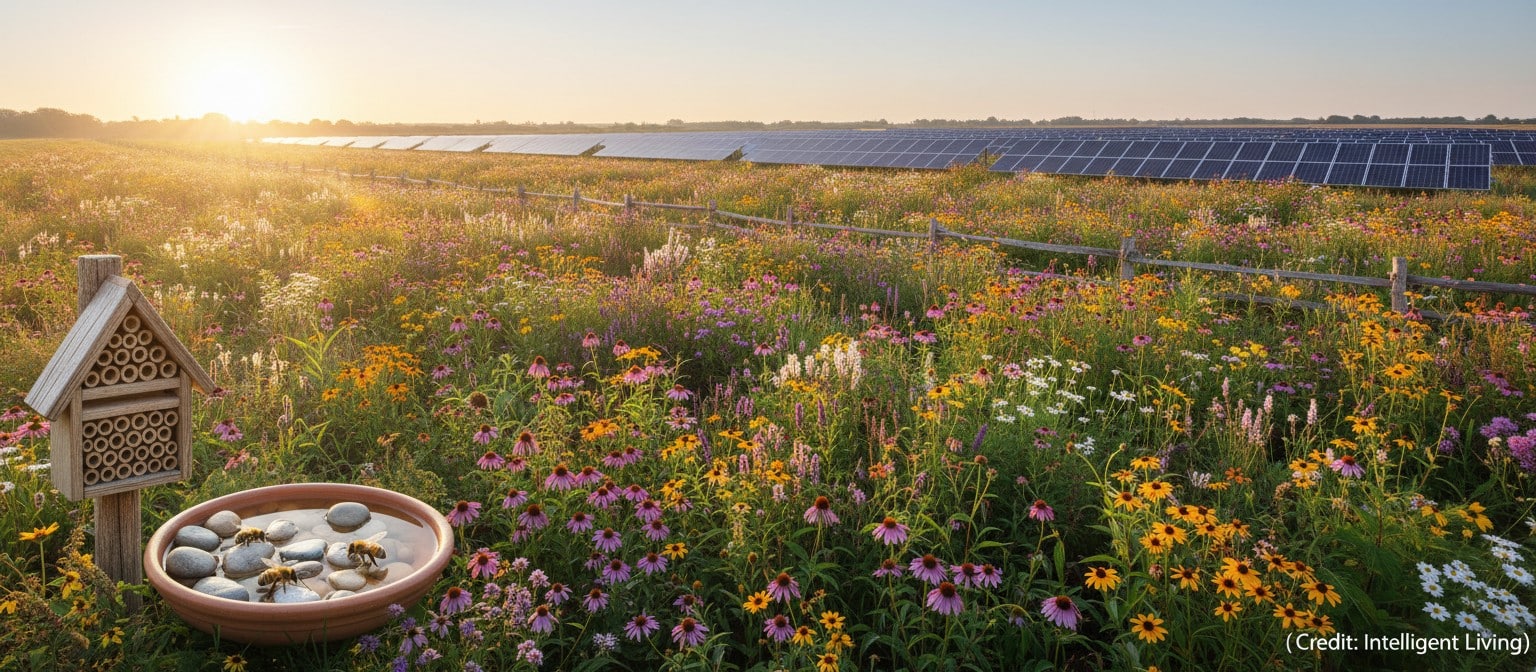 The most durable pollinator protection stacks practical habitat support with smarter land use, so bees have water, blooms, and nesting even during forage gaps. (Credit: Intelligent Living)
FAQ: Bee Nutrition, Brood, and What’s Next
How Pollen Sterols Impact Honeybee Brood Development
Sterols serve as structural building blocks for cell membranes and hormones. Larvae require these micronutrients to transition through the pupal stage into healthy adults.
Precision Fermentation Yeast as a Natural Pollen Supplement
Engineered yeast acts as a powerful supplement during forage gaps. It provides a consistent source of 24-methylenecholesterol, though natural biodiversity remains the gold standard for hive health.
Economic Connections Between Honeybee Nutrition and Infrastructure
Pollination services underpin over $400 million in annual crop production. Healthy, sterol-rich colonies ensure stable yields for farmers and predictable food pricing for consumers.
Drivers of Seasonal Bee Forage Gaps in Modern Agricultural Landscapes
Monoculture farming and urban expansion limit flowering plant variety. Hives often miss the diverse sterol profiles required for continuous brood production when only one pollen type is available.
Local Strategies for Gardeners to Enhance Pollinator Health
Native flowers create a reliable food calendar for local species. Providing clean water and nesting sites reduces physiological stress on pollinator populations.