The natural products industry is centered around health, and this keynote was a fitting cap to the 45th annual Natural Products Expo West. Jessica Knurick, a renowned nutrition scientist, registered dietitian and science communicator, discussed how evidence-based research, food systems and policies influence individuals’ dietary choices.
To open, Knurick shared how her grandpa, who had type 2 diabetes, died of a heart attack at age 65. She then made it her mission to investigate ways to reduce cardiometabolic disease risks.
While earning her master’s and Ph.D., she learned there’s excellent data showing that nutrition plays a direct role in several chronic conditions—and that dietary modification can slash disease risks. Ample evidence also shows the healthiest eating styles are rich in fruits, vegetables, legumes, whole grains and various proteins and very low in low-nutrient ultraprocessed foods.
“It’s very important to understand that an overall dietary pattern, in the research and in practice, is what predicts health much more so than single foods, single ingredients or single nutrients,” Knurick said.
Realizing that lack of data isn’t the problem—lack of adoption is—Knurick wondered why so few Americans follow evidence-based dietary guidelines. This prompted her scrutiny of the U.S. food system.
“We all make individual choices, and that matters a lot for our health—but we all make individual choices within systems,” Knurick said. “And we can either set those systems up for the most people to succeed or for the most people to fail. Right now, we see the system is producing very high chronic disease rates in this country.”
She realized the food system needs tweaking: “If we can redesign systems to help people succeed in this country—to adopt these healthy behaviors—then we can actually get somewhere with health.”
The food environment’s impact
Although many factors influence individuals’ dietary choices, the overall food environment—which includes food pricing, availability, marketing and policy—is a major determinant, Knurick explained.
Policy alone has a huge impact on the food environment. U.S. farm policy dictates which foods are subsidized and produced. USDA programs affect supply chains and distribution. Programs like SNAP and WIC influence which foods millions of Americans can afford.
Although some policies have produced wins, such as SNAP reducing food insecurity, many others have set us up for failure, Knurick said. For example, if we’re told to eat nutrient-dense diets, but 50% to 70% of what’s produced and sold are low-nutrient ultraprocessed foods, that’s like swimming upstream.
“If we want people to make better choices, we need to improve the food environment, which we can do through policy,” Knurick said. If the government subsidized fewer commodity crops in favor of fruits and vegetables, for instance, then produce prices could drop and consumption would increase.
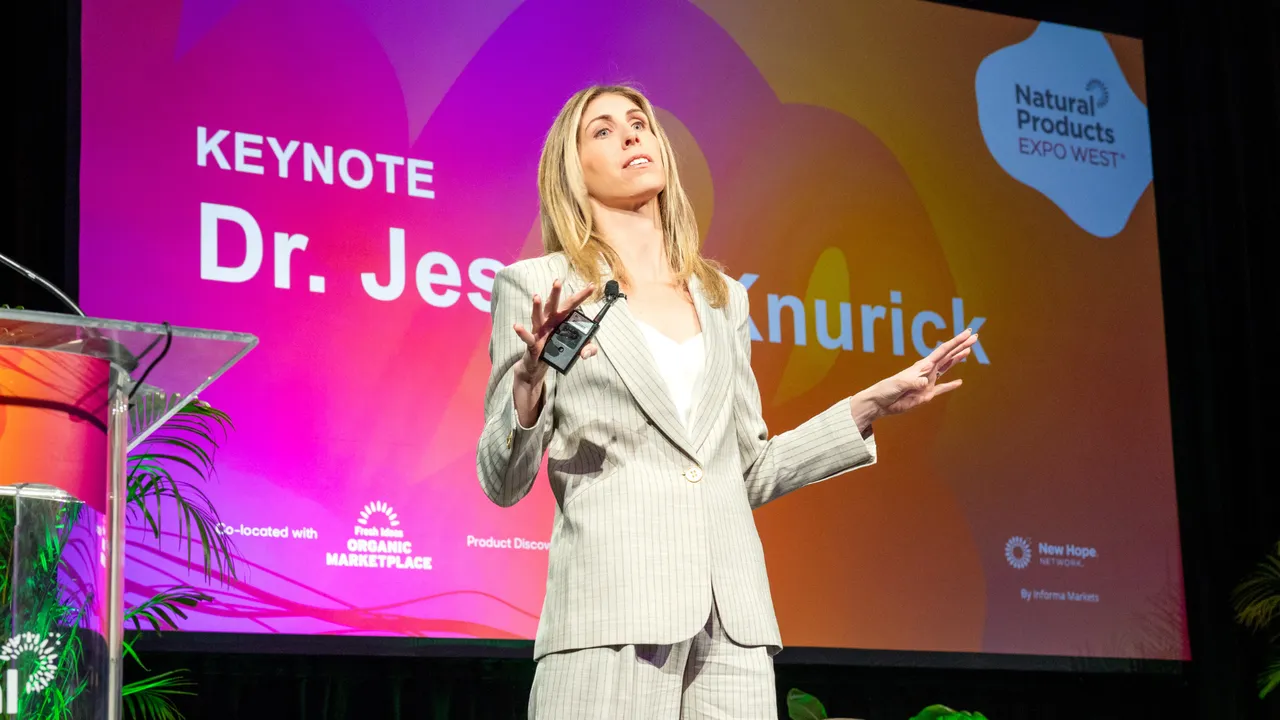
Jessica Knurick highlighted conflicting information consumers receive with social media algorithms promoting “fear-based” content.
Nutritional misinformation hinders health
As consumers try to make smart food choices, “they are also navigating a very confusing information environment right now,” Knurick said. Despite data identifying the healthiest eating patterns, lots of conflicting information is emerging, she explained, especially as social media amplifies influencers’ nutritional advice and makes oversimplified health claims go viral.
According to Knurick, data shows that most health- and nutrition-related information on social media is inaccurate or misleading. “What works for social media algorithms tends to be inflammatory, fear based and play into conspiratorial thinking,” she said. “This creates an environment where we’re focusing on the wrong things.”
For example, instead of focusing on overall dietary patterns, Knurick said several “misguided nutrition conversations” now dominate public discourse, such as lambasting “simple villains” like seed oils and synthetic dyes. These debates, she said, “distract us from what could actually impact policy and make systems and overall health better.”
Industry’s role in enhancing health
As a driver of which foods get made and sold, the food industry plays an important part in improving the nation’s well-being. While developing high-quality, in-demand products, Knurick encouraged brands to also consider formulation, distribution, pricing, promotion, marketing and nutrition messaging through a public-health lens.
Knurick suggested the industry make “nutritionally meaningful improvements” to products. Also communicate nutrition responsibly by emphasizing foods within overall dietary patterns, focusing on positive product attributes and ingredients and avoiding amplifying misinformation trends, even if they help sell product initially. Brands can also support policies and initiatives that improve food access, particularly though advocacy work.
Registered attendees of Natural Products Expo West 2026 can watch the recording of this session on the Expo West app.