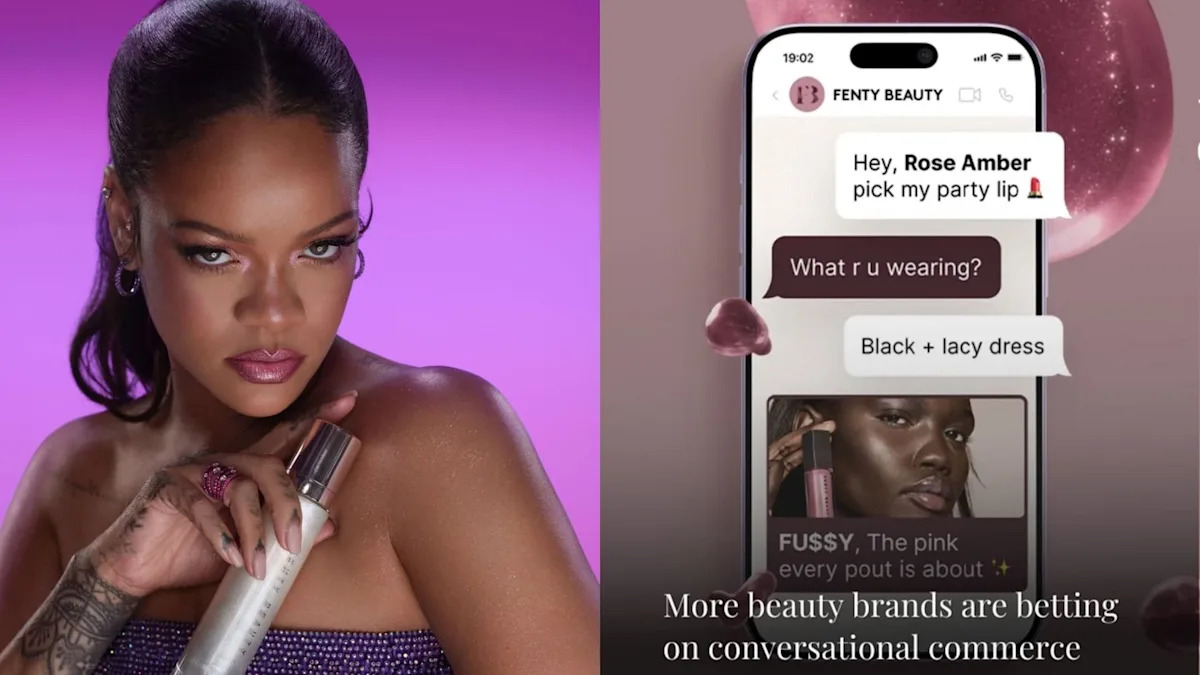
I’ve gotten used to how beauty brands talk to me. It’s loud, constant and carefully curated — posts, ads, campaigns that all blur together after a while. So when I saw that Rihanna is bringing Fenty Beauty into WhatsApp using AI, I didn’t just see a new feature. I saw a shift.
And the more I thought about it, the more I realized this might change how we experience beauty brands altogether.
This doesn’t feel like marketing anymore
What struck me first is how different this feels from everything else. Instead of pushing content at me, this invites me into a conversation. I can ask questions, get recommendations, move at my own pace. It doesn’t feel like I’m being targeted. It feels like I’m participating.
And that’s a subtle but powerful change. Because when something feels like a conversation, I lower my guard without even realizing it.
It mirrors how we already behave
What makes this so effective is how natural it feels.
I already use messaging apps to make decisions. I ask friends what they think, send screenshots, get opinions before I buy anything. Moving that behavior into a space where a brand can respond instantly doesn’t feel like a stretch.
It feels like a continuation. And that’s what makes it hard to resist.
_.jpeg)
Fenty Beauty is expanding beyond social media, using AI to create more interactive shopping experiences.
(Fenty Beauty/Instagram)But this is where I start to question it
The more I leaned into the idea, the more I found myself pausing. Because yes, it’s convenient. Yes, it’s personal. But it’s also AI. And that raises a different kind of question.
If I’m asking for advice, real advice, do I actually trust it coming from something designed to sell to me. There’s something slightly uncomfortable about getting beauty recommendations from AI, even when it’s done well. Because unlike a friend, or even an in-store advisor, the intention here is clear. The goal is to guide me toward a product. The conversation may feel personal, but it’s still driven by a system that benefits from my decision.
And I think that’s where this becomes more than just a feature. It becomes a question of trust. Am I okay with an AI learning how I talk, what I like, what I need — and then using that to influence what I buy?
Maybe I am. Maybe most of us are. But it’s worth acknowledging that this isn’t neutral.
And yet it still works
Even with that hesitation, I can’t ignore the fact that it works. Because it taps into something simple. I want quick answers. I want clarity. I want something that feels tailored to me without having to search for it.
And this delivers that almost instantly. That’s the tension I keep coming back to. I can question it and still use it. I can be aware of it and still find it helpful.
Rihanna understands where this is going
What makes this feel intentional — not experimental — is who’s behind it. Rihanna has always been ahead of how people engage with beauty. This doesn’t feel like she’s chasing a trend. It feels like she’s recognizing a shift before it fully settles.
Instead of competing for attention in crowded feeds, she’s stepping into a space where attention already exists, conversations.

Rihanna’s approach to Fenty Beauty reflects a shift toward more direct, personal ways of reaching consumers.
(Rihannadiary/Instagram)Why this works and why it matters
If I strip it down, this works because it changes the dynamic. It moves brands from something I scroll past to something I interact with. From something distant to something that feels close.
But that closeness comes with complexity. Because the more natural it feels, the easier it is to forget what’s behind it.
I don’t think this is just about Fenty Beauty or WhatsApp. I think it’s about where communication is heading. Because if this becomes normal, then the line between conversation and marketing gets thinner.
And maybe that’s the point. The question is whether we’re comfortable with it. Or if we’ll only realize what changed after we’ve already adapted to it.